Thursday, August 25, 2022

School Year 2022-2023: Keeping Milk and Dairy on the Lunch Menu


It’s time to crank up the half-pint carton machine and get milk to those nearly 50 million children who returned—or will be returning toon--to U.S. public schools, as well as all those in the private school sector. Dairy and nutrition advocates are encouraging parents and policymakers to prioritize the health of students by making milk and dairy options more accessible in the coming school year. 

School milk sales have declined by more than one billion half pints since the 2008-2009 school year. This presents a challenge for both the dairy industry and school districts nationwide as they look to modernize milk while delivering it to students in the most economical, efficient and sustainable way possible. 

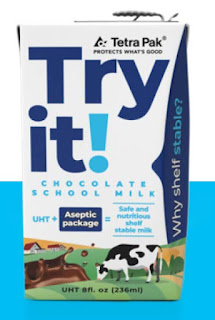
Today’s blog sponsor—Tetra Pak—along with Dairy MAX, an affiliate of Dairy Management Inc., and National Dairy Council that represents dairy farmers in select Western regions, recently conducted a pilot program with the Dallas Independent School District (ISD), Texas’ largest school district. Nine schools in the district were offered shelf-stable milk in aseptic cartons. This packaging does not require refrigeration until opened. It is made from primarily renewable materials and is recyclable. Not only does the longer shelf life reduce spoilage and waste, but it also means fewer deliveries and reduced costs.


The pilot program numbers show the benefits of shelf-stable school milk. For starters, net milk consumption increased 12%. Further, with reduced delivery frequency coupled with shared deliveries, it is projected that the district could save $1.5 million per year by switching the entire district to shelf-stable milk. Additional findings from the program included that there were no “lost milk days” from supply chain issues, administrative work was reduced due to fewer invoices and, most importantly, children favored or were indifferent to the taste of the shelf-stable milk.

Shelf-stable milk is the same milk that comes in traditional chilled packaging. To allow for a shelf life of more than six months with no refrigeration needed before opening, the milk undergoes ultra-high temperature processing and is then filled in aseptic cartons. This process and package combination retains the nutritional values of dairy milk without the use of additives or preservatives.

Source: Tetra Pak/Dairy MAX

In addition to tasting great, the 2020-2025 Dietary Guidelines for America (DGA) recommend three servings of dairy a day for a healthy diet. Milk is the top source of calcium, potassium, phosphorus and vitamin D in kids ages 2 to 18 years old. However, according to the U.S. Departments of Agriculture and Health and Human Services, U.S. children over four years old and adolescents are not consuming enough dairy to meet the recommendations in DGA, thereby under consuming a variety of nutrients they need to grow. And, because of falling participation rates in school breakfast and lunch programs due to the COVID-19 pandemic and removal of universal free meals in the 2022-2023 school year, there are growing concerns for nutrition security among students.

“Milk makes school meals more healthful and offering many varieties of milk encourages children to consume these products vital for their own development,” said Jim Mulhern, president and CEO, National Milk Producers Federation (NMPF). “From low-fat flavored to lactose-free options, parents, educators and policy leaders overwhelmingly agree that milk on the menu encourages healthy kids and ensures that everyone has equitable access to the 13 essential nutrients milk provides through school meals.”

Michael Dykes, president and CEO, International Dairy Foods Association (IDFA), said, “The most recent DGA report is clear: children are not receiving enough essential nutrients for growth, development, healthy immune function and overall wellness. School meals offer the most important opportunity of the day for children to get the essential nutrients they need in an 8-ounce serving of milk. Now is the time of year when our parents, educators, school meals professionals and policymakers need to work together to encourage school meal participation and nutritious milk consumption each day.” 

Survey data shows the best way to do that is by offering many varieties of milk, including different fat varieties, flavors and lactose-free options. Shelf-stability helps reduce waste and safe money. Might the future of school milk be in aseptic cartons? 
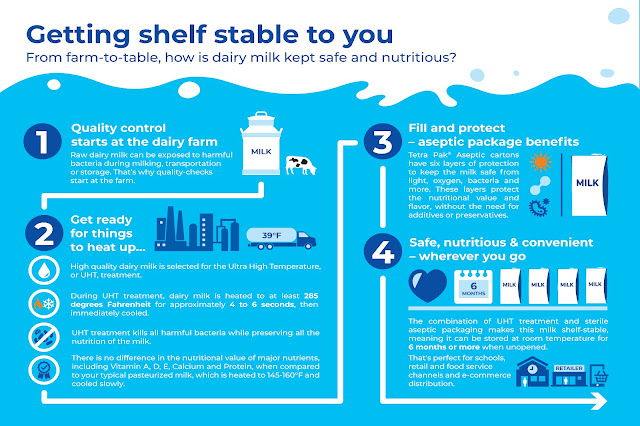

Source: Tetra Pak

“Research shows children eat their healthiest meals at schools, which provide balanced nutrition including milk, whole grains and a variety of fruits, vegetables and lean protein,” said, Lori Adkins, president, School Nutrition Association (SNA). “School nutrition professionals are committed to ensuring access to and promoting consumption of healthy school meals to support student success.”

The NMPF, IDFA and SNA are working with parents and school nutritionists to increase consumption of dairy in keeping with recommendations from the 2020-2025 DGA report and leading health organizations. This FACT SHEET released by the group underscores how all milk is a source for 13 essential nutrients, including calcium, vitamin D and potassium, nutrients of public health concern for children. 

4th Annual CMAB and VentureFuel “Open Innovation” Competition Finalists 

The California Milk Advisory Board (CMAB) announced the eight finalists in the Real California Milk Excelerator, a partnership with innovation consultancy VentureFuel. The program is focused on identifying, curating and accelerating dairy-based products, including traditional consumer food and beverage items, textiles and beyond. The competition will award up to $500,000 in prizes for startups that introduce novel benefits and drive use of California milk and dairy in formulations.

In its fourth year, the 2022 Real California Milk Excelerator advances innovation in its truest state: open. As one of the biggest dairy competitions in the world, the program seeks early-stage applicants with high-growth potential that create a 50% cow’s milk-based product or working prototype.

"We launched the Excelerator to foster a culture of innovation in support of California dairy and this year’s contestants certainly delivered on our high expectations,” said John Talbot, CEO of the CMAB. “Our ‘Open Innovation’ finalists focused on themes important to the next generation of consumers: sustainable sourcing and use of upcycled materials; clean labels and benefits from convenience to function; and global flavors and ingredients.” 

The eight members of the 2022 Real California Milk Excelerator cohort are:
  • Dosa by DOSA (Chico, Calif.) – Indian yogurt Lassi drinks.
  • Board at Home (Chico, Calif.) – E-commerce company, offering an experience of artisanal crafted cheeses and products shipped directly to consumers’ homes.
  • Goon with the Spoon (Danville, Calif.) – Specialty super premium ice cream from hip-hop artist, entrepreneur and chef Earl “E-40” Stevens.
  • Mi Terro (City of Industry, Calif.) – A first-of-its kind, venture-backed synthetic biology and advanced material company that engineers biomass waste into compostable biomaterials to end microplastic.
  • Neutral Foods (Gustine, Calif.) – Organic Half and Half product that has a carbon neutral footprint.
  • Pariva (Boston, Mass.) – Spreadable marinated yogurt bites.
  • Tres Lecheria (La Habra, Calif.) – Traditional and flavored Tres Leches cakes.
  • Wheyward Spirit (Sonoma, Calif.) – A clear, specialty spirit upcycled and distilled from whey.
“This VentureFuel innovation program for CMAB was designed to uncover the many uses of dairy,” said Fred Schonenberg, Founder and CEO of VentureFuel, Inc., the corporate innovation advisory firm that curated and runs the Excelerator. “Our curation of new startup solutions, especially the finalists, demonstrates the many ways dairy can innovate to connect with the next generation of consumers, showcasing sustainable options, creative packaging, new markets and direct-to-consumer approaches.”

Finalists will participate in a pitch event Wednesday, November 2nd in San Carlos, Calif., where all eight companies will present before a live audience and panel of industry expert judges. Once again, I’m judging. 


Thursday, August 18, 2022

Cheese Trends 2022 and Beyond


Hold onto your seats when you hear these numbers. Cheese consumption in the U.S. has doubled since 1980 and more than tripled since 1970. Per capita cheese consumption was 38.1 pounds in 2020 and is projected to reach 43.1 pounds by 2030, according to the U.S. Department of Agriculture Economic Research Service. That’s a lot more cheese that needs to be produced, which means a lot more milk that cows need to provide and a lot more whey for high-protein innovations. 

Mozzarella remains the most popular cheese in America, thanks to our love of this fresh cheese on pizza and similar foods, followed by cheddar, but both have been losing share to categories such as Other American and Hispanic. Many of the cheeses in these two categories are recognized as specialty cheeses. They are gaining traction by chefs and consumers alike, all of whom want to explore new flavors and uses in their culinary adventures. 


The specialty cheese market is growing at a faster pace than everyday cheeses. When it comes to cheese, consumers are willing to dig into their pockets and fork over a few extra dollars for premium product. These cheeses tend to be sold in the deli department and have shown impressive performance the past few years. 


For the month of July, deli department retail cheese sales reached $772, a 4.4% increase as compared to July 2021, according to IRI. Many of these cheeses are sold as random weight products, so unit sales are not available. But when it comes to dairy department cheese, dollar sales of natural and processed cheeses were up in July 2022, as compared to July 2021, with unit sales down. And both cheese snack kits and alternative-dairy cheeses (a.k.a. plant-based cheese) had dollar and unit sales down in the month of July. 


source: IRI


Heather Prach, director of education for IDDBA attributes the boom in deli cheese sales to July 4th holiday celebrations. 

“Charcuterie education and promotions are a great way to boost both deli meat and specialty cheese sales and we see more retailers get involved with ready-made or store-made platters for easy entertaining,” she said.  


Many of those specialty cheeses were recognized at the American Cheese Society’s Annual Conference in Portland, Ore., a few weeks ago. Congratulations to the winners of the ACS competition. A complete list of the 380 awards bestowed this year can be found HERE

Fun cheese fact: The world produces more cheese than coffee, tobacco, tea and cocoa beans combined according to Dairy Farmers of Wisconsin.

To check out some noteworthy cheese introductions, link HERE

For more cheese stats, scroll down. 


Thursday, August 11, 2022

Dairy Industry 2022: It’s not your daddy’s dairy anymore.


Dairy Processing’s inaugural State of the Industry shipped this week. It is an honor to be a part of the publication’s editorial team. Link HERE to the digital edition, which includes a comprehensive overview of all dairy product categories, as well as dairy alternatives. There’s also IRI branded sales data for the 52-week period ended June 27, 2022. 

With most dairy alternatives made on the same equipment as dairy products, and often in dairy manufacturing facilities, it is safe to say that “times are changing.” Ingredient companies have spent the past few years working diligently to improve plant-based dairy systems. The innovations entering the marketplace today are more sophisticated in terms of flavors, formats and nutrient density. 

Tastes are changing, too, especially in terms of sweet preferences. When decreasing sugar in the diet, most shoppers prefer to reduce rather than replace with non-sugar alternatives or other flavors, according to HealthFocus International’s new report “Sweetener Solutions: A Path Forward—New Sweetener Insights from Around the World.” The study shows that shoppers have a preference to products that taste less sweet to the taste/flavor of non-sugar sweeteners or other substitutes. 

Taste and health remain priorities for consumers, according to “Growth Opportunities in Dairy-2022,” a new global report from FMCG Gurus. In fact, 73% of global consumers say that taste is important when choosing what fresh dairy products to purchase. The report looks at changing consumer attitudes and behaviors towards dairy, examining consumption habits in 2022. The report also explores consumer need states and motivations that impact dairy consumption. 


FMCG Gurus insights show that across product categories, consumers have increased their consumption of dairy products during the past two years. However, there has simultaneously been a significant increase in the proportion of consumers who turn to plant-based products on at least a weekly basis, with the biggest jump being within the oat milk category. This aligns with the trend of the growing proportion of consumers who say that they are following a diet based on the avoidance or moderation of animal products, with most of these individuals identifying as flexitarian.

FMCG Gurus research also shows that “high in vitamins” is the most appealing functional claim within the dairy industry, with 64% of global consumers stating this. When it comes to sustainability, the research shows that 80% of global consumers favor locally made brands made with locally sourced ingredients and about 73% of global consumers also find sustainability pledges important when buying dairy products. 

Read about how California dairy processors are innovating to cut emissions and close loops HERE.

To more than a third of global consumers surveyed as part of NielsenIQ’s forthcoming report—The Brand Balancing Act—small brands represent local, independent and unfamiliar products. In fact, 40% said they prefer to buy small brands either exclusively or when the time and price is right, while 56% said they prefer to buy locally made products.

A recent annual survey conducted by Vericast, a marketing solutions company and expert in consumer behavior, just released its “2022 Grocery and CPG TrendWatch Report,” which shows how rising prices, supply chain delays and record-high inflation have affected retail behavior. Nearly 2,000 adults in the U.S. and more than 300 consumer packaged goods and grocery/drug/mass industry professionals were surveyed. Vericast found that consumers across key demographic groups are scrapping long-held retail behaviors and finding entirely new ways to shop for household essentials, creating new opportunities for savvy marketers. 

Notably, 61% of all shoppers say that one of their biggest challenges is rising prices and almost a third are regularly switching products because their preferred product is not available. This represents an opportunity to guide shoppers to stores where products are in stock, or to drive awareness of other products that meet the same need.
 
“Consumers across all key demographics are switching shopping gears in this economic environment,” says Aimee Englert, executive director-client strategy at Vericast. “Marketers who understand this and plan accordingly will be top of mind as buyers focus on value and saving. To successfully retain and acquire new shoppers, marketers must know how different segments spend, their unique behaviors and how to capture their attention quickly and effectively.”

Across the key demographic groups, top findings from the survey include:

  • Baby boomers are the most sensitive when it comes to price. Eighty-three percent of baby boomers indicated that price increases are the biggest challenge when it comes to shopping for food, health and beauty, personal care, or household items online or in-store. As a result, baby boomers are most likely to make a switch; more than one-third have switched products because their preferred products are not available.
  • Just over 40% of baby boomers say they are most influenced by coupons that arrive in the mail or newspaper. However, more baby boomers are searching for coupons both in print and online, proving that an omnichannel approach to offering deals will pay dividends when it comes to shoppers looking to save.
  • Millennial parents crave convenience but struggle to balance it with cost. Over half (53%) of millennial parents struggle to afford essentials. And due to rising gas prices, 63% of millennial parents are more likely to shop at fewer stores, compared to 56% of consumers overall.
  • Despite rising costs, this generation more than any other will pay extra for the convenience of a subscription service. However, they still rate the in-store experience higher than online (70% vs. 63%), so marketers should look for ways to invigorate the online shopping experience to help these consumers discover new products with increased convenience.
  • Affluent households increasingly seek value online. Even higher-income households are cutting back on spending. In fact, 57% of affluent shoppers say the rise in prices is their biggest challenge when shopping for food, health and beauty, personal care, or household items online or in-store.
  • Affluent shopper purchasing habits are changing as much as other consumer groups in a volatile economic environment. Forty-two percent are stockpiling products, 39% have switched to shopping more online and 23% are using cashback rebates or apps more often. Indexing toward a quality, convenient online shopping experience will attract shoppers with the most disposable income.
  • Gen Z is purpose-driven and digital first. Members of Gen Z are most influenced by social media advertising to shop at a new store/website or try a new product. Further, 50% use their phones when shopping in-store and nearly half (48%) are interested in virtual reality to see how products can fit into their lives. While it’s still early, marketers should begin exploring how virtual and augmented reality, as well as the metaverse, can enhance marketing strategies for this demographic.  
  • Additionally, Gen Z is looking for products that align with their social, environmental and/or political values. This is especially important when it comes to food products (21%) and beauty and personal care (22%). Brands should ensure messaging emphasizes their brand values to gain and keep loyalty.
You can download the report HERE.


Thursday, August 4, 2022

Navigating Consumer Perceptions of Plant-Based: and how dairy processors can use this knowledge for future innovation


The “power of plant” is strong, with a mainstreaming of plant-based eating taking place before our very eyes; however, it’s no surprise that as plant-based foods become a bigger part of everyday life, consumers have become more discerning. Interest in plant-based products like meat alternatives and plant milks are being met with growing consumer concerns around exactly how healthy and sustainable these really are, according to “The Plant Paradox: Navigating the Complexities of Plant-based Perceptions Around the World” from HealthFocus International. 

FMI—The Food Industry Association, just published its inaugural “Power of Plant-Based” report. You can watch a one-minute video with highlights HERE

The FMI report looks at the whole range of what constitutes as plant based, including naturally plant-based foods, such as fruits, vegetables, beans and whole grains, as well as alternatives to traditional animal-derived items. When looking at this spectrum of products, the study found that two out of five (42%) shoppers put either a lot or some effort into selecting plant-based foods or beverages.

“More than 40% of shoppers at least occasionally eat a meat, dairy or seafood alternative, but dairy alternative sales are more than twice those of meat alternatives,” said Steve Markenson, director of research and insights for FMI. “The plant-based foods most likely to be regularly consumed by shoppers are naturally plant-based: fruits and vegetables (75%) and beans, nuts, or grains (47%).”


A quarter of shoppers regularly consume milk alternatives and 21% regularly consume other dairy alternatives, according to FMI. Slightly less than 20% of shoppers regularly consume meat alternatives. Those who tried plant-based meat and dairy products once or twice but did not continue said taste was the biggest reason.

When asked how they would refer to their type of eating, most shoppers identify as meat eaters, considering themselves to be omnivores (15%) or carnivores (21%). About one in 10 (9%) identify as being flexitarians, while a similar proportion follow approaches that avoid meat, such as vegetarian (6%), vegan (2%) or pescatarian (2%).


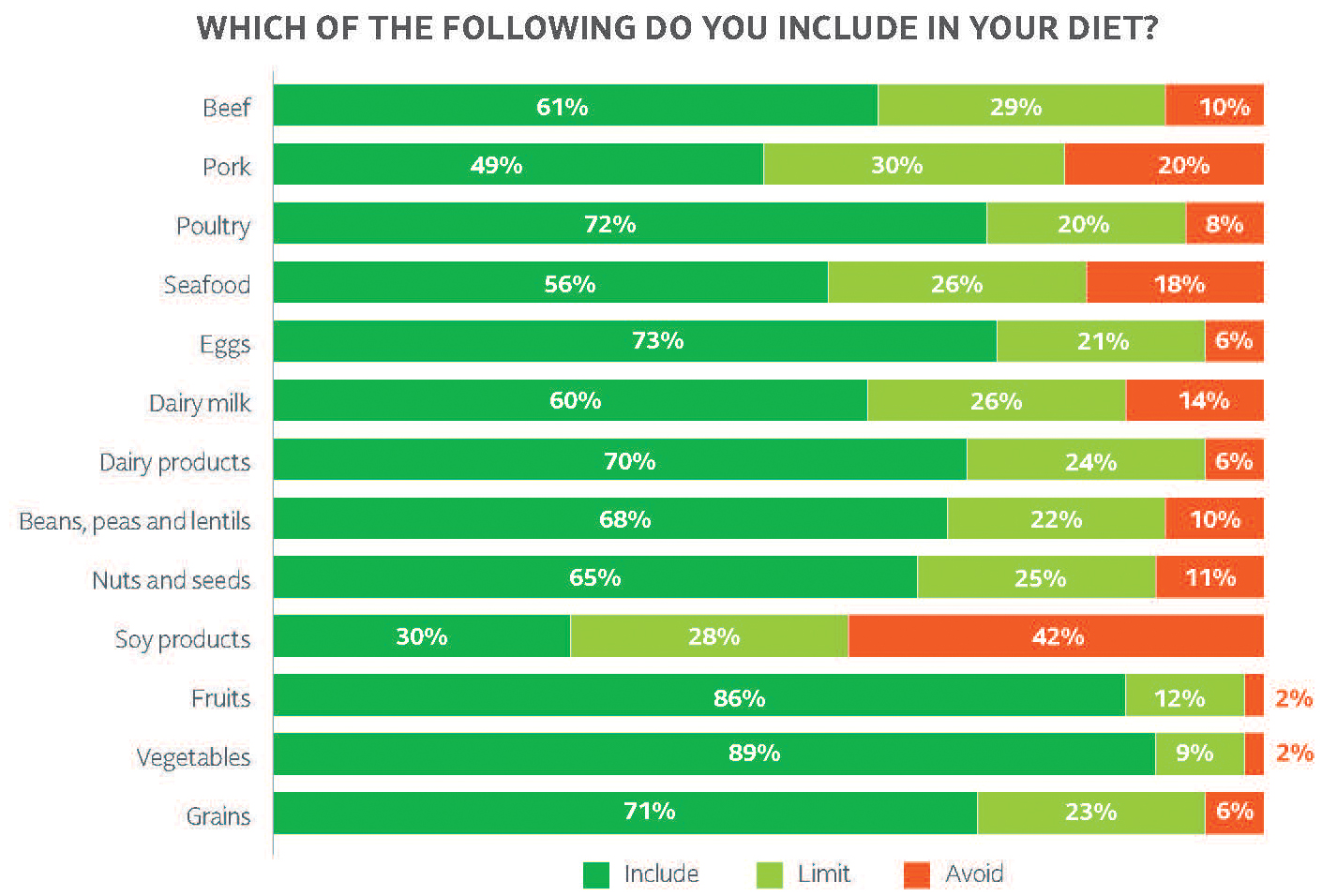
The majority of consumers surveyed include dairy milk (86%) in their diet. Even more include dairy products (94%). That’s what makes products such as Plucky Pickle Dips so attractive in today’s marketplace. 

Originally introduced in 2018 as Darling Pickle Dips, Plucky Pickle Dips can now be found in more than 500 stores and Target recently increased its placement. Other major retailers are evaluating the product for placement in their next resets. The refrigerated dip line is made with zesty pickled vegetables, herbs and spices that are mixed into a smooth cream cheese and white bean blend. The cream cheese gives the dips richness, while the pureed beans provide a slightly chunkier texture than most creamy dips. It also bring a decent dose of plant to the product. 

The dips were developed by two life-long friends--Sara Doherty and Britt Jungerberg—in their quest for something different and better-for-you in the premium dip category. Darling Foods LLC was one of six dairy companies that participated in the 2018 Land O’Lakes Inc., Dairy Accelerator, a program supporting the dairy industry by providing tailored coursework and mentorship to dairy entrepreneurs. To qualify for consideration, each company was required to utilize dairy as a primary ingredient in their products. This product’s success shows the power of working with an accelerator program.


Graph source: FMI-The Power of Plant Based, 2022

“Our ethnographic research suggests consumers are seeking out plant-based foods and beverages primarily for both taste and nutrition,” said Krystal Register, senior director for health and well-being at FMI. “The food industry has an opportunity to provide guidance and educate consumers on overall healthy eating approaches that include plant-based options in alignment with the Dietary Guidelines.”  

The FMI research found that curiosity is a major characteristic for shopper experimentation. Millennials are more likely than Gen X and Boomers to put effort into selecting plant-based foods, and nearly half of shoppers buying plant-based foods and beverages live in households making more than $100,000 and have children. Shoppers interested in these foods and beverages tend to have bigger basket sizes, but also shop online.  

Graph source: FMI-The Power of Plant Based, 2022

The report found consumption of plant-based food and beverages will likely continue to grow, with nearly one-in-three shoppers expecting to increase consumption “a little,” and 16% expecting to increase consumption “a lot.” Thirty-five percent of shoppers who regularly consume plant-based items said they will consume “a little more” and 27% said they will consume “a lot more” in the future.

The time is right to become a “Flexitarian Dairy Company.” Link HERE to read more. 


Thursday, July 28, 2022

Become a Flexitarian Dairy Company


Photo source: Ingredion Inc.

Although demand for plant-based alternatives remains strong, many “proclaimed” flexitarians are still confused on the terminology of this lifestyle. A new study conducted by Danone North America found that only 24% of Americans correlate the flexitarian diet with being flexible and nonrestrictive. This is why it is paramount that dairy foods marketers do a better job of explaining that dairy is allowed in a flexitarian lifestyle…and even better, that dairies offer plant-based options, too. 

 The studied showed that younger generations have a higher level of understanding, yet only one in five adults were correctly able to define the flexitarian-eating style. A mere 19% of surveyed consumers recognized that moderate amounts of meat are allowed in a flexitarian diet, and only 12% recognized the inclusion of dairy products. 

There’s no denying that the demand for plant-based foods is strong. The flexitarian style of eating has been declared the food trend of the year by many trend trackers. 

Ingredion Inc., today’s blog sponsored, sampled two plant-based dairy-type prototypes at the recent IFT FIRST. There was a butterfly jasmine plant-based milk tea made with pea protein isolate and sweetened with allulose and fermented sugarcane Reb M. The drink also included soluble prebiotic fiber. There was also a high-protein, reduced sugar sour cherry rose swirled coconut chai frozen dessert bar. 


The Danone study found that while 20% of Americans identify as flexitarian or reducetarian, another similar trend that is focused on reducing instead of eliminating meat, more than half of Americans (54%) were not yet familiar with the term. Meanwhile, 84% of American adults indicated that they were familiar with veganism, yet that eating approach has the smallest following (1%), followed by only 3% of Americans identifying as vegetarian (ovo-lacto). Most Americans (42%) still eat meat and dairy nearly daily. 

“Flexitarianism is one of the simplest, non-restrictive plant-forward styles of eating that enables people to get the nutrition benefits they want and need without abandoning the foods they love,” said Kristie Leigh, registered dietitian nutritionist from Scientific Affairs at Danone North America. “As a leader in both plant-based and dairy products, we consider ourselves a flexitarian company and want to educate the public on the benefits of incorporating dairy in a plant-based diet to help overcome some common misperceptions.”  

Six Myths (and facts) about Plant-Based Eating  

While interest in the topic continues to grow, there is a ton of consumer confusion when it comes to understanding the various plant-based eating styles out there. The new consumer survey revealed seven major myths on plant-based, and specifically flexitarian eating styles.   

Myth 1.  Flexitarian isn’t a plant-based diet. 

Fact: More than 9 out of 10 Americans (91%) did not consider flexitarian as a type of plant-based diet, which couldn’t be further from the truth. Flexitarian is a plant-based diet but that doesn’t mean you can’t enjoy meat and dairy in moderation. This style of eating is abundant in plants and is still considered a plant-based or plant-forward approach. It provides the same health benefits while being less rigid and restrictive.  

Myth 2. A flexitarian diet is difficult to follow.  

Fact: As the name suggests, flexitarian is a combination of the words “flexible” and “vegetarian,” which are the main benefits of this approach. Yet nearly three-quarters (73%) of Americans mistakenly believe that a flexitarian diet is not easy to follow or maintain over time. Flexitarianism gives consumers the option to allow for both plant-based and animal-based foods in their daily lifestyle. 

Myth 3: A plant-based diet is likely to be inadequate in protein. 

Fact: It is possible to consume adequate amounts of protein when increasing plant foods, especially with a flexitarian approach that includes dairy. Yet two-thirds of Americans (66%) failed to recognize that dairy contains high-quality protein, which is especially important when reducing meat consumption. Similarly, nearly three-fourths of Americans (73%) do not think plant-based dairy alternatives, such as soy, provide high-quality protein. 

Photo source: Ingredion Inc.

Myth 4: A flexitarian diet is a weight loss diet.   

Fact: Switching to a flexitarian eating style may result in weight loss, but the benefits go far beyond a number on the scale. It’s not a quick, short-term way to lose weight. While 41% of Americans see weight management as one of the top reasons to switch to a flexitarian diet, flexitarianism is more of a lifestyle with multiple health benefits beyond weight. For example, few Americans (25%) recognized a flexitarian approach offers muscle and bone health benefits, although Gen Z was more likely to identify the muscle and bone health benefits of (36%) a flexitarian approach compared to all other age groups. 
 
Myth 5.  A flexitarian diet restricts dairy. 

Fact: While nearly 9 out of 10 Americans (88%) mistakenly believe dairy is not included in a flexitarian diet, dairy is in fact a valuable part of a flexitarian eating pattern. Milk and yogurt are not only nutrient-rich, but they are also a good source of high-quality protein, which is especially important when reducing meat consumption.  

Myth 6. A flexitarian style of eating is suitable only for adults.  

Fact: Among parents in the group surveyed, 20% said their children were following a flexitarian or reducetarian approach, which is significantly larger than vegetarian (4%) or vegan (5%). Nearly nine in 10 (89%) believe that plant-based dairy alternatives are a nutritious option for children, while more than half (51%) believe that dairy products offer multiple essential nutrients like calcium, vitamin D and potassium. 

1Online survey of 1,014 adults (ages 18+) across the United States between May 9-11, 2022, conducted by KRC Research and commissioned by Danone North America.   


Friday, July 22, 2022

Limited-Time Offerings are the Future of Dairy Innovation. That’s why eye-catching packaging is paramount.


Source: RTA Outdoor Living

(click on infographic to enlarge)

It’s the dog days of summer. That means we are eating lots of ice cream and milkshakes, with the latter being a safer way to consume this favorite summertime treat, as the high temperatures make a dipped cone a bit messy. 

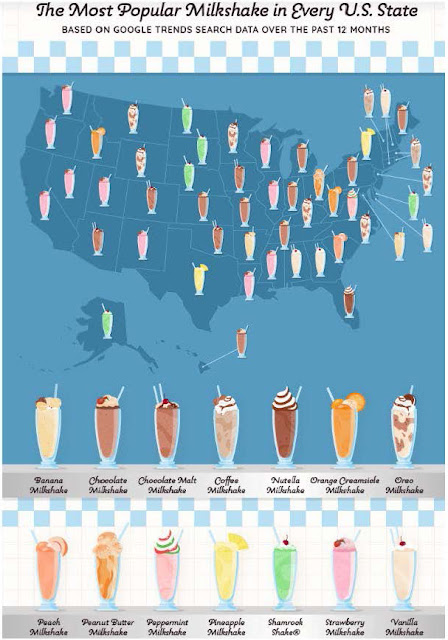
Before we explore the importance of limited-time offerings (LTOs) and eye-catching packaging, here’s what you all have been waiting for: the most popular milkshake flavor in your state. 

RTA Outdoor Living, a custom prefabricated outdoor kitchens and cooking appliances supplier, investigated Google Trends data over the past 12 months for the most popular milkshake flavors in order to determine the top flavor in every U.S. state. The full results can be explored HERE.

Chocolate and vanilla lovers might be a little shocked when they see that the strawberry milkshake was the most popular milkshake across the country. The creamy blend of strawberries and ice cream was the number one milkshake in 10 U.S. states, while chocolate reigned in eight states. The Oreo milkshake was the third most popular, with six states naming it as their superior flavor. Another shake that broke the top five was the Shamrock Shake. The infamous green milkshake is a minty flavor that typically comes out once a year to celebrate St. Patrick’s Day. Maybe it’s the short timeframe and the feeling of needing to get it while you can that makes this shake so popular. 

That’s a perfect lead into LTOs. Limited-time offerings, often centered around flavors of a season, create an urgency to purchase because the product may not be available the next time you shop. Sometimes they are simply bizarre flavors that a marketer creates to draw attention to the brand. Whatever the reasoning behind the LTO, the package must get the consumer’s attention. It has to scream to them “TRY ME!”


DesignRush, a B2B marketplace that connects businesses with design agencies, recently published “10 Best Ice Cream Packaging Designs with Delicious Presentations.” You can view the entire report HERE

DesignRush agrees with my assessment of ice cream packaging. The company write, “Ice cream is an irresistible treat; it’s the very reason why brands package their creamy goodness in the most creative and visually engaging ways possible. After all, the packaging is not just about making a product look great. It’s all about selling an idea, a story and an experience that everyone can indulge in. Great ice cream packages should instantly give customers a visual representation of how the sweet treat would taste like.”

One of my favorite examples featured by DesignRush comes from the designer Simoneone who used illustration to create a pint container for Steep Creamery & Tea in San Francisco. The standout features are doodles with minimal text blocks and a simple black-and-white colorway on the container. Lids are plain, which is where the flavor is printed. The package got Steep’s ice cream into a take-home pack, which was essential during the pandemic.

“The graphics illustrate the brand’s journey. With this style choice, using a simple color palette complements the overall design. The entire illustration is black-and-white, which stays true to the doodle theme and keeps things clean and streamlined. The only color pop you’ll see is the green leaf on the logo, which draws the attention back to the brand name,” according to DesignRush. 

Let’s explore some recent LTOs in the freezer.

Graeter’s Ice Cream, known for its handcrafted flavors and Old World French Pot process, just released its fourth (of five) Bonus Flavors for 2022. Each Bonus Flavor remains a secret until the day it’s released. Consumers are made aware of the new flavors via broadcast media, social media, local scoop shops, the Graeter’s app and online store.

So far, Graeter’s fans have enjoyed Strawberry Cheesecake, Frozen Hot Chocolate and Churro Bonus Flavors this year. And now---drum roll, please—it’s Candy Bar Chip (pictured). This flavor combines rich peanut nougat ice cream with candied peanuts and milk chocolate chips. Each Bonus Flavor is an LTO. Once the flavor is gone from scoop shops and online, the flavor is retired for the year. 

Blue Bell celebrated July being National Ice Cream Month with Oatmeal Cream Pie, which is oatmeal-flavored ice cream with hints of brown sugar mixed with soft oatmeal cookies and a vanilla icing swirl. 

“We have taken all of the best parts of an oatmeal cream pie and combined it with our ice cream,” says Jimmy Lawhorn, vice president, sales and marketing for Blue Bell. “You immediately taste the sweetness of the brown sugar in the ice cream, but it is subtle. Once the vanilla icing swirl hits your taste buds, you know this is going to be good. The texture and taste of the soft oatmeal cookies tie it all together. It is just like eating a homemade oatmeal cream pie, but in ice cream form.” 

Also new from Blue Bell this summer is Strawberry Lemonade Ice Cream. The flavor is strawberry ice cream swirled with a refreshing lemonade sherbet sprinkled with lemon flavored flakes. 

McConnell’s embraces the pint package, especially for its LTOs. That’s because pints are a powerful package in the frozen desserts space. They command a premium and allow for consumers to try something new without the commitment of a larger-sized package. 

McConnell’s has a large mail order business and this summer the company offered the Vacation à la Mode bundle that included three brand new LTO frozen treats inspired by the sweet taste of summer vacation. The five pack included Pina Colada (fresh pineapple, coconut flakes and lime blended into rum-infused ice cream), Strawberry Daiquiri Sorbet (dairy free), Espresso Rumtini & Macadamia Nuts (coffee ice cream spiked with rum and paired with salt-roasted, Hawaiian macadamia nuts), Toasted Coconut Almond Chip (shredded coconut, toasted to caramelized perfection, crunchy, salt-roasted almonds, and bittersweet chocolate chips) and Passion Fruit Lemon Swirl (dairy free).

When it comes to LTOs in bizarre flavors, both Jeni’s and Van Leeuwen deserve standing ovations. This summer, Jeni’s introduced The Pool Collection. This series of five LTOs is described as “chill as a cabana in the shade and as refreshing as diving into the deep end.”

What’s on deck? Here’s the lineup:
  • Bombastix Sundae Cone ice cream is double vanilla cream with gooey fudge and chocolate-covered waffle cone chunks.
  • Butterscotch Popcorn ice cream is sun-popped popcorn ice cream with a butterscotch crunch.
  • Golden Nectar ice cream is golden sweet cream that tastes like a chilled summer chai (minus the tea) with firecracker-like snaps of aerated toffee candy.
  • Watermelon Taffy ice cream is uber creamy with the taste of tart candied watermelon.
  • Dairy-free Lemon Bar has a lemon, shortbread crust, and rich coconut cream.

Last summer, Van Leeuwen teamed up with Kraft Heinz to bring together two of life’s greatest pleasures: ice cream and macaroni and cheese. The LTO sold out online in the first few hours and did not last long in scoop shops. Continuing with the cheese theme, earlier this year, Van Leeuwen rolled out a pizza-flavored ice cream featuring a mozzarella base with tomatoes and basil. It was part of an exclusive launch at Walmart that also included mashups like Hot Honey (bits of honeycomb in a vanilla base with a hot honey swirl) and Planet Earth (blue spirulina and matcha green tea cake). This summer the company continued its relationship with Walmart with the launch of five new limited-edition flavors. The mashups included Grey Poupon with Salted Pretzels, Honey Cornbread with Strawberry Jam and Espresso Fior di Latte Chip.  

“These pints offer something delicious for every member of a household, whether they like their desserts savory or sweet,” says Ben Van Leeuwen, co-founder and chief executive officer. 

Now go cool off with some ice cream!


Friday, July 15, 2022

IFT FIRST: A New Generation of Food Innovators to Feed The World


The Institute of Food Technologists’ (IFT) in-person annual convention took place this week in Chicago after a two-year pandemic hiatus. And let me tell you, it was nothing like the pre-pandemic IFT events. Another positive change to come from the virus. Thank you!

It was not your daddy’s IFT, as someone described it. It was noticeably void of retired academics, even current professors and their students, especially from abroad. The expo and education program was mostly business focused, and this was well received by exhibitors and industry attendees. The show lived up to its rebranding of “IFT FIRST--where Food is Improved by Research, Science and Technology.” Kudos to the “meetings team” with this new and improved lineup of content and programming. 

The energy and change quickly became apparent at 8:15am on Monday when Walt Whitman and the Soul Children of Chicago performed at the first of three daily keynote presentations. They got attendees to stand up, clap and even wiggle a bit to Pharrell Williams’ Happy song. (I did it!)

Please watch this 23-second VIDEO to get you charged up. 

The conversation at this first keynote centered around  “Should We Eat More Processed Foods?” There are two sides to this story when you consider that new technologies enable formulators to create foods that can’t be made in home kitchens, foods that are far from the junk food many categorize as processed foods. (I plan to write my July 19th Food Business News column on this keynote. I will share the link next week.) But in a nut shell, advocates say “a substantial increase in food processing is the best way to feed growing human populations while also reducing food waste. We should trust and invest in food technology that can make our global food supply healthier and more sustainable, including highly or ultra-processed foods.” Opponents argue that “these kinds of foods are often less nutritious, and are commonly linked to adverse health indices, particularly when it comes to ultra-processing.” Stay tuned…


Tuesday’s morning keynote panel discussion—R&D at the Edges of Human Experience—included current and former food science teams from NASA. They discussed the need for advanced technologies to better understand the role of food in the life of an astronaut and why human travel to Mars won’t happen until technology is available to feed them. 

“Food is so important. It’s not only sustenance. It can be life support,” said Scott Parazynski, a panelist and former astronaut. “It’s also a bridge between cultures, and it’s a tie to home.”

He pleaded for innovators to develop products that replicate the tastes astronauts crave from space. But that’s just one small problem for mankind. To get to Mars, there’s a lot more to consider in terms of nutrition. 

Panelist Michele Perchonok, a past IFT president who managed the NASA Space Food Systems Lab before her retirement, identified some of the challenges of space food development. In addition to safety and preserving nutrient density, shelf life is paramount, as well as minimizing packaging waste. 

It will be about a six-month journey to Mars. Then there’s about a two-year stint exploring the planet followed by a six-month return trip. With current technology, feeding a crew of six for three years would require more than 26,000 pounds of food, of which 17% is packaging waste. Further, the shelf-life requirement is more than three years because it is impossible for the vehicle transporting the astronauts to also transport the food. There will be about a six-month supply on their ship, and the rest will have to be pre-positioned on Mars prior to takeoff. And jokingly, she said, they have to know Martians won’t take it. But seriously, she explained, it has to be pre-positioned safely so that it is available when the astronauts arrive.  

Food scientists have a major role to play in advancing space food product development, according to Dorit Donoviel, executive director at the Translational Research Institute for Space Health, who moderated the panel. “We’re looking to you,” she said. “We’re here to ask you to please engage and help us solve these problems.”

These needs put a whole new perspective on why advanced technologies—everything from bioengineering to 3-D printing to cellular meat—are important. The beauty of all this work by NASA is that it can be adapted to food production on Earth and help feed the growing population. 

But to get there, thinking out of the box is paramount. That brings me to Wednesday morning’s final keynote that left attendees eager to get back to the lab. “Cultivating Curiosity: The Key to Unlocking Innovative Solutions to Complex Problems,” was addressed by Evette Cordy, CEO of Agents of Spring. She explained that organizations are often too focused on the short term and then jump quickly to provide solutions. Think of how so many of you carelessly jumped on the high-protein ice cream category when you felt threatened by a few players. It’s sort of the same with plant based right now. 

“…what is the customer problem you are trying to solve?” asked Cordy. “That is why we must first learn to problem find before we problem solve. Curiosity is the tool we can use to solve our most problems.”

Cordy led attendees in exercises to assess the type of mindsets they have. She then explained how developing those mindsets can improve curiosity.
The “zen master,” for example, is present and in the moment. “If your mind is empty, it is always open to anything. It is open to everything.” Then there is the “novice” vs. “expert” mindsets. 

“We need to step out of our ‘expert’ mindset, which is ego-driven, as well as guarded,” said Cordy. Conversely, the novice mindset defers judgement, is open, and seeks the unknown.

The “sleuth” mindset is someone who listens with both their ears and eyes. It is also someone who doesn’t follow along with the crowd. A study found that, when in a group setting, 41% of people conform to the opinion of the group rather than standing by their own opinion. This is not how you innovate!

“Don’t blend in, stand out. Break the rules, and live outside your comfort zone,” Cordy said. (Woo hoo! That’s been my mantra my whole life.) 

This is much like the “playmaker” mindset. Stop fearing play and looking silly. These qualities provide a gateway to curiosity through experiences.

Lastly there’s the “interrogator” mindset. This is someone who gets to the heart of why people do what they do. An interrogator has open body language and tone, which others find inviting. 

“It’s not about following a script,” said Cordy. “It’s about digging around to get to peoples’ underlying needs.”

These mindsets help cultivate curiosity. Most people spend 47% of their waking day thinking about something while they are doing something else, according to Cordy. In addition, employees receive a number of interruptions per day. When they are interrupted, it takes an average of 23 minutes to get back to what they were doing. To innovate, this must stop. 
“If we are busy and not even focused on the task at hand, how can we have room to try anything new, let alone find solutions to our most valuable problems?” 

And that brings me to the THREE KEY TAKEAWAYS FOR DAIRY FOODS INNOVATORS. 

1. Stop replicating. Yes, plant-based was a big buzz at IFT FIRST, and in my eyes, the concepts that did not try to directly replicate real dairy or real meat were the big winners. The world does not need any more plant-based cheddar or mozzarella. Please trust me on this. Take it to the next level. Cheesy-like crisps, for example, based on plant protein, but similar in crunch, nutrition and taste as baked cheese snacks. They do not need to be called plant-based cheese snacks. Give them a new name. 
Here’s something to think about. Hummus does not call itself a plant-based dip, nor does peanut butter call itself a plant-based protein spread. 

Here’s a great example of thinking outside the box. Salt & Straw, the Portland, Ore.-based, family-run ice cream company, is launching Culinary Perfume. To celebrate National Ice Cream Day on July 17, Salt & Straw is inviting customers to try their latest creation by offering a free complimentary spritz of Culinary Perfume at all 27 scoop shops.

“We’ve been stuck on sprinkles and whipped cream for the past 100 years. This is a new frontier, trying to figure out how to personalize your ice cream that completely plays into your senses,” said Tyler Malek, co-founder and head ice cream innovator at Salt & Straw. “I’m fascinated with the fact that you can’t actually smell ice cream and that seemed like too big of an opportunity to just let lie. As we’ve learned and tested ice cream flavors over the last 12 years, I have fallen in love with the way all of your senses interact with a food experience, and we are really excited for everyone to try it.”

Research suggests that up to 80% of our eating experience is based on smell, and yet ice cream does not release a scent. The ingredients within the frozen treat might be fragrant but, at such low temperatures, the chemicals that would normally make our olfactory senses sing are essentially frozen in ice. As the ice cream melts on our tongue, these flavors are released.

Enter Salt & Straw’s new Culinary Perfume, an edible fragrance created to spray directly onto ice cream to enhance the tasting experience by adding the crucial sensory element of smell. Salt & Straw’s latest innovation encourages consumers to explore customization unlike ever before. With three editable scents and countless ice cream flavors, the possibilities of combinations are endless.

The scents are: A Cloud of Cocoa (combo of smoky warmth with malty cocoa), A Plume of Blooms (honeysuckle and jasmine) and A Swoon of Citrus (juicy, tart citrus is balanced by an herbal nuance).

For dairy innovators, it’s time to think out of the “standards of identity” and create new concepts in the dairy space. There are numerous examples in recent months. Think noosa Cheesecake Bites, Nick’s Smak Swedish-style refrigerated low-net-carb, high-protein and keto friendly bars, and the many varied Clio Snacks bars. Link HERE for more info on these products.

Today’s blog sponsor, Agropur, showcased Cheesecake Bites at IFT FIRST. For more info, link HERE. That leads me into the second takeaway. 

2. Sugar reduction was big business at IFT FIRST, but I was so happy to see new approaches to doing it. The stevia market is overwhelming, I doubt anyone would disagree. And, consumers who have tried foods made with inferior formats of stevia are turned off. 

Exhibitors at IFT FIRST addressed this through other sugar-reduction technologies. Some are based on real cane sugar formatted into sensory-enhanced crystals, others are real cane sugar blended with fibers and natural flavors. Some are even based on dairy!  

Deproteinized whey, also known as whey permeate, is a concentrated source of minerals along with lactose. It allows for a reduction in total sugar and added sugars in many formulations, including those Cheesecake Bites. It’s also considered an upcycled ingredient, as it is the liquid stream that remains after whey protein ingredient manufacturing. In fact, you might even call it a double upcycled ingredient, as whey is the waste stream from cheese production and permeate is the waste stream of whey ingredient production. That brings me to the final takeaway.

3. Upcycled and sustainability stories dominated IFT FIRST. It’s not enough to be clean label, natural, organic or plant based. Just remember that going forward as you get creative in your product development efforts. 

Don’t forget to enjoy ice cream on Sunday, National Ice Cream Day.