Thursday, July 28, 2022

Become a Flexitarian Dairy Company


Photo source: Ingredion Inc.

Although demand for plant-based alternatives remains strong, many “proclaimed” flexitarians are still confused on the terminology of this lifestyle. A new study conducted by Danone North America found that only 24% of Americans correlate the flexitarian diet with being flexible and nonrestrictive. This is why it is paramount that dairy foods marketers do a better job of explaining that dairy is allowed in a flexitarian lifestyle…and even better, that dairies offer plant-based options, too. 

 The studied showed that younger generations have a higher level of understanding, yet only one in five adults were correctly able to define the flexitarian-eating style. A mere 19% of surveyed consumers recognized that moderate amounts of meat are allowed in a flexitarian diet, and only 12% recognized the inclusion of dairy products. 

There’s no denying that the demand for plant-based foods is strong. The flexitarian style of eating has been declared the food trend of the year by many trend trackers. 

Ingredion Inc., today’s blog sponsored, sampled two plant-based dairy-type prototypes at the recent IFT FIRST. There was a butterfly jasmine plant-based milk tea made with pea protein isolate and sweetened with allulose and fermented sugarcane Reb M. The drink also included soluble prebiotic fiber. There was also a high-protein, reduced sugar sour cherry rose swirled coconut chai frozen dessert bar. 


The Danone study found that while 20% of Americans identify as flexitarian or reducetarian, another similar trend that is focused on reducing instead of eliminating meat, more than half of Americans (54%) were not yet familiar with the term. Meanwhile, 84% of American adults indicated that they were familiar with veganism, yet that eating approach has the smallest following (1%), followed by only 3% of Americans identifying as vegetarian (ovo-lacto). Most Americans (42%) still eat meat and dairy nearly daily. 

“Flexitarianism is one of the simplest, non-restrictive plant-forward styles of eating that enables people to get the nutrition benefits they want and need without abandoning the foods they love,” said Kristie Leigh, registered dietitian nutritionist from Scientific Affairs at Danone North America. “As a leader in both plant-based and dairy products, we consider ourselves a flexitarian company and want to educate the public on the benefits of incorporating dairy in a plant-based diet to help overcome some common misperceptions.”  

Six Myths (and facts) about Plant-Based Eating  

While interest in the topic continues to grow, there is a ton of consumer confusion when it comes to understanding the various plant-based eating styles out there. The new consumer survey revealed seven major myths on plant-based, and specifically flexitarian eating styles.   

Myth 1.  Flexitarian isn’t a plant-based diet. 

Fact: More than 9 out of 10 Americans (91%) did not consider flexitarian as a type of plant-based diet, which couldn’t be further from the truth. Flexitarian is a plant-based diet but that doesn’t mean you can’t enjoy meat and dairy in moderation. This style of eating is abundant in plants and is still considered a plant-based or plant-forward approach. It provides the same health benefits while being less rigid and restrictive.  

Myth 2. A flexitarian diet is difficult to follow.  

Fact: As the name suggests, flexitarian is a combination of the words “flexible” and “vegetarian,” which are the main benefits of this approach. Yet nearly three-quarters (73%) of Americans mistakenly believe that a flexitarian diet is not easy to follow or maintain over time. Flexitarianism gives consumers the option to allow for both plant-based and animal-based foods in their daily lifestyle. 

Myth 3: A plant-based diet is likely to be inadequate in protein. 

Fact: It is possible to consume adequate amounts of protein when increasing plant foods, especially with a flexitarian approach that includes dairy. Yet two-thirds of Americans (66%) failed to recognize that dairy contains high-quality protein, which is especially important when reducing meat consumption. Similarly, nearly three-fourths of Americans (73%) do not think plant-based dairy alternatives, such as soy, provide high-quality protein. 

Photo source: Ingredion Inc.

Myth 4: A flexitarian diet is a weight loss diet.   

Fact: Switching to a flexitarian eating style may result in weight loss, but the benefits go far beyond a number on the scale. It’s not a quick, short-term way to lose weight. While 41% of Americans see weight management as one of the top reasons to switch to a flexitarian diet, flexitarianism is more of a lifestyle with multiple health benefits beyond weight. For example, few Americans (25%) recognized a flexitarian approach offers muscle and bone health benefits, although Gen Z was more likely to identify the muscle and bone health benefits of (36%) a flexitarian approach compared to all other age groups. 
 
Myth 5.  A flexitarian diet restricts dairy. 

Fact: While nearly 9 out of 10 Americans (88%) mistakenly believe dairy is not included in a flexitarian diet, dairy is in fact a valuable part of a flexitarian eating pattern. Milk and yogurt are not only nutrient-rich, but they are also a good source of high-quality protein, which is especially important when reducing meat consumption.  

Myth 6. A flexitarian style of eating is suitable only for adults.  

Fact: Among parents in the group surveyed, 20% said their children were following a flexitarian or reducetarian approach, which is significantly larger than vegetarian (4%) or vegan (5%). Nearly nine in 10 (89%) believe that plant-based dairy alternatives are a nutritious option for children, while more than half (51%) believe that dairy products offer multiple essential nutrients like calcium, vitamin D and potassium. 

1Online survey of 1,014 adults (ages 18+) across the United States between May 9-11, 2022, conducted by KRC Research and commissioned by Danone North America.   


Friday, July 22, 2022

Limited-Time Offerings are the Future of Dairy Innovation. That’s why eye-catching packaging is paramount.


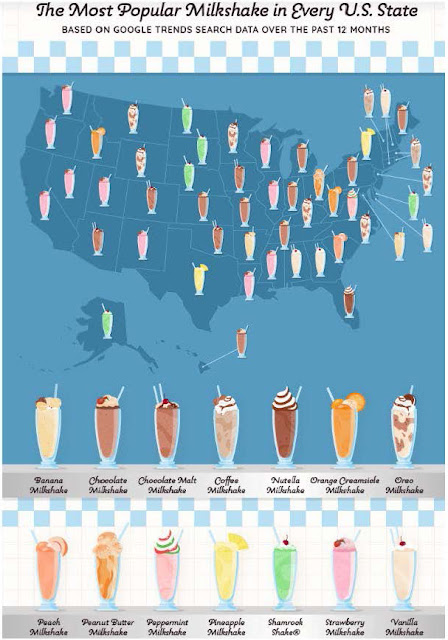
Source: RTA Outdoor Living

(click on infographic to enlarge)

It’s the dog days of summer. That means we are eating lots of ice cream and milkshakes, with the latter being a safer way to consume this favorite summertime treat, as the high temperatures make a dipped cone a bit messy. 

Before we explore the importance of limited-time offerings (LTOs) and eye-catching packaging, here’s what you all have been waiting for: the most popular milkshake flavor in your state. 

RTA Outdoor Living, a custom prefabricated outdoor kitchens and cooking appliances supplier, investigated Google Trends data over the past 12 months for the most popular milkshake flavors in order to determine the top flavor in every U.S. state. The full results can be explored HERE.

Chocolate and vanilla lovers might be a little shocked when they see that the strawberry milkshake was the most popular milkshake across the country. The creamy blend of strawberries and ice cream was the number one milkshake in 10 U.S. states, while chocolate reigned in eight states. The Oreo milkshake was the third most popular, with six states naming it as their superior flavor. Another shake that broke the top five was the Shamrock Shake. The infamous green milkshake is a minty flavor that typically comes out once a year to celebrate St. Patrick’s Day. Maybe it’s the short timeframe and the feeling of needing to get it while you can that makes this shake so popular. 

That’s a perfect lead into LTOs. Limited-time offerings, often centered around flavors of a season, create an urgency to purchase because the product may not be available the next time you shop. Sometimes they are simply bizarre flavors that a marketer creates to draw attention to the brand. Whatever the reasoning behind the LTO, the package must get the consumer’s attention. It has to scream to them “TRY ME!”


DesignRush, a B2B marketplace that connects businesses with design agencies, recently published “10 Best Ice Cream Packaging Designs with Delicious Presentations.” You can view the entire report HERE

DesignRush agrees with my assessment of ice cream packaging. The company write, “Ice cream is an irresistible treat; it’s the very reason why brands package their creamy goodness in the most creative and visually engaging ways possible. After all, the packaging is not just about making a product look great. It’s all about selling an idea, a story and an experience that everyone can indulge in. Great ice cream packages should instantly give customers a visual representation of how the sweet treat would taste like.”

One of my favorite examples featured by DesignRush comes from the designer Simoneone who used illustration to create a pint container for Steep Creamery & Tea in San Francisco. The standout features are doodles with minimal text blocks and a simple black-and-white colorway on the container. Lids are plain, which is where the flavor is printed. The package got Steep’s ice cream into a take-home pack, which was essential during the pandemic.

“The graphics illustrate the brand’s journey. With this style choice, using a simple color palette complements the overall design. The entire illustration is black-and-white, which stays true to the doodle theme and keeps things clean and streamlined. The only color pop you’ll see is the green leaf on the logo, which draws the attention back to the brand name,” according to DesignRush. 

Let’s explore some recent LTOs in the freezer.

Graeter’s Ice Cream, known for its handcrafted flavors and Old World French Pot process, just released its fourth (of five) Bonus Flavors for 2022. Each Bonus Flavor remains a secret until the day it’s released. Consumers are made aware of the new flavors via broadcast media, social media, local scoop shops, the Graeter’s app and online store.

So far, Graeter’s fans have enjoyed Strawberry Cheesecake, Frozen Hot Chocolate and Churro Bonus Flavors this year. And now---drum roll, please—it’s Candy Bar Chip (pictured). This flavor combines rich peanut nougat ice cream with candied peanuts and milk chocolate chips. Each Bonus Flavor is an LTO. Once the flavor is gone from scoop shops and online, the flavor is retired for the year. 

Blue Bell celebrated July being National Ice Cream Month with Oatmeal Cream Pie, which is oatmeal-flavored ice cream with hints of brown sugar mixed with soft oatmeal cookies and a vanilla icing swirl. 

“We have taken all of the best parts of an oatmeal cream pie and combined it with our ice cream,” says Jimmy Lawhorn, vice president, sales and marketing for Blue Bell. “You immediately taste the sweetness of the brown sugar in the ice cream, but it is subtle. Once the vanilla icing swirl hits your taste buds, you know this is going to be good. The texture and taste of the soft oatmeal cookies tie it all together. It is just like eating a homemade oatmeal cream pie, but in ice cream form.” 

Also new from Blue Bell this summer is Strawberry Lemonade Ice Cream. The flavor is strawberry ice cream swirled with a refreshing lemonade sherbet sprinkled with lemon flavored flakes. 

McConnell’s embraces the pint package, especially for its LTOs. That’s because pints are a powerful package in the frozen desserts space. They command a premium and allow for consumers to try something new without the commitment of a larger-sized package. 

McConnell’s has a large mail order business and this summer the company offered the Vacation à la Mode bundle that included three brand new LTO frozen treats inspired by the sweet taste of summer vacation. The five pack included Pina Colada (fresh pineapple, coconut flakes and lime blended into rum-infused ice cream), Strawberry Daiquiri Sorbet (dairy free), Espresso Rumtini & Macadamia Nuts (coffee ice cream spiked with rum and paired with salt-roasted, Hawaiian macadamia nuts), Toasted Coconut Almond Chip (shredded coconut, toasted to caramelized perfection, crunchy, salt-roasted almonds, and bittersweet chocolate chips) and Passion Fruit Lemon Swirl (dairy free).

When it comes to LTOs in bizarre flavors, both Jeni’s and Van Leeuwen deserve standing ovations. This summer, Jeni’s introduced The Pool Collection. This series of five LTOs is described as “chill as a cabana in the shade and as refreshing as diving into the deep end.”

What’s on deck? Here’s the lineup:
  • Bombastix Sundae Cone ice cream is double vanilla cream with gooey fudge and chocolate-covered waffle cone chunks.
  • Butterscotch Popcorn ice cream is sun-popped popcorn ice cream with a butterscotch crunch.
  • Golden Nectar ice cream is golden sweet cream that tastes like a chilled summer chai (minus the tea) with firecracker-like snaps of aerated toffee candy.
  • Watermelon Taffy ice cream is uber creamy with the taste of tart candied watermelon.
  • Dairy-free Lemon Bar has a lemon, shortbread crust, and rich coconut cream.

Last summer, Van Leeuwen teamed up with Kraft Heinz to bring together two of life’s greatest pleasures: ice cream and macaroni and cheese. The LTO sold out online in the first few hours and did not last long in scoop shops. Continuing with the cheese theme, earlier this year, Van Leeuwen rolled out a pizza-flavored ice cream featuring a mozzarella base with tomatoes and basil. It was part of an exclusive launch at Walmart that also included mashups like Hot Honey (bits of honeycomb in a vanilla base with a hot honey swirl) and Planet Earth (blue spirulina and matcha green tea cake). This summer the company continued its relationship with Walmart with the launch of five new limited-edition flavors. The mashups included Grey Poupon with Salted Pretzels, Honey Cornbread with Strawberry Jam and Espresso Fior di Latte Chip.  

“These pints offer something delicious for every member of a household, whether they like their desserts savory or sweet,” says Ben Van Leeuwen, co-founder and chief executive officer. 

Now go cool off with some ice cream!


Friday, July 15, 2022

IFT FIRST: A New Generation of Food Innovators to Feed The World


The Institute of Food Technologists’ (IFT) in-person annual convention took place this week in Chicago after a two-year pandemic hiatus. And let me tell you, it was nothing like the pre-pandemic IFT events. Another positive change to come from the virus. Thank you!

It was not your daddy’s IFT, as someone described it. It was noticeably void of retired academics, even current professors and their students, especially from abroad. The expo and education program was mostly business focused, and this was well received by exhibitors and industry attendees. The show lived up to its rebranding of “IFT FIRST--where Food is Improved by Research, Science and Technology.” Kudos to the “meetings team” with this new and improved lineup of content and programming. 

The energy and change quickly became apparent at 8:15am on Monday when Walt Whitman and the Soul Children of Chicago performed at the first of three daily keynote presentations. They got attendees to stand up, clap and even wiggle a bit to Pharrell Williams’ Happy song. (I did it!)

Please watch this 23-second VIDEO to get you charged up. 

The conversation at this first keynote centered around  “Should We Eat More Processed Foods?” There are two sides to this story when you consider that new technologies enable formulators to create foods that can’t be made in home kitchens, foods that are far from the junk food many categorize as processed foods. (I plan to write my July 19th Food Business News column on this keynote. I will share the link next week.) But in a nut shell, advocates say “a substantial increase in food processing is the best way to feed growing human populations while also reducing food waste. We should trust and invest in food technology that can make our global food supply healthier and more sustainable, including highly or ultra-processed foods.” Opponents argue that “these kinds of foods are often less nutritious, and are commonly linked to adverse health indices, particularly when it comes to ultra-processing.” Stay tuned…



Tuesday’s morning keynote panel discussion—R&D at the Edges of Human Experience—included current and former food science teams from NASA. They discussed the need for advanced technologies to better understand the role of food in the life of an astronaut and why human travel to Mars won’t happen until technology is available to feed them. 

“Food is so important. It’s not only sustenance. It can be life support,” said Scott Parazynski, a panelist and former astronaut. “It’s also a bridge between cultures, and it’s a tie to home.”

He pleaded for innovators to develop products that replicate the tastes astronauts crave from space. But that’s just one small problem for mankind. To get to Mars, there’s a lot more to consider in terms of nutrition. 

Panelist Michele Perchonok, a past IFT president who managed the NASA Space Food Systems Lab before her retirement, identified some of the challenges of space food development. In addition to safety and preserving nutrient density, shelf life is paramount, as well as minimizing packaging waste. 

It will be about a six-month journey to Mars. Then there’s about a two-year stint exploring the planet followed by a six-month return trip. With current technology, feeding a crew of six for three years would require more than 26,000 pounds of food, of which 17% is packaging waste. Further, the shelf-life requirement is more than three years because it is impossible for the vehicle transporting the astronauts to also transport the food. There will be about a six-month supply on their ship, and the rest will have to be pre-positioned on Mars prior to takeoff. And jokingly, she said, they have to know Martians won’t take it. But seriously, she explained, it has to be pre-positioned safely so that it is available when the astronauts arrive.  

Food scientists have a major role to play in advancing space food product development, according to Dorit Donoviel, executive director at the Translational Research Institute for Space Health, who moderated the panel. “We’re looking to you,” she said. “We’re here to ask you to please engage and help us solve these problems.”

These needs put a whole new perspective on why advanced technologies—everything from bioengineering to 3-D printing to cellular meat—are important. The beauty of all this work by NASA is that it can be adapted to food production on Earth and help feed the growing population. 

But to get there, thinking out of the box is paramount. That brings me to Wednesday morning’s final keynote that left attendees eager to get back to the lab. “Cultivating Curiosity: The Key to Unlocking Innovative Solutions to Complex Problems,” was addressed by Evette Cordy, CEO of Agents of Spring. She explained that organizations are often too focused on the short term and then jump quickly to provide solutions. Think of how so many of you carelessly jumped on the high-protein ice cream category when you felt threatened by a few players. It’s sort of the same with plant based right now. 

“…what is the customer problem you are trying to solve?” asked Cordy. “That is why we must first learn to problem find before we problem solve. Curiosity is the tool we can use to solve our most problems.”

Cordy led attendees in exercises to assess the type of mindsets they have. She then explained how developing those mindsets can improve curiosity.
The “zen master,” for example, is present and in the moment. “If your mind is empty, it is always open to anything. It is open to everything.” Then there is the “novice” vs. “expert” mindsets. 

“We need to step out of our ‘expert’ mindset, which is ego-driven, as well as guarded,” said Cordy. Conversely, the novice mindset defers judgement, is open, and seeks the unknown.

The “sleuth” mindset is someone who listens with both their ears and eyes. It is also someone who doesn’t follow along with the crowd. A study found that, when in a group setting, 41% of people conform to the opinion of the group rather than standing by their own opinion. This is not how you innovate!

“Don’t blend in, stand out. Break the rules, and live outside your comfort zone,” Cordy said. (Woo hoo! That’s been my mantra my whole life.) 

This is much like the “playmaker” mindset. Stop fearing play and looking silly. These qualities provide a gateway to curiosity through experiences.

Lastly there’s the “interrogator” mindset. This is someone who gets to the heart of why people do what they do. An interrogator has open body language and tone, which others find inviting. 

“It’s not about following a script,” said Cordy. “It’s about digging around to get to peoples’ underlying needs.”

These mindsets help cultivate curiosity. Most people spend 47% of their waking day thinking about something while they are doing something else, according to Cordy. In addition, employees receive a number of interruptions per day. When they are interrupted, it takes an average of 23 minutes to get back to what they were doing. To innovate, this must stop. 
“If we are busy and not even focused on the task at hand, how can we have room to try anything new, let alone find solutions to our most valuable problems?” 

And that brings me to the THREE KEY TAKEAWAYS FOR DAIRY FOODS INNOVATORS. 

1. Stop replicating. Yes, plant-based was a big buzz at IFT FIRST, and in my eyes, the concepts that did not try to directly replicate real dairy or real meat were the big winners. The world does not need any more plant-based cheddar or mozzarella. Please trust me on this. Take it to the next level. Cheesy-like crisps, for example, based on plant protein, but similar in crunch, nutrition and taste as baked cheese snacks. They do not need to be called plant-based cheese snacks. Give them a new name. 
Here’s something to think about. Hummus does not call itself a plant-based dip, nor does peanut butter call itself a plant-based protein spread. 

Here’s a great example of thinking outside the box. Salt & Straw, the Portland, Ore.-based, family-run ice cream company, is launching Culinary Perfume. To celebrate National Ice Cream Day on July 17, Salt & Straw is inviting customers to try their latest creation by offering a free complimentary spritz of Culinary Perfume at all 27 scoop shops.

“We’ve been stuck on sprinkles and whipped cream for the past 100 years. This is a new frontier, trying to figure out how to personalize your ice cream that completely plays into your senses,” said Tyler Malek, co-founder and head ice cream innovator at Salt & Straw. “I’m fascinated with the fact that you can’t actually smell ice cream and that seemed like too big of an opportunity to just let lie. As we’ve learned and tested ice cream flavors over the last 12 years, I have fallen in love with the way all of your senses interact with a food experience, and we are really excited for everyone to try it.”

Research suggests that up to 80% of our eating experience is based on smell, and yet ice cream does not release a scent. The ingredients within the frozen treat might be fragrant but, at such low temperatures, the chemicals that would normally make our olfactory senses sing are essentially frozen in ice. As the ice cream melts on our tongue, these flavors are released.

Enter Salt & Straw’s new Culinary Perfume, an edible fragrance created to spray directly onto ice cream to enhance the tasting experience by adding the crucial sensory element of smell. Salt & Straw’s latest innovation encourages consumers to explore customization unlike ever before. With three editable scents and countless ice cream flavors, the possibilities of combinations are endless.

The scents are: A Cloud of Cocoa (combo of smoky warmth with malty cocoa), A Plume of Blooms (honeysuckle and jasmine) and A Swoon of Citrus (juicy, tart citrus is balanced by an herbal nuance).

For dairy innovators, it’s time to think out of the “standards of identity” and create new concepts in the dairy space. There are numerous examples in recent months. Think noosa Cheesecake Bites, Nick’s Smak Swedish-style refrigerated low-net-carb, high-protein and keto friendly bars, and the many varied Clio Snacks bars. Link HERE for more info on these products.

Today’s blog sponsor, Agropur, showcased Cheesecake Bites at IFT FIRST. For more info, link HERE. That leads me into the second takeaway. 

2. Sugar reduction was big business at IFT FIRST, but I was so happy to see new approaches to doing it. The stevia market is overwhelming, I doubt anyone would disagree. And, consumers who have tried foods made with inferior formats of stevia are turned off. 

Exhibitors at IFT FIRST addressed this through other sugar-reduction technologies. Some are based on real cane sugar formatted into sensory-enhanced crystals, others are real cane sugar blended with fibers and natural flavors. Some are even based on dairy!  

Deproteinized whey, also known as whey permeate, is a concentrated source of minerals along with lactose. It allows for a reduction in total sugar and added sugars in many formulations, including those Cheesecake Bites. It’s also considered an upcycled ingredient, as it is the liquid stream that remains after whey protein ingredient manufacturing. In fact, you might even call it a double upcycled ingredient, as whey is the waste stream from cheese production and permeate is the waste stream of whey ingredient production. That brings me to the final takeaway.

3. Upcycled and sustainability stories dominated IFT FIRST. It’s not enough to be clean label, natural, organic or plant based. Just remember that going forward as you get creative in your product development efforts. 

Don’t forget to enjoy ice cream on Sunday, National Ice Cream Day. 


Thursday, June 23, 2022

The Whole Scoop: Ice Cream Trends and Disruptions in 2022


Photo source: The International Dairy Foods Association

All charts are sourced to: The International Dairy Foods Association's 2022 survey conducted with Research America Inc.

The International Dairy Foods Association (IDFA) hosted the 38th annual Capitol Hill Ice Cream Party on the National Mall on June 22nd after a two-year hiatus due to the pandemic. This summertime event—always held in June, National Ice Cream Month--is for members of Congress, their families, Capitol Hill staff and other special guests. IDFA members donated more than 200 three-gallon tubs of ice cream and 750 novelties to the event, which also featured sustainable cups and utensils to put a focus on the industry's sustainability goals. Representatives from IDFA member companies traveled to Washington, D.C., for the event. The group also met with members of Congress to advocate on key dairy industry policy priorities, including workforce issues, supply chain challenges and improving trade access for dairy exporters. 

“The return of the IDFA Ice Cream Party is the biggest scoop on Capitol Hill in years,” said IDFA President and CEO Michael Dykes. “We always say ice cream is as bipartisan as you can get.”

Here are some general ice cream stats: 

  • In 2021, ice cream makers in the U.S. churned out more than 1.3 billion gallons of ice cream.
  • The average American eats about 20 pounds of ice cream each year, or about 4 gallons.
  • Fortune Business Insights estimates the global ice cream market will reach $97.8 billion in 2027, up from $71.5 billion in 2021. This is a 37% jump in less than a decade.
  • U.S. ice cream makers contribute $13.1 billion to the U.S. economy and support about 28,800 dairy industry jobs, according to IDFA’s Dairy Delivers economic impact report.
  • The majority of U.S. ice cream and frozen dessert manufacturers have been in business for more than 50 years. Many are still family-owned businesses.


The Whole Scoop
Earlier this year, IDFA partnered with Research America Inc., to survey America’s love for all things ice cream and frozen desserts. This year’s survey is the most comprehensive to date, polling major national and regional ice cream makers and processors from IDFA’s membership (n=132), as well as hundreds of smaller scoop shops and retail ice cream makers from the North American Ice Cream Association, in addition to 1,002 American consumers. 

America’s favorite flavors depend on who you ask--ice cream makers or consumers—according to the survey. With both groups, Chocolate, Vanilla and Cookies N’ Cream remain the top-three flavors in the country, mirroring results from the 2017 IDFA-Research America survey.

Top-Five Flavors Among Ice Cream Makers and Scoop Shops:
  1. Cookies N’ Cream
  2. Vanilla
  3. Chocolate 
  4. Mint Chocolate Chip 
  5. Strawberry
Top Flavors Among Consumers: 


“America’s love for ice cream knows no bounds,” said Dykes. “Comforting and satisfying as an indulgent treat, ice cream production and consumption grew throughout the COVID pandemic and sales continue to set a blazing pace at grocery, scoop shops and corner stores.” 


Highlights from the survey include: 
  • Waffle cones beat out sugar cones 32% to 12% among consumers, but 37% of consumers prefer to eat their ice cream out of a bowl. 
  • Chocolate is the most popular topping sauce, beating caramel 26% to 18%. 
  • Nuts and sprinkles are the most popular dry toppings, 15% and 14%, respectively. 


  • 73% of consumers have ice cream at least once per week and two out of three consume ice cream in the evening. 
  • 84% prefer to purchase ice cream at the grocery store and eat it at home.


  • Almost half of consumers prefer half-gallon containers for ice cream from a grocery store; 23% prefer a pint. 
  • While ice cream makers say they are seeing increased demand for non-dairy ice creams and plant-based ingredients, consumers rank these at the bottom of the list for most-consumed types of ice cream and frozen desserts.
  • July is the busiest month for ice cream production when nearly three-fifths of all ice cream is produced, followed by June and May. 
  • Two-thirds of ice cream makers say they already use or plan to incorporate more sustainable packaging solutions.
  • And interestingly, processors say sandwiches are the best-selling novelty, but consumers say they like cones best. 


Five Innovators Disrupting the Category

1. Pretty Cool Ice Cream is a small handmade ice cream company in Chicago. By the time IFT takes place in a few weeks, there will be two locations—Logan Square and Lincoln Park—for you to visit. I promise, it’s worth the trip. 

The concept was co-founded by award-winning pastry chef Dana Cree, author of Hello, My Name Is Ice Cream. Pretty Cool Ice Cream specializes in hand-made frozen novelties—dairy and vegan—made by skilled artisans. They are individually packaged, with graphics created by local artists. Dairy-based innovations include Caramel Horchata Crunch, Mango Lassi and Peanut Butter Potato Chip. 

Photo source: Pretty Cool Ice Cream (above) Eater Chicago (below)

A number of flavors include extra dairy for innovative flavor twists. Examples include Goat Cheese Black Raspberry Swirl, Watermelon Buttermilk and Chicago Mix. The latter was inspired by the iconic caramel and cheddar popcorn mix of Chicago. This stick bar treat is made by dipping salted caramel ice cream in a cheese popcorn shell.

To connect with neighborhood families, when Winnie the Pooh! A Musical Stage Adaptation arrived in the Windy City, Cree developed the kid-sized Silly Old Bear Bar. It is vanilla bean ice cream dipped in a caramel shell with bits of crushed honey comb candy. 

2. The Musket Room in New York City has been a Michelin-starred establishment since 2013. Each week this summer, until the end of August, Executive Pastry Chef Camari Mick is collaborating with a local chef, bartender or food industry personality to develop a new hand-made ice cream sandwich. The event started with Chef JJ Johnson of FieldTrip in Harlem. He created ice cream inspired by jollof rice, with macaron cookies and popped rice. This was followed by Chef Stefano Secchi’s of Rezdora with her brown butter truffle and ricotta ice cream sandwiched between two amaretto cookies. 

Photo source: Musket Room

3. Krispy Kreme is shaking up the ice cream category with its new Original Glazed Soft Serve, a one-of-a-kind ice cream made with ingredients from Krispy Kreme’s proprietary and secret Original Glazed Doughnut recipe, including its iconic glaze flavor, as well as real whole milk. Even the toppings and inclusions are “original,” some made from dehydrated Original Glazed doughnuts. It’s now available in 10 U.S. markets in cups, shakes and waffle cones. 

4. The Princess Cruises gelato shops are now designated as Ospitalità Italiana. They are the first and only locations to offer an authentic Italian gelato experience outside of Italy.

The prestigious Ospitalità Italiana designation is issued by the Italian Chamber of Commerce committee, an organization of the Italian government, and confirms that every step of the gelato-making process meets or exceeds a strict set of standards as approved by official Italian auditors and experts, who review the process on a yearly basis. Only gelato shops that attain outstanding quality status are awarded the official Ospitalità Italiana certification. 

(Photo source: Princess Cruises)

Princess Cruises handcrafts its fresh gelato with Italian-certified ingredients and equipment each day in the pastry kitchens onboard the cruise line’s three newest ships. Corporate Pastry chef Eric Le Rouzic trained with Italian chefs at the Gelato Carpigiani University in Bologna and the Gelato Comprital Atheneum in Milano to master the art of making the product. 

According to legend, the recipe for gelato was popularized when architect Bernardo Buontalenti was asked to create a special confection for a member of the Medici noble family in the 16th century. Buontalenti mixed milk, eggs, sugar and extracts in a special machine surrounded by ice and salt, and egg cream-based gelato was born. While it’s creamy, authentic gelato has less butter fat and fewer calories than traditional ice cream. The authentic Italian ingredients are combined with Princess’ freshly sourced fruit and is made each day with whole milk. As a result, a scoop of its gelato is 80 to 100 calories. Guests can choose from a variety of flavors, including Fior di Latte (vanilla), Cioccolato (chocolate), Tiramisu, Nutella and Caramello Salato (salted caramel). 


(Photo source: 1-900-ICE-CREAM)

5. 1-900-ICE-CREAM creates and produces innovative ice cream flavors on a weekly basis. The schedule goes like this. On Monday, the staff identifies three to six new flavors for the week. Monday through Friday they make the ice cream in their factory in Kensington, Pa. As ice cream flavors are finished, they are delivered to nearby scoop shops that serve as their retail channel. Depending on available stock, they also ship nationally. (Note how lids state the date of production.) 

And here's my hometown bonus: The Rainbow Cone has been a Chicago favorite since 1926. It’s a stack of five flavors: Orange Sherbet, Pistachio, Palmer House (New York vanilla with cherries and walnuts), Strawberry and Chocolate. 
(Photo source: The Rainbow Cone)

The ice cream is sliced--not scooped--into a cone or a cup. This almost-100-year old family-owned company has more trucks and kiosks around Chicago than ever before, including this truck at (free) Lincoln Park Zoo located along the lakefront, not too far from where many IFTers will be staying when in town for IFT First, July 10 to 13. Hope to see you there.  


Friday, June 17, 2022

Insights from Fancy Food Show 2022 Held Smack in the Middle of Dairy Month, and More!


Photo source: DAH!

I’m coming off of five days, four nights in New York City attending the Fancy Food Show, which included dining with actress and author Padma Lakshmi, who is the board advisor and brand partner for DAH! India Inspired Yogurt. This was followed by Marcum’s Food & Beverage Summit where “real” dairy innovation proved to be of high interest to many attendees and investors. And then, walking back to my hotel for a needed night’s rest before an early flight home, I spontaneously was gifted a 5th row ($250) ticket to see Sarah Jessica Parker and Matthew Broderick on Broadway in the remake of Neil Simon’s Plaza Suite. (I did not get that sleep.) Then the return to Chicago Thursday morning included almost four hours stuck on the tarmac at LaGuardia airport because of storms. On the plus side, I had an amazing pro-dairy conversation with my seat mates, followed by the very enlightening “How do you milk a microbe?” webinar from the non-GMO Project. Yes, I am exhausted.


Takeaways from the Fancy Food Show

It was wonderful to see so many of you at the Summer Fancy Food Show. The annual event, held June 12-14, marked a return following a two-year hiatus and featured more than 1,800 exhibiting companies. Please read THIS impressive summary of highlights from the show written by my Food Business News colleague Monica Watrous. 

Topline: The specialty food market, which encompasses products with limited distribution, gourmet ingredients and elevated preparations, reached total sales of $175 billion in 2021, up 7.4% from the prior year, according to the Specialty Food Association. Dairy, in its many shapes and formats, is one of the largest sectors of the specialty food industry. Cheese, creamer and frozen desserts lead the way, with yogurt, butter and refrigerated desserts gaining traction.  

The annual State of the Specialty Food Industry research presented at the Fancy Food Show included a closer look at specialty perishable sales, which are expected to reach nearly $33.5 billion in 2022. Perishables (random weight, non-UPC’d specialty items sold in a bakery, cheese, deli, meat and seafood sections) are critical to specialty, both in scale and as a good source of growth. For specialty retailers, perishables departments represent enticing, creative merchandising and execution. Plus, they are important centers for emerging food and beverage innovation that may eventually migrate to packaged goods categories. 

After being challenged by shutdowns during COVID, perishables can expand to better meet consumers’ needs for hot, ready-to-eat, or take-home, heat-and-eat fresh meals; meal kits; sandwiches, side dishes and salads; breakfast foods; confections and desserts; and hot and cold beverages. Dairy’s presence in many of these concepts is strong. 

The research also showed that BIPOC (black, indigenous and people of color)- and women-owned brands are in demand by consumers and retail buyers and foodservice operators are seeking out incubators, brokers, business-two-business wholesalers and distributors, and even sales consultancies that specialize in supporting and growing these brands. Showcasing these brands has moved far beyond seasonal features to align with observed months like Black History or Women’s History, and will continue to expand. 

In case you missed Tuesday’s Daily Dose of Dairy—Painterland Sisters Skyr Icelandic-style Yogurt—here it is again. These sisters, their product and their mission speak to the specialty food consumer and the future of dairy. They remind me of the early days of Stonyfield yogurt. Their enthusiasm is contagious and should inspire us all. 


Picture are the Painter sisters—Hayley and Stephanie—who grew up on a 4th-generation Pennsylvania family farm. Together the two are bringing to market whole milk organic skyr yogurt that they describes as “for your family’s health, for the future of family farms like ours, for the planet, for women in business and more.”
Made from whole milk, each 5.3-ounce cup packs in up to 18 grams of protein. The product is lactose free (through the addition of lactase) and delivers billions of probiotics, including BB12, the world’s most clinically documented Bifidobacterium probiotic strain. The yogurt is sweetened naturally using a touch of cane sugar and contains no fillers. The initial rollout is in five varieties: Blueberry Lemon, Mixed Berry, Strawberry and Vanilla Bean. The company uses ultra-filtered milk that is gently heated and minimally processed. 

“We believe in regenerative farming, family togetherness, hard work, good food and simple living,” said Hayley at the Fancy Food Show. “When you buy organic skyr yogurt from Painterland Sisters, you don’t just get a healthy, delicious, convenient, sustainable snack, you join a sisterhood.”

My biggest take-away from the Fancy Food Show was also trending at the International Dairy Deli Bakery Association’s annual exposition the previous week. It’s terroir. From the word terre, meaning land, terroir is a French term that describes the most vital components in French food and drink production. It’s a reference to everything from the soil to climate to sunlight. It’s a description of the quality of the environment where a crop is grown, essentially, everything that makes up the surrounding habitat and gives it its unique character. The importance of terroir is most prevalent in the wine industry.

The Americanized version is most apparent with cheeses touting they are made from either California or Wisconsin milk. But our terroir twist includes animals and how they are raised. It also includes the story behind grains, nuts, seeds and produce. There’s a lot of opportunity in this space and it will continue to evolve as supply chain issues and food economics dominate conversations. 

That’s a great lead into the webinar: How Do You Milk a Microbe? With June being Dairy Month, the Non-GMO Project felt the time was right to bring “animal-free” dairy proteins into the spotlight. The organization, along with American dairy farmers, are concerned that many shoppers, food manufacturers and retailers are unaware that these “animal-free” dairy proteins are actually unlabeled and unregulated GMOs. 

You can view the webinar HERE.

“Synbio dairy products are GMOs because they are created by genetically engineering a microbe like yeast to excrete milk proteins,” said Megan Westgate, founder and executive director of the Non-GMO Project. “That’s the definition of unnatural.”


During the webinar she explained, “Any sincere conversation about food in the United States starts with an acknowledgment that our food system has been built on stolen land and slave labor. The colonial mindset behind these atrocities is still alive and well.

“That mindset is based on the misconception that somehow human beings are separate from nature and each other and the life is a resource to be extracted and manipulated,” she said. “And that’s the same mindset behind all genetic engineering and it is not going to get us out of the mess that human beings are in as a species at this moment in time on planet earth.”

Wow, this is powerful stuff and I encourage you to read more. She quoted Einstein:

“You can’t fix a problem with the same consciousness that created it.”


“Fortunately, we are part of nature and as such every single one of us has an innate capacity to remember how to belong to earth,” said Westgate. 

She provided data that showed “consumers want products that are natural and not genetically modified. But it is becoming more challenging to provide those products because of the proliferation of new GMOs that are not being tracked or regulated.”

The non-GMO Project prohibits the use of synbio dairy, also often referred to as precision fermentation, in its verification process. The Project acknowledges that many of the companies developing these new GMOs have good intentions, such as climate change and animal welfare, but they don’t provide transparency. And, there are so many unknowns.  


Synbio dairy could also put traditional dairy farmers and farmworkers out of business.


“GMOs pose a threat to the land, environment, and family farms, and I don’t think GMOs have a place in our farming and food system,” said Albert Straus, founder and CEO of Straus Family Creamery. “As the first Non-GMO Project Verified Creamery in North America, we are committed to organic farming. 

“Organic farming practices protect the environment, address animal welfare, build soil health and provide nutritious food while revitalizing rural communities,” Strauss said. “Organic dairy farming and milk production are the foundation for a carbon-neutral dairy farming model that we’ll achieve on my farm by 2023.”


The speakers emphasized that there are “real and proven benefits of traditional, organic, regenerative dairy created in cooperation with nature.” 

Alan Lewis, TEDx speaker, and head of government affairs and food and agriculture policy for Natural Grocers, said that almost all of the labs producing synbio dairy are private and funded by private investors. This leads to many secrets in the patents and allows companies to reveal only what they want revealed. He compared synbio dairy to the way Winston Churchill once described Russia: “a riddle, wrapped in a mystery, inside an enigma.”   

Straus ended the webinar with something we must all remember and live by: “Livestock have an essential role in reducing climate change.”

Now, onto the few lighter moments this week. Thanks to my friends at DAH! for including me in the dinner at Semma Southern Indian in the West Village. The multi-course menu featured DAH!’s signature lassi probiotic-rich smoothie incorporated into dishes created by Chef Vijay Kumar (pictured with Padma Lakshmi). Her Hulu show--Taste of The Nation--just received a James Beard award this week, the day before she accepted three honors at the Critics’ Choice Awards. 

And yes, I was a bit starstruck with Sarah and Matthew. 

Dairy Innovators: Private Kitchen Pitch Contest presented by Midwest Dairy

The Hatchery Chicago has partnered with Midwest Dairy, a non-profit supporting farmers to highlight dairy products, to offer the Midwest Dairy Kitchen Pitch Contest. If you use 25% or more cow’s milk dairy in your ingredient base (made from a cow and can include milk, cheese, yogurt, butter, etc.), you are invited to apply. Applications opened June 1, 2022, and will close June 30, 2022, end of business day (5pm CST). The official rules are HERE

The Hatchery Chicago supports emerging brands with access to kitchen space and wrap-around services to support their business growth. Midwest Dairy represents 4,600 dairy farm families to 39 million consumers working on their member’s behalf to build dairy demand by inspiring consumer confidence in products and production practices. Midwest Dairy is funded by farmers across a 10-state region, including Minnesota, North Dakota, South Dakota, Nebraska, Iowa, Illinois, Missouri, Kansas, Arkansas, and eastern Oklahoma. 

One winner will receive six months of free rent in one of The Hatchery’s private commercial kitchens along with other startup support. Apply HERE.