Growth Summit 2023 was held this week in Las Vegas. It’s an annual event of what once was IRI, but now, after joining forces with The NPD Group, is Circana. “Identifying and Closing Consumer Benefit Gaps” was a session on Day 2 of the Growth Summit. Speakers used fluid milk as the example to show how Circana’s National Eating Trends’ in-home consumption data, when used in conjunction with Circana OmniMarket retail sales data, identifies gaps in consumer behavior, creating opportunities for product innovators. And for dairy, boosting protein and fiber contents presents a noteworthy innovation opportunity.
Before I provide some of Circana’s insights, I must share this recent personal experience at my neighborhood Aldi. While picking up a few staples and browsing the AOS (If you don’t know what the acronym stands for in relation to Aldi, you are missing out on so much fun!), there was a 25-something bulked dude shopping who asked me if I thought the avocado he was holding would be ripe enough to make guacamole the next day. It was. I then complemented him on the three gallons of 2% milk in his cart and asked if that was all for him. His response, “I cannot get enough of this stuff. That’s about a gallon a day just for me.”
I kid you not. This dude was for real and I left Aldi with a big smile on my face. (OK, I was also a little flattered he asked for my opinion of the avocado.)

Two days later I boarded a plane for the Growth Summit. When I left Vegas, I was also smiling. I only lost $10 on slots (I was up to $30, then blew it all.) But it was the session that showcased dairy, along with all the amazing dairy marketers in the room (Nice chatting with the DFA team. Wish I could have met more dairy folks.) that had me walking on cloud nine.
John Crawford, vice president of client insights-dairy at Circana provided data that showed what we all know: Milk volume sales have been declining. But consumers have not abandoned beverages nor have they abandoned dairy.
“There are growth pockets in dairy milk with successful claims,” he said. “Milk with protein-, no/low sugar- or lactose-free claims have all experienced growth the past five years. But those pockets are small.”

Indeed, value-added dairy milk is growing but it is not offsetting traditional volume declines. Value-added milk (and other dairy) is where the most innovation opportunities exist.
Darren Seifer, executive director--food and beverage industry analyst at Circana, took the stage and added that beverage consumption increased this past year. The data showed that there were about nine billion more beverages consumed in 2022. The data also showed that like milk, bottled water is predominantly consumed at home. This suggests the need for more marketing around milk’s hydration properties.

What was quite interesting is that data also showed that plant-based milks are more reliant on host foods. Only a third of plant-based milk is consumed as “a glass of milk,” whereas almost half (48%) of dairy milk is consumed as “a glass of milk.” This means we need to add more value to that milk so more consumers drink a glass or two a day, so that they reach for the gallon and pour a glass of milk instead of grabbing a bottle of water.
Using Circana data, Seifer identified the benefit gaps for milk.
“Forty percent of adults are seeking more protein in their diet, and 33% are seeking more fiber,” he said. “Ironically, most are getting enough protein already, but that is not the case with fiber.”

Fiber remains a nutrient of concern. It’s the forgotten nutrient. This presents an opportunity for dairy marketers--milk, yogurt and even ice cream—to boost fiber content and promote its presence along with the high-quality protein inherent to dairy milk (and missing in that plant-based stuff).
At the same time that consumers want more protein and fiber, they are trying to avoid sugar. This is another innovation opportunity, especially in the flavored milk sector.
My friends over at Mattson Food Lab concur that there is a big focus on sugar reduction in 2023, by both formulators and consumers. Mattson Food reports:
“An evolving preference for less-sweet options is one outgrowth of the trend, the other a plethora of technology solutions that facilitate current sweetness levels with fewer grams of sugar. After decades of American brands adding sugar to everything, we’re now formulating without sugar, removing it from existing products and replacing it with fiber, the forgotten nutrient. The average American consumes only half of what the experts say is needed for good health. We expect to see far more fiber claims in the near future, driven by prebiotics, and the normalizing of talking about what has euphemistically been called regularity.”

This is supported by findings from the International Food information Council’s 2022 Food and Health Survey, which identified the trend of “Drinking Our Way to Wellness.” According to the survey’s findings, wellness will continue to be top-of-mind for many consumers, but it will increasingly come in liquid form, driven in large part by consumers looking for added benefits like energy, mental health and gut health support.
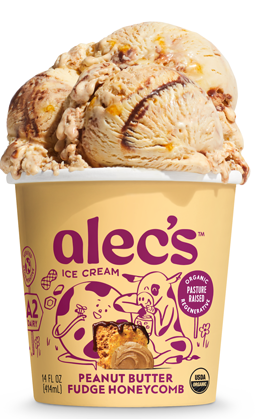
In regards to gut health, IFIC reports that while many consumers are focusing on what foods can do for their minds, others are interested in what they can do for their guts. Probiotics have been steadily growing in popularity, with digestive/gut health being the third most commonly sought-after benefit among Americans. Don’t expect that interest to wane in the coming year, and expect to see them more and more beyond the yogurt section, as probiotics are increasingly being added to non-traditional foods like chocolate, ice cream, juices, sauces and even nutrition bars.
Similar to consumers’ pursuit of energy benefits, beverages are also viewed as a delivery system for probiotics and prebiotics. According to IFIC’s 2022 Consumer Insights on Gut Health and Probiotics Survey, of those who try to consume probiotics, 25% say they commonly seek them out in wellness drinks. Similarly, among those who try to consume prebiotics, 23% seek them out in wellness drinks.
Fiber, the forgotten nutrient, presents a great deal of opportunity for dairy foods innovation.

.jpg)


.jpg)







.png)