Friday, August 25, 2023

Keto Lives On: How Dairy Processors Can Capitalize on this Dietary Lifestyle


Today’s blog has an accompanying 10-minute presentation that may be viewed HERE.


Keto is the most popular type of diet in America these days, with 47 out of 50 states searching for terms related to it more than any other diet, according to data compiled by FitnessVolt. The Mediterranean diet and paleo diet rank second and third, respectively.

FitnessVolt analyzed numerous search terms related to various popular diets across every U.S. state to establish the nutrition plans that Americans are most interested in. Keto is number one. 

The keto diet replaces a large portion of carbohydrates with fats and proteins, with fats making up most of the diet. The benefit here is that you cut back on a lot of empty carbs, such as sugar and refined grains. This is one of the appeals of the word keto on food and beverage packaging. 


Dairy foods are well poised to play in the keto space, as they are naturally a source of fat and high-quality protein, and relatively low in sugars. Lactose, milk’s inherent sugar, can easily be eliminated through ultra filtration, or put to work to offer nominal sweetness through the addition of lactase.  

Formulators of keto foods are getting creative with ingredient technology to add color, crunch, flavor, texture and possibly even more fat and protein through the use of inclusions. With dairy foods, those bits and pieces provide excitement to milk’s whiteness. Think cottage cheese, dips, ice cream, yogurt and even cheese snacks and spreads. 

Mainstreaming of a high-fat, moderate-protein and very-low-carbohydrate diet started around 2018 after a number of celebrities endorsed this weight-loss plan. This eating regimen is one of many that today’s consumers follow, according to the International Food Information Council’s (IFIC) 2023 Food & Health Survey, which showed that the number of Americans following a diet or eating pattern in the past year jumped to 52%, from 39% in 2021 and 38% in 2019. The most common dietary lifestyles according to IFIC are high protein (18%), mindful eating (17%), calorie counting (12%) and clean eating (12%). One might argue that keto, an unregulated marketing term, is suggestive of high protein and mindful eating. 

Today keto (4%) is more popular than vegetarianism (1%) and vegan (1%), according to the 2023 IFIC survey. It’s no wonder why so many new products position themselves as keto or keto friendly. Just like vegetarian and vegan claims attract everyday consumers, the term keto on a package lures in shoppers who are looking to cut back on carbohydrates, specifically added sugars. 

Most marketers never imagined back in 2018 that the term would still be used on product packaging in 2023. Not only is it being used, its use is growing. Why? Here’s my theory. 

Claims such as high protein and low carb are legally defined. High-protein claims can be tricky, as protein quality is factored into the calculation. Low carb, too, is tricky business, as some keto shoppers are good with fiber carbs and inherent sugars. 

And lastly, while keto is suggestive of a high-fat food, really, be serious, few will be drawn to such a label claim. While high fat is what keto is all about, it is doubtful that many would want to load up their cart with foods making this claim. 

The word keto is an innocent suggestion of all of these claims and more. It’s a positive spin on a food item that makes one feel like it’s a smart choice. 

It is important to differentiate between keto and keto friendly, even though neither term is legally defined. Most keto dietary plans suggest a daily intake of less than 30 grams of net carbohydrates. Net carbohydrates, which is also not legally defined, refers to carbohydrates that the body digests and includes sugars naturally found in everything from fruit to milk, as well as caloric carbohydrates, such as wheat flour, oatmeal and other grains. To calculate the net carbs in a food, fiber and sugar alcohol content is subtracted from the total carbohydrate content. 

The keto weight-loss regimen emphasizes a diet that is about 70% fat, 20% protein, and 5% each simple carbohydrates and non-starchy vegetables. Foods labeled as keto tend to have such a composition. By eating only foods with these nutrient ratios, you are supposedly getting the fat you need to get thin through a process known as ketosis. 

Ketosis is when the body burns fat instead of carbohydrates for energy. The liver converts fat into fatty acids and ketone bodies, with the latter traveling to the brain and fueling the body, the traditional role of glucose obtained from carbohydrates. Burning ketones in place of glucose is associated with weight loss, reduced inflammation, sustained energy and more. Unlike other dietary lifestyles, the keto diet is not a long-term approach to eating since it does not provide the body with adequate, balanced nutrition.  But keto-labeled foods do help you keep carbohydrates at bay. 

Remember, keto friendly is not the same as keto. Keto friendly is typically more of a low-carbohydrate food. It can be consumed if you are following a keto diet without fear of surpassing that maximum of 30 grams of net carbs per day. 

To make keto and keto-friendly foods, you must eliminate most grains, fruits, sugars and starchy ingredients. Many dairy foods are well poised to play in this space. 

And how do you add color, crunch, flavor, texture and possibly even more fat and protein? Through inclusions. Nuts, for example, are a source of fat and protein. Fabricated flavored pieces can provide excitement to keto-friendly dairy foods when naturally sweetened with carb-free allulose, monkfruit or stevia. 


Friday, August 18, 2023

The Dairy Industry Cannot Turn Back Time: Gen Z May Drink Less Milk, But They Love Ice Cream


It’s a Toy Story 3 morning for me as my baby (21 years old) drives himself down to University of Illinois Urbana-Champaign for his final year of undergrad. Three years ago he started his Illini journey after high school prom, graduation and all that other senior year stuff got cancelled because of COVID. He started freshman year as an Illini confined to a two-person dorm room, taking meals remotely and classes online. 

He is the future. A resilient demographic—Gen Z—who is not tolerating the mess from previous generations. 

Older folks may not like the ways of Gen Z, but, well, you have no choice. They do not just accept what is told to them. They question everything more than any other previous generation. Why? Because they don’t trust the generations who got the world to where it is today. (Frankly, I do not blame them.)

And while it’s estimated that dairy milk consumption is down 20% among members of Gen Z, compared to the national average, it’s important to remember that they are not opposed to dairy milk…or cheese, yogurt, ice cream etc., it’s just that they like to mix things up. They like options. Their parents groomed them to be this way. (Blame yourself!)


The world also taught them during the past few years that life is too short to not enjoy food. And guess what, they enjoy dairy foods, in particular ice cream. 

Have you heard about their fascination with ice cream bread? While the three-ingredient recipe became a thing about 10 years ago, Gen Z now knows about it. On August 6, TikTok creator EtzooCrew posted a video with directions on how to make it.

“The Internet just told me to put ice cream, flour and baking powder in a baking dish with sprinkles on top and put it in the oven at 350 for 45 minutes. Let’s see what happens,” said EtzooCrew. After 45 minutes, EtzooCrew pulls out a fully risen loaf of bread. 

Within two days of posting, the video had 11.6 million views and 1.7 million likes. 

Here’s the beauty of ice cream bread. It’s a lesson in food science. Real ice cream is dairy milk, sugar and eggs. These are also common ingredients in quick breads, the chemically leavened baked goods vs. yeast-raised bread. And, only real dairy ice cream can make ice cream bread. 

If you are an ice cream marketer, it’s time to have fun with this. Ben & Jerry’s is on board. Check out the brand’s marketing materials HERE

Are there more opportunities like this for the dairy industry to capitalize on in order to keep Gen Z excited about real dairy? I am sure there are and the place to start is with dessert.


Megan Slagel, senior manager category lead-dots and pretzels, The Hershey Company, recently wrote that not only does Gen Z have an “especially strong” desire for dessert, they’ll choose a restaurant based on its desserts, and they’ll especially seek out certain kinds of branded desserts.

“Young consumers can’t get enough sweets,” she wrote. “Eighty-seven percent think about eating dessert at least once a day. Half of all Gen Z has skipped a meal altogether and just ordered dessert instead. For Gen Z especially, dessert is a big part of their social lives, their social media and their relationships.”

Dessert is not just a special treat. Dessert defines how they socialize, how they celebrate and where they choose to eat.

Dessert defines Gen Z, a demographic that is not intimidated by a movie about plastic dolls. In fact, this generation is helping Barbie, the first film directed by a solo woman, to break all types of box office records. Go, Barbie! Go!

Cold Stone Creamery partnered with Warner Bros. Pictures and Mattel to introduce a new Barbie-inspired flavor--pink cotton candy--and a cake. All That Glitters is Pink combines pink cotton candy ice cream, graham cracker pie crust, dance party sprinkles and whipped topping. For a party of epic proportions, there’s also the Best Cake Ever. Drawing inspiration from the film’s Best Day Ever themes, this statement cake is made with layers of moist yellow cake and pink cotton candy ice cream with dance party. 

Gen Z is accelerating the “humanization of pet food” movement. In response, Marcoot Jersey Creamery has added Dog-O’s Ice Cream and Ice Ice Doggy products to its pet treat lineup. Dog-O’s Ice Cream for Dogs comes in four flavors: Cheddar Bacon, Classic Vanilla, Peanut Butter & Banana Smash, and Pumpkin Crunch. Ice Ice Doggy treats come in Blueberry, Mixed Berry, and Peanut Butter & Banana. Both product lines are made with whey proteins.
 
Marcoot Jersey Creamery is owned and operated by seventh-generation dairy farmers. The company first entered the pet snack space with cheese chews in July 2021 as part of an initiative to achieve zero-waste operations.
The third fun new ice cream product is less about Gen Z, and more about their parents or grandparents. It’s Churn Back Time Cherlato Gelato from Cher. On July 23, the 77-year-old announced her newest business venture on Instagram by sharing this VIDEO, which shows off her own ice cream truck. 

According to a Cherlato Instagram post, the brand is a “culmination of a decades-long journey to find the freshest and most amazing ice creams in the world.” Cher teamed up with Giapo, an ice cream brand based in New Zealand, for the project and “brainstormed, taste-tested, experimented and eventually conceived Cherlato.”

Currently Cherlato is a single ice cream truck touring Los Angeles. This is likely the best way to connect with Gen Z, as most of them do not know Cher. 


Friday, August 11, 2023

Real Cheese Is Much More Than Delicious: Let’s start promoting protein content and the long-term energy from casein.


Thanks to the U.S. Dairy Export Council (USDEC) for hosting me on an 11-day, three-city (Tokyo; Ho Chi Minh City, Vietnam; and Seoul) speaking engagement to promote the use of U.S. dairy ingredients—mostly proteins—in food and beverage innovations. In each of these cities, I spent considerable time doing what I love to do: explore local supermarkets. While I found many interesting new products, some of which have already been featured as a Daily Dose of Dairy, I also made a number of observations, one being that the Japanese are more advanced than the U.S. in terms of communicating the power of dairy proteins. 


Take note of the protein powders on this page calling out the inclusion of whey proteins and casein, for immediate and long-term refueling. (Casein is a slower-digesting protein than whey.) They also have dairy protein mixes designed for women, picky-eater children, and tween and teen aspiring athletes. 


We know that dairy proteins are a powerhouse and we tend to focus on whey. But what about the power of casein, which is the majority of the protein in cheese? 


As cheese marketers and retailers dive into back-to-school promotions, it makes sense to take a step back and reevaluate how we market all those convenient cheese snacks in the marketplace, from strings to cubes to the newest concept from Kraft Heinz, Lunchables with Fresh Fruit.


After seeing a 500% increase in social media searches for “Lunchables with fruits and vegetables” in the past year, Lunchables with Fresh Fruit is debuting just in time for the back-to-school season. The product features the brand’s two best-selling Turkey and Ham Cracker Stackers varieties alongside apples, clementines, grapes or pineapple.


The new product line is set to deliver a delicious, wholesome and convenient solution to power kids forward throughout the day, while getting them accustomed to eating fruits by showing up prominently in a product they already know and enjoy. The fruit and crackers provide immediate energy in the form of carbohydrates, while the protein in the meat and cheese satiates and energizes during the couple hours after consumption. 

That’s important messaging that should be part of all cheese marketing. While there are no issues with Americans eating their fair share of cheese—per capita consumption has been increasing forever—there could be an opportunity to further grow the business in the snacking space.  

The average U.S. consumer ate about 40.3 pounds of cheese in 2021, according to the U.S. Department of Agriculture Economic Research Service. And, over the past decade, U.S. per capita consumption of cheese increased by more than five pounds. Basic dairy department cheeses, such as American, cheddar and mozzarella, in shred, chunk and slice format, remain the leaders in this space, but it’s the specialty and snacking items that keep shoppers interested. The latter has opportunity for the growth with the casein for long-term energy message. 

To read about the State of the U.S. Cheese Industry, as well as other categories of dairy products, link HERE to the analysis I wrote for Dairy Processing.


Friday, August 4, 2023

Frozen Novelty Innovation Knows No Limits


Cones, cups, push tubes, sandwiches, sticks, you name it. Frozen novelties, as the name suggests, are novel treats sold in the freezer. Currently they are a driver of retail ice cream category growth.  

It was not that long ago that the retail frozen novelty category was a shrinking business. Decades ago, frozen novelties were dominated by bold colors, cartoon characters and fun flavors…mostly designed for kids. But after moms started diligently reading ingredient statements and refusing to purchase products with artificial colors and chemical-sounding ingredients, product offerings started to dwindle. The category evolved to be mostly portion-controlled, low-fat “skinny” products designed for the mom rather than her kids.  

Times have changed, again, thanks to efforts by marketers focusing on frozen novelties as a snack, one that fulfills one or more snacking occasions. Today there are approximately 300 billion snacking occasions that occur annually in the U.S., according to Mike Gervasio, vice president, category leadership for PepsiCo. He said there are five need-states that run the spectrum, starting with emotional snacking and ending with functional snacking. Products that meet these need-states vary by daypart and demographic.   


At one end of the spectrum is “uplift.” This is all about snacks that help consumers feel excited and relieve boredom. Nourishment is at the other end. 

“This is about ingredients that matter,” he said. “Snacks to satisfy the body.” 

In between there’s indulgence, satisfaction and energy. That’s why snacking is one of the fastest evolving food and beverage categories, with consumers embracing more ways to snack than ever and innovation occurring at a remarkable rate.

This is fueling innovation in frozen novelties, an approximate $7.9 billion retail business that grew about 10% in dollar sales from 2021 to 2022, according to Circana data. Multi-serving packaged ice cream and like products, including the powerful pint container, is just a bit larger, with approximate $8.1 in retail sales, an increase of about 8% from 2021 to 2022, according to Circana data. 

Here are some noteworthy frozen novelties that entered the global retail marketplace this past year. 


Häagen-Dazs calls its latest creation “a cone for grown-ups.” Butter Cookie Cones come in four varieties. There’s chocolate ice cream topped with chocolate fudge sauce, chocolate curls and cookie pieces; coffee ice cream topped with espresso sauce, roasted almonds and cookie pieces; strawberry ice cream topped with white chocolate curls, raspberry sauce and cookie pieces; and vanilla ice cream topped with caramel sauce, chocolate curls and cookie pieces. The 3.7-ounce cones are individually wrapped and sold in boxes of four.


In the U.K. and France, the Häagen-Dazs brand teamed up with world-renowned pastry chef Pierre Hermé to develop a macaron ice cream range that comes in single-serve cups, pints and stick formats. 

The product features crunchy, chewy mini macaron shells in creamy ice cream. The range includes three different varieties: Strawberry & Raspberry, Double Chocolate Ganache, and Yuzu & Lemon.
“The collaboration with Pierre Hermé is a perfect way of showcasing the true craftsmanship of our brands. We are both passionate about innovating and re-interpreting classic favorites and creating extraordinary experiences for our consumers,” according to Häagen-Dazs Global Brand Director Manuel Garabato. “And what better way to do that than with a pure French ‘amour’ taste experience.”


Papila Collection brings L’Original Macaron Ice Cream to the U.S. The new hand-held frozen dairy dessert is exclusive to all Sam’s Clubs in the U.S. The product was developed with a French award-winning pastry chef and successfully launched with Waitrose & Partners in the U.K. in 2022.

“The biggest challenge was mastering the delicate balance of humidity transfer from the ice cream to the macaron shell, a feat that required exceptional skill and ingenuity to prevent sogginess,” according to the company’s website. .

L’Original Macaron Ice Cream comes in three varieties. They are: Chocolate (the macaron and ice cream are made with 80% cocoa gourmet chocolate), Raspberry and Lychee (the ice cream is a blend of juicy raspberries and fragrant lychees sandwiched between two raspberry macarons) and Vanilla (the macaron and ice cream are made with a premium blend of three vanillas sourced from Madagascar, Mexico and Tahiti). A box contains two of each variety.


Ferrero launched a trio of ice cream sticks in the U.K. under its Ferrero Rocher and Raffaello brands. The Ferrero Rocher Classic and Ferrero Rocher Dark ice creams are coated with crunchy hazelnut pieces and filled with hazelnut-flavored ice cream, while the Raffaello ice cream sticks feature a crispy coating with a sprinkling of coconut shavings and crunchy almond pieces with coconut-flavored ice cream.


Just in time for the Barbie movie debut, Spanish ice cream company La Menorquina partnered with Chupa Chups to develop a crunchy, pink ice cream cone. Inspired by the Chupa Chups strawberry-cream lollipop candy, the frozen novelty features a crunchy pink cone filled with Chupa Chups strawberry-cream flavored ice cream, filled with a strawberry sauce, encased in a white chocolate coating and topped with caramel chips and rounded sprinkles.


Private-label retailer Aldi continuously offers exclusive frozen novelties to its U.S. customers. Some recent offerings include Sundae Shoppe Stroopwafel Vanilla Ice Cream Sandwiches, which is vanilla ice cream sandwiched between two soft stroopwafels filled with dulce de leche. There’s also Sundae Shoppe Vanilla Ice Cream filled Cupcakes, Stracciatella Dipped Cookie Sandwiches and Donut Bars flavored Ice Dessert.


J&J Snack Foods has long played in the water ice space. The company is now in dairy-based frozen novelties with the rollout of Gelato Frozen Novelties. The gelato comes in three flavors--Italian Cannoli, Mint Chocolate Chip and Sweet Cream Churro--in 4-ounce cups and is sold at retail in boxes of four cups.

Well’s Enterprises got creative with Blue Bunny Stuffed Puffs. The first product to launch in this co-branding initiative was Blue Bunny Stuffed Puffs Scoopables, which combines Blue Bunny’s signature frozen dairy dessert with Stuffed Puffs’ Filled Marshmallow. There’s also ice cream sandwiches that feature Blue Bunny’s signature frozen dairy dessert with Stuffed Puffs’ Filled Marshmallow sandwiched between two graham cracker cookies. 


The company also teamed up with The Cheesecake Factory to offer At Home Cheesecake Ice Cream Bars in original and strawberry flavors. The stick novelties were inspired by the casual-dining restaurant chain’s iconic desserts.
Bimbo Bakeries and Sorrisa Group partnered to introduce Entenmann’s Ice Cream Sandwiches. The bakery-inspired novelties come in six varieties: brownie cookie salted caramel, chocolate chip cookie, chocolate chip and brownie cookie, chocolatey glazed cookie donut, chocolatey glazed cookie donut salted caramel and glazed cookie donut. The donut ice cream sandwiches feature a glazed, moist donut cookie rather than an actual donut.

Swedish business Nick’s entered the U.S. frozen novelty space with ice cream bars in seven varieties. They are: Choklad Choklad, Mint Choklad, Peanot Choklad Krunch, Salta Karamell Swirl, Strawar Swirl, Triple Choklad and Vanilj Choklad. Some of the varieties have a chocolate coating (120 to 140 calories), while others are uncoated and contain a swirl of variegate (50 calories). They are all low in net carbs and contain no added sugars. Key ingredients are cream, milk protein concentrate, whey protein isolate, allulose, soluble corn fiber, erythritol, inulin and EPG (modified plant-based oil).


Friday, July 28, 2023

The Pint Package Gains Presence in the Freezer with Unique Concepts


As we wrap up July, National Ice Cream Month, it seems appropriate to once again discuss the pint package in the freezer. Pints are a powerful package size in the world of ice cream. By definition, pints hold 16 fluid ounces of product; however, for economics, some “pint” packs contain a little less.

Regardless of how much is inside, pints cost more--often a lot more—on a per-ounce-base than larger-sized ice cream containers. In fact, numerous artisan, hand-crafted brands command more than $10 per pint at retail. Such smaller-sized containers, though more expensive, invite consumers to try something new. There’s less product, and thus less risk of waste if you don’t like it.

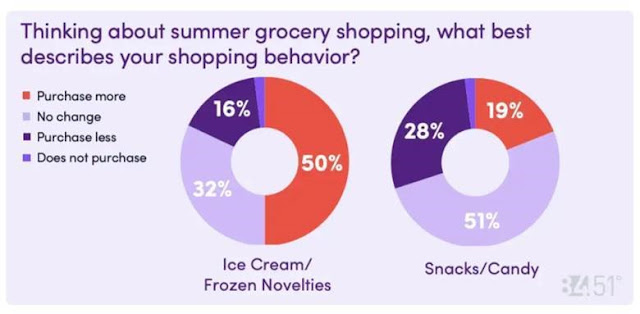
With concern over inflation at the lowest it has been in the past 12 months, shoppers are firing up the grill and stocking the freezer with their favorite summer treats. That includes ice cream! In 84.51’s July Consumer Digest, the Cincinnati-based data powerhouse provides real-time insights on consumer’s path to purchase and their key decision points, along with what’s in their summer shopping baskets. 


Half of shoppers surveyed said they are purchasing more ice cream than usual this summer. Ice cream is the top impulse buy for shoppers, with more than two out of three (69%) shoppers saying they are most likely to decide to purchase ice cream/novelties during their shopping trip. That’s more than snacks/candy (67%), fresh bakery (63%) and produce (45%). And more consumers are shopping in-store, according to 84.51. That’s a great opportunity for ice cream, which makes eye-catching flavor descriptions and cool package graphics on ice cream pints very attractive to the impulse shopper. 

Pints help ice cream manufacturers overcome formulation challenges associated with adding lots of inclusions, especially variegates and fruit sauces that impact freezing temperature and product integrity over shelf life. Pints also allow for unique formulations, such as layers and cores. This is something Ben & Jerry’s taught the ice cream industry when the brand started packing in chunks, chips, swirls and all types of flavorful ingredients that could cause the aerated ice cream mixture to collapse in a larger-sized container that would go in and out of the home freezer for multiple eating occasions.


Recent Rollouts

Just this week, legendary hip-hop artist Snoop Dogg, along with the Happi Co., broke into the frozen dessert aisle with Dr. Bombay Ice Cream. The seven-variety line of pints promises an experience that will help “free ya mind and rock your taste buds to the core.” Customers can expect a unique, yet nostalgic experience with Dr. Bombay Ice Cream. Snoop Dogg selected the flavors to curate an ice cream collection that allows them to find their own flava. Varieties are Bonus Track Brownie, Cocoa Cream Cookie Dream, Iced Out Orange Cream, Rollin’ In the Dough, S’more Vibes, Syrupy Waffle Sundaze Tropical Sherbet Swizzle.
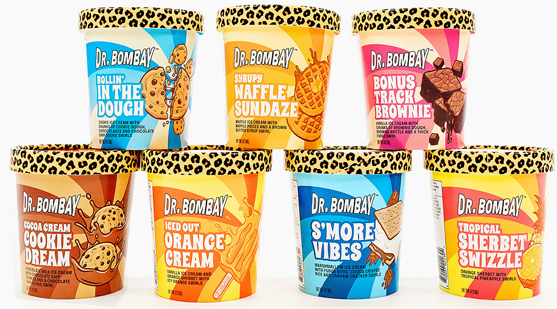


“Ice cream is more than just a snack to me; it’s a way to chill, relax and get happy,” says Snoop Dog. “That’s exactly what I want Dr. Bombay Ice Cream to do, bring a smile to your face and ease your mind. I’ve poured my heart and soul into perfecting these first seven flavors, and I can’t wait for my fans and the world to experience what I’ve created. Fans will also notice that my sidekick, Dr. Bombay, is the name, face and persona of this brand. That’s because he’s like a son to me and you always want your kids to be more successful than you are. That’s my goal in building this lifestyle brand, starting with ice cream.”

Enlightened, the first and largest brand within Beyond Better Foods, a New York City-based company founded by Forbes Under 30 alum Michael Shoretz in 2012, is shaking things up in the freezer with new Greek Frozen Yogurt Pints. Enlightened was one of the first light ice creams on the market. These new pints are an upgraded version with added texture, taste and nutritional value.

Enlightened’s new pints are made with premium Greek yogurt to deliver the perfect balance of sweetness and creaminess, while offering all the benefits of Greek yogurt, such as prebiotics and probiotics. With 150 calories or less, 8 to 10 grams of protein, and minimal added sugar per serving, these pints are both a delicious and nutritious treat.

“After seeing our customers’ response to our Greek yogurt bars earlier this year, we knew we had to try a pint version,” says Shoretz. “We strive to make the best-tasting low-sugar treats by constantly adapting and improving.”

The pints are launching in six varieties. They are Brownies & Cookie Dough, Chocolate Peanut Butter, Coffee Toffee, Kookie Dough, Mint Chip and Salted Caramel Cookie. Kookie Dough is uniquely colored blue by using the natural coloring spirulina. 

Gaining traction in the marketplace is Two Spoons, a brand started by two LA foodies who yearned to have premium ice cream on a low-carb, ketogenic diet. They spent two years testing more than 1,000 batches of ice cream until “we perfected our recipe.” Made with California dairy, combined with natural ingredients and homemade mix-ins, the slow-churned ice cream has only 6 grams or less of net carbs per pint. 
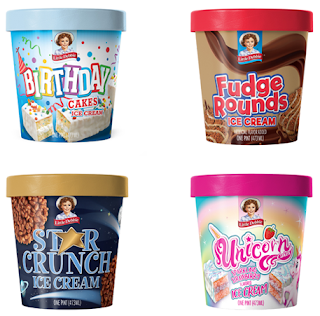
Family-owned brands Hudsonville Ice Cream and Little Debbie continue their collaboration with four new additions to their year-round line of snack cake ice cream flavors. They are Birthday Cake (sweet white cake-flavored ice cream with yellow cake pieces and colorful icing sprinkles), Fudge Rounds (chocolate ice cream with chocolate cake-flavored ice cream marbled together with soft chocolatey cake crumbs), Star Crunch (caramel-flavored ice cream with chocolate-coated crispies and a thick fudge swirl) and Unicorn Cakes (strawberry-flavored ice cream with yellow pound cake pieces and purple sanding sugar, finished with a blue icing swirl). The product is also expanding distribution to retailers nationwide. 

The four new flavors join the original Hudsonville Little Debbie ice cream line that launched in February 2022 exclusively at Walmart. Original flavors include Cosmic Brownie, Honey Buns, Nutty Bars, Oatmeal Creme Pies, Strawberry Shortcake Rolls, Swiss Rolls and Zebra Cakes.

Heritage Kulfi recently added two new flavors to its premium kulfi collection: Almond Blossom and Malai Sweet Cream. Kulfi’s origins are in the Indian subcontinent dating back to the 16th century, yet it remains challenging to find it in American supermarkets…until now. The line made its debut a few years ago with limited distribution. The original line includes Alphonso Mango, Cardamom Chai, Coconut, Earl Grey, Pistachio, Rosewater, Saffron and Vanilla Bean varieties. Heritage Kulfi is slow cooked and cooled overnight, yielding a dense, creamy texture and rich dairy notes. 

“I have always seen Heritage Kulfi as an extension of my own identity and a way to stay connected with my culture through food,” says Ahmed Mansoor, founder and CEO. “These quintessential kulfi flavors not only extend that opportunity to the entire South Asian community, but offer something authentic to anyone who appreciates delicious, well-made ice cream.”
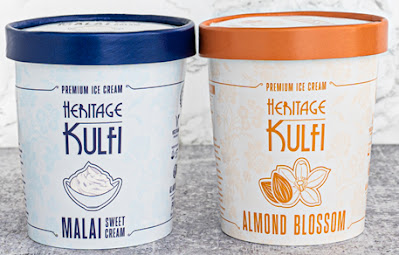
New Almond Blossom reflects almond’s key place in South Asian desserts like kheer (rice pudding) and burfi (fudge). This flavor is concocted with real California almonds and a touch of orange blossom for a bright, sunny finish. Malai Sweet Cream honors malai, the defining flavor of traditional kulfi. Malai is the cream that forms at the surface when milk is heated. High in milk fat with a distinctive cooked milk flavor, malai serves as the backbone of all Heritage Kulfi flavors. In traditional kulfi making, malai is the base upon which all other flavorings are layered, giving all Heritage Kulfi ice creams a consistently creamy and rich cooked-milk profile. For those seeking to explore kulfi for the first time, or for those already intimately familiar with the dessert eager for a nostalgic, authentic representation, the Malai Sweet Cream is the place to start.

Collaboration Drives Innovation with Midwest Dairy and The Hatchery Chicago

The Hatchery Chicago, a leading non-profit incubator dedicated to fostering successful food and beverage businesses on the West Side of Chicago, announces its collaboration with farmer-focused leaders, Midwest Dairy, for an opportunity aimed at emerging brands. The Private Kitchen Pitch Contest Presented by Midwest Dairy offers participants access to state-of-the-art, commercial kitchen space and comprehensive support services to fuel business growth. Two finalists will be awarded up to one year of private kitchen space at The Hatchery, enabling them to scale their businesses like never before.

In the previous year, five companies showcased their innovative ideas before a panel of judges, and Nikkita Randle’s Twisted Eggroll emerged as the winner, securing six months of rent-free private commercial kitchen space. Reflecting on the experience, Randle stated, “Midwest Dairy has been an absolute blessing for [us]. Having our rent eliminated for six months kept our business in a healthier financial state. We were able to send out more samples to potential stores with the funds we saved. Midwest Dairy has connected us to a different platform that will allow Twisted Eggroll to thrive moving forward.”

Natalie Shmulik, chief strategy and incubation officer of The Hatchery, says, “We take immense pride in partnering with Midwest Dairy for another exciting pitch contest to support the startup community. Midwest Dairy’s commitment to advancing innovation, as well as creating more diverse and inclusive opportunities for startups, greatly aligns with our mission. These sponsored kitchens give entrepreneurs the opportunity to push past barriers, launch unique concepts to market, and drive innovation in dairy and the industry as a whole.”

To be eligible for the Private Kitchen Pitch Contest Presented by Midwest Dairy, all applicant businesses must utilize 30% or more of cow’s dairy milk in their ingredient base. Current private kitchen tenants of The Hatchery Chicago are not eligible to participate. Prospective businesses and entrepreneurs are encouraged to apply HERE


Friday, July 21, 2023

IFT FIRST 2023: Was that stone soup I sampled?


It was great to see so many of you in Chicago this week for IFT FIRST. (Loved and appreciated all the hugs!)

Stone soup…do you remember that folktale?

This Eastern European tale starts with travelers arriving in a village with not much more than an empty cooking pot. The town folks are unwilling to share any food so the travelers start making stone soup. They fill the pot with water and a large stone, and place it over a fire. A curious villager asks what they are doing. After explaining they are making soup, the travelers suggest to the villagers that the soup could use some garnish to improve flavor. The villager, with hopes in having some of the soup, provides carrots. Another villager walks by, also curious, and decides to add some cabbage. The villagers come together, each adding another ingredient…all types of vegetables, along with meat, milk and butter. When the soup is done, the inedible stone is removed, and the new-formed community comes together over a tasty meal. 

That’s what IFT FIRST felt like this year. We were a community coming together to feed each other and the growing population. Congratulations on an expo done well!

It was not that long ago when you sampled prototypes on the IFT expo floor, you needed a spit up. This week most ingredient suppliers showed how they can work together, crossing party lines, so to say, and create bipartisan global food systems charged with feeding the world with nutritious and sustainable foods that also tasted great. 


(Kudos to today’s blog sponsor, Idaho Milk Products, for its great-tasting, shelf-stable vanilla protein shake and dairy protein-enhanced crackers. You can peruse and download an array of white papers and application sheets by linking HERE.) 

The term “global food systems” refers to the collaboration of all steps involved in food creation, from seed and livestock genetics to waste management. Sourcing sustainable ingredients is part of the formulating component of global food systems. There’s a great deal of opportunity to differentiate products in the marketplace through sustainable ingredient selection. This was very apparent at IFT FIRST. 

To read more about “Sourcing sustainable ingredients,” link HERE to an article I just wrote on this topic for Food Business News

To bring this topic close to home, here’s what Mars Inc., is doing. The company uses vanilla sourced from farmers participating in the Livelihoods Fund for Family Farming, an effort focused on improving the lives of vanilla farmers in Madagascar, to flavor Dove ice cream bars.

There’s a great deal of opportunity for dairy foods manufacturers to take a lead role in securing global food systems. Let’s not mess it up. We’ve done that in the past. School milk is the perfect example. 

When I was a little girl, school chocolate milk was made with the cheapest cocoa available. To make it palatable, it was sugared up. This continued for a long, long time and produced the current “not-milk generation.” The dairy industry needs to own that! We did it to ourselves. But, we are being given an opportunity to nourish children and not think about making a profit over what is “the right thing to do.” And in the long run, we will create a new “milk generation.” 

At IFT FIRST, sugar reduction was an overarching theme throughout the expo floor. Often times it was all about using higher-quality, clean-label ingredients to enable the need for less sugar in all types of applications, with “school” chocolate milk, as well as other flavored milks, ice creams, yogurts and dairy protein nutritional beverages being sampled. 

While IFT FIRST was taking place, Nestlé announced its breakthrough technology that reduces intrinsic sugars in key ingredients. This is what I am talking about!!!

Nestlé has introduced a versatile and cost-effective sugar reduction technology that can be applied across different product categories, with benefits beyond sugar reduction. It can also be used to produce low-lactose and skimmed milk-based products, while reducing total sugars.

Using an enzymatic process, it reduces intrinsic sugar in ingredients such as malt, milk and fruit juices by up to 30%, with a minimal impact on taste and texture. The sugar-reduced ingredients are then used in recipes for various products. There is no need to add sweeteners or bulking agents to replace the volume of the eliminated sugar.

When the patented sugar reduction method is applied to milk-based products, it also increases prebiotic fibers. First clinical studies have shown that these fibers can support the growth of multiple types of beneficial bacteria leading to a favorable microbiome composition in healthy adults.

This is a win-win opportunity for dairy foods innovation.

“Sugar reduction across our portfolio remains a top priority. This new technology is a true breakthrough, as we can reduce sugar without adding sweeteners while preserving a great taste, all at a minimal cost increase,” said Stefan Palzer, chief technology officer at Nestlé. “In addition, our scientists discovered that the sugar reduction generates prebiotic fibers that support the microbiome, which is an additional benefit. We are now accelerating the global roll-out across formats and categories."

The sugar reduction was first piloted in cocoa and malt-based ready-to-drink beverages in Southeast Asia and over the past year, Nestlé has already introduced it in factory lines for cocoa and malt-based powdered beverages, such as Milo across several countries across Asia, Africa and Latin America. Since 2021, the sugar-reduction technology has been applied to more than 200 000 tons of cocoa and malt-based beverages. The roll-out continues, and other product categories, such as dairy powders, will follow.

The development of novel technologies is part of Nestlé’s continuous efforts to improve the nutritional value of its products, while supporting responsible consumption as part of a balanced diet. The new sugar-reduction technology complements a wide range of existing solutions that Nestlé has developed over the years in collaboration with external innovation partners and suppliers. This includes natural sweeteners, sweetness-enhancing or bitterness masking flavors, as well as natural bulking agents such as fibers, cereals and tailor-made dairy and cocoa powders.

“We’re in a pretty exciting spot right now for dairy and nutrition,” said Miquela Hanselman, manager for regulatory affairs, National Milk Producers Federation, when discussing the Whole Milk for Healthy Kids Act, which will hopefully get passed by Congress this year. “National Milk is working with other dairy organizations to kind of make sure that we have all of our bases covered.”

We need all hands on deck to do this. It’s time to get creative. 

IFT FIRST kicked off on Monday with a keynote on “Creating a culture of innovation” by Duncan Wardle, former head of innovation and creativity at Disney. You can read more HERE.

He said it’s important that today’s leaders fuel the next generation of food innovators with the skills of cultivating creativity, intuition, curiosity and imagination. Why? Because these skills cannot be programmed. AI, as of yet, cannot replace these skills. 

There’s so much opportunity for the dairy industry to use ingredient technology to innovate, to keep dairy relevant. Be brave. 

“The opposite of bravery is not cowardice,” said Wardle. “It’s conformity.”

Here’s some positive messaging coming out of the Center for Science in the Public Interest on “Can you become more tolerant of lactose?” Link HERE.

And more great news from Progressive Grocer about “Winning over the ‘not-milk’ generation.” Link HERE.

Lynn Petrak writes, “Processors and industry groups are focusing on attention-getting marketing campaigns and product innovations, among other efforts, in the wake of shifts in beverage preferences. In a widely shared article earlier this year, The New York Times underlined market challenges, pointing out that younger Gen Z consumers have been dubbed the ‘not milk’ generation for buying 20% less cow’s milk than average consumers in 2022. Among other reasons, the story cited this demographic’s lactose intolerance rates, their concerns about the dairy industry’s impact on climate change, and the taste of the low-fat and skim milk that they were served in schools. Despite these and other issues, the article noted that the fact that milk is a naturally derived and nutritionally rich product can be an enticing proposition among all age groups.”

One of the biggest enticements is milk’s protein content, including its quality and completeness. Currently the Protein Digestibility Corrected Amino Acid Score (PDCAAS) is used to assess the quality of all protein. This score is an adjustment for the quality of the protein. It is based on the types and amounts of amino acids in the food as well as the overall digestibility. The PDCAAS values range from 0.0 to 1.0, where values are truncated to a maximum score of 1.00, which cows milk, casein, whey, eggs and soy protein all possess. Most plant protein sources have much lower values.  

The % Daily Value for protein is determined using PDCAAS. A yogurt containing 10 grams of milk protein may make an “excellent source of protein” claim. A cultured vegan product with 10 grams of protein from peas and nuts most likely only qualifies for a “good source of protein” claim, and when doing so, should not flag 10 grams of protein per serving, as this is misleading. 

Let’s get more creative with milk proteins. The time is now.





