Thursday, January 27, 2022

Ten Take-Aways from Dairy Forum 2022…for personal, professional and industry growth.


 It was wonderful to see so many of you at Dairy Forum 2022 to learn what is NEW, NOW and NEXT for dairy. This year’s program was all about reconnecting, inspiring and sharing knowledge and insights to push our industry forward toward bigger and better things. 

I attended many sessions and am sharing 10 messages I collected that resonated with me. I hope they positively impact you personally and professionally. 



1. The United States is poised to become the world’s dominant supplier of dairy products. This is possible because of all of us, according to Michael Dykes, president and CEO, International Dairy Foods Association.

“We are leading on sustainability, health and wellness, technology and innovation, attracting and retaining the best workforce, and growing our markets in the United States and abroad,” said Michael Dykes, president and CEO, International Dairy Foods Association. “While serious headwinds continue, the outlook for our industry is bright, thanks to your ability to embrace innovation, invest in growth and remain unified.” 

Hear Dykes’ big take-aways on the U.S. dairy industry in a 7-minute video HERE.


2. Our industry’s products are as varied as the consumer’s tastes and those tastes are changing rapidly, according to Christina Adams, partner, McKinsey & Company. It is a good time to take items out of your portfolio. Simplify it, then focus on innovation and put in new products. 

3. Trends are stupid and too late, according to Keith Schroeder, CEO, High Road Craft Ice Cream Inc. Most dairy industry business models are broken, as they focus on the commodity side of things and this fails to attract disruptive top talent to innovate. 

4. Millennials don’t want to be a head count. They want their head to count, according to Jim Donald, chairman of Albertson’s and former CEO of Starbucks, Pathmark Supermarkets and Extended Stay Hotels. Make them feel valued and provide them a sense of belonging. 

5. About 75% of millennials use social and environmental commitments to decide where they want to work, according to Ludovic Meilhac, partner, McKinsey & Company. 

6. Diversity is when you have more than one person in the room. Inclusion is the condition where “insider-ness” is maximized and “outsider-ness” is minimized. Inclusion is not the absence of exclusion; it is the intentional and deliberate acts undertaken to ensure others have a sense of belonging, according to Steve Robbins, diversity, inclusion and cultural competency expert. 

7. To be a modern food brand, you have to meet consumers where they are. You want to show up every day, according to Tressie Lieberman, vice president of digital and off-premise at Chipotle. Make the consumer feel known and valued. “Win today (the sale) and create the future.”

8. It’s time to focus on the future of food, not the past, according to Yin Woon Rani, CEO, Milk Processor Education Program.
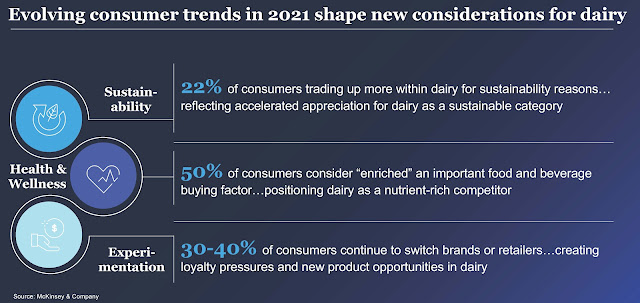

9. If consumers are willing to change, they expect you (the industry) to change, according to Ludovic Meilhac, partner, McKinsey & Company.

10. Anything is possible, just count 5-4-3-2-1, according to Mel Robbins, expert on leadership and defeating doubt, award-winning CNN commentator and best-selling author. Her “5 Second Rule” helps to get you out of the place between knowledge and action, which she calls the “knowledge-action” gap. It’s the place where you know what to do but can’t seem to make yourself do it.

You can learn more by watching her 45-minute Ted Talks. Here’s the LINK.

Together we can discover what is NEW, highlight what is NOW and co-create what is NEXT for dairy!






Thursday, January 20, 2022


Growing interest in immune health is forecast to continue to grow, according to the International Food Information Council’s online surveys completed November 4 to 9 (n=1000) and December 2 to 6, 2021 (n=1000). More than half (57%) of respondents expressed interest in foods or beverages that support immune health. 

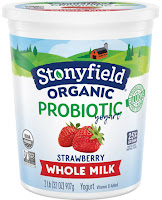
Dairy foods have long been a player in this space with probiotics in cultured dairy foods, with or without vitamin D fortification. It’s time to make sure you are adding these beneficial bacteria to everything from yogurt to kefir to cottage cheese. This includes frozen variations, as well plant-based alternatives.  

Probiotics has become a familiar term to many since the pandemic. Awareness of their immune benefits is rising and companies are exploring ways to differentiate in the competitive market. This might be through the inclusion of other recognized immunity-boosting ingredients or prebiotic fiber. Maybe it’s the inclusion of botanicals or nootropics. 


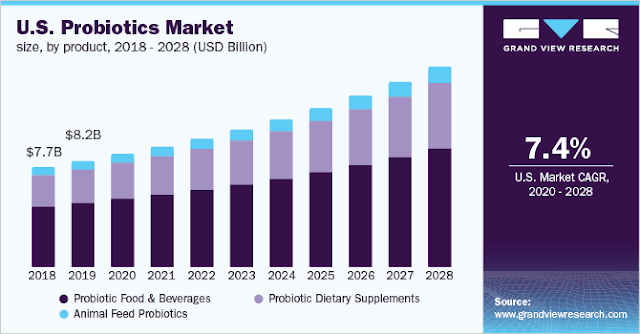
The global probiotics market size was estimated at $54.8 billion in 2020 and is expected to grow at a compound annual growth rate of 7.2% from 2021 to 2028, to a valuation of $95.3 billion, according to Grandview Research. It is driven by the growing consumer inclination towards preventive healthcare in conjunction with the development of efficient probiotic strains. 


Probiotics, when consumed in adequate amounts, have desirable effects on the body, such as improved gut health and reduced intestinal inflammation. Probiotics play a great role in preventive healthcare as they prevent the occurrence of diseases by strengthening the immune system. Thus, rising awareness regarding preventive healthcare is expected to boost the market growth over the forecast period, reports Grandview Research in “Probiotics Market Size, Share & Trends Analysis Report By Product (Food & Beverages, Dietary Supplements), By Ingredient (Bacteria, Yeast), By End Use (Human, Animal), By Distribution Channel, And Segment Forecasts, 2021 – 2028,” which was published in August 2021. 

“The market in the U.S. is characterized by the presence of demographic-specific probiotics, such as for geriatrics and genders. These niche markets have offered regional players the chance to adopt different strategies to enhance their product portfolio and maximize their resources. Excessive demand for probiotic-based food and beverage products as well as dietary supplements is expected to drive the U.S. market over the next few years,” according to the report. 

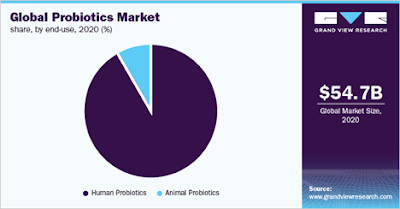
The human probiotics segment led the global market in 2020 with a revenue share of more than 91%, according to Grandview Research. On the basis of end use, the market has been broadly classified into human and animal probiotics. Technological advancements with respect to human-grade probiotics have broadened the scope of the products fit for human consumption. This is in reaction to the integration of novel food-grade ingredients in juices and other non-milk-based applications by prominent market players. 


Probiotics are a great way to keep consumers focused on dairy, where, despite all the marketplace challenges since the onset of the pandemic, demand has only kept growing. Per-capita dairy consumption in the U.S. is at the highest levels since 1960. Exports in 2021 are on pace for a record, too, reports the National Milk Producers Federation. 

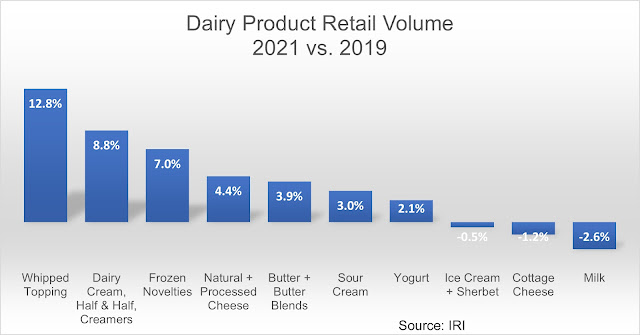
Retail sales figures from 2020 are now available from IRI. The data show that 2020’s gains in grocery-store purchases weren’t just a rechanneling of lost school and restaurant business toward at-home consumption. By comparing 2021 with 2019, we can see that dairy’s gains are built to last.

Retail fluid milk may have declined when compared to 2019, but this is attributed to consumers shifting toward dairy in other forms. Plus, don’t forget, kids are back in school and getting their daily dose of milk in the classroom. And, fast-food kids’ meals are back in style for quick meals between activities. Milk makes them better.


Did you know that my wonderful state of Illinois is helping kids get the nutrient-dense milk they need when they are eating out? Governor J.B. Pritzker signed House Bill 3490 into law on Dec. 10, 2021. It states that if a restaurant includes milk as a beverage in a kids’ meal, the drink must be dairy milk and contain no more than 130 calories per container or serving. 

The National Milk Producers Federation said that even though retail fluid milk sales are down compared to the 2019, there still are some bright spots. Because grocery-store milk prices have increased, actual fluid-milk revenues rose nearly $900 million over the past two years. That’s actually a bigger gain than plant-based beverages, which saw sales of their more-expensive products rise only $513 million.

Further, fluid’s decline wasn’t uniform across all categories. Whole milk consumption increased 0.5% over the past two years and is now well-established as the most popular variety of conventional milk, showing that fluid milk is more popular when it tastes more like milk. Just think of the potential if probiotics were included!

Hope to see many of you at Dairy Forum 2022 this week. 


Friday, January 14, 2022

The Year of Keto Claims


The Fresh Thyme Market near my gym recently placed “keto friendly” shelf tags throughout the store to help consumers identify foods compliant with the keto dietary lifestyle. They can be found by creamers, cheese and eggs, among other products. 

While keto is not legally defined, most keto dietary plans suggest consuming less than 30 grams of net carbohydrates per day. To put that in perspective, a two-thirds cup serving of traditional vanilla ice cream contains about 25 grams of net carbs.  

So what are net carbohydrates and why keep them low? Like keto, the measurement of net carbs is also not legally defined. The industry-accepted definition is a measure of the carbohydrates that the body digests, in other words, caloric carbohydrates. This is everything from wheat flour to honey, as well as the sugars naturally found in milk, fruits and vegetables. Grams of net carbs are calculated by subtracting grams of fibers and sugar alcohols from total grams of carbohydrates.

With sugar reduction fueling the health and wellness trend, along with fats no longer the enemy and protein the shining star, a keto-friendly label helps consumers choose foods that they believe are heathier for them. 


“During the pandemic, many consumers changed their diet to keto for better health or shedding excess pounds,” according to the “Keto and Paleo Consumers: High Protein/Low Carb Diet Trends and Opportunities” report from Packaged Facts. The November 2021 report states that 5% of consumers follow the keto diet always or almost always and that there is broad consumer interest for occasional usage of keto-friendly foods. 

Based on the number of new keto-friendly product announcements I’ve received in the past month, marketers have taken note about the opportunities to better target those with occasional interest. Retailers such as Fresh Thyme Market are embracing this opportunity, too.  

The keto diet mandates very-low carbohydrate intake, high fat and adequate protein content. It forces the body to burn fat by making carbohydrates scarce. It’s about 70% fat, 20% protein, and 5% each simple carbohydrates and non-starchy vegetables. 

Medical doctors started using a high-fat, moderate-protein and very-low-carbohydrate diet to control seizures in patients with epilepsy in the 1920s. It’s only been in the past decade or so that this eating pattern became associated with weight loss. While many food marketers were skeptical on the longevity of its popularity, it’s safe to say that it is definitely the four-letter word of the year. 

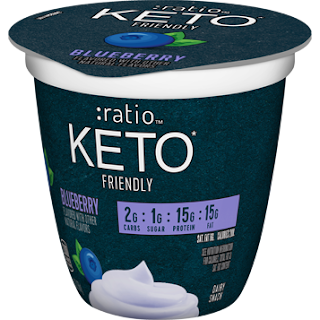
General Mills has been playing in the keto space for some time. During the summer of 2020, the company introduced the :ratio line of snacks, which included yogurt-type cultured dairy cups and crunchy bars. The primary components of the dairy snacks are ultra-filtered nonfat milk, milk, milk fat and avocado oil. The addition of non-dairy fat prevents the product from being called yogurt, per the U.S. standard of identify for yogurt. The product, however, is cultured with yogurt cultures (Lactobacillus bulgaricus and Streptococcus thermophilus). Thus, the product is described as “flavored yogurt cultured dairy snack.” 

Less than a year later, :ratio protein joined the lineup. The primary components of these dairy snacks are ultra-filtered nonfat milk and whey protein concentrate.

For the New Year, the :ratio brand introduced a range of new products that span across categories aimed at providing consumers with variety. All of the products have 1 gram of sugar per serving and provide a convenient option for consumers tracking macronutrients.

There are new flavors of :ratio Keto Dairy Snacks. Blueberry, Mixed Berry and Peach are joining the original five: Black Cherry, Coconut, Mango, Strawberry and Vanilla. One serving provides 15 grams of protein. There’s also new :ratio Keto Granola, :ratio Keto Soft Baked Bars and new keto-friendly Wonderworks Frosted cereal.

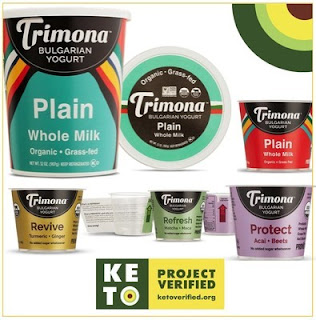
In August 2021, Trimona Foods, the maker of Trimona Bulgarian Yogurt, had its entire product line Keto Verified. With zero added sugars and A2/A2 tested organic milk, Trimona meets the needs of keto diet followers and the “keto-curious” by offering an easy way to add fermented dairy to the daily diet. 

It’s possible for dairy processors to take keto friendly to the next level by touting the presence of better-for-you practices, such as grass fed and regenerative agriculture. Such specialty items are being sought out by health-conscious consumers who want to make a difference, for themselves and the planet. They also command a premium, which makes them attractive to retailers. 

Condolences for Dr. John Bruhn

It is with a heavy heart that I share the loss of a dear friend to many of us in the dairy industry. Dr. John Bruhn of Davis, California, passed on Dec. 18, 2021. 

You can read about his amazing life and accomplishments HERE.


Thursday, December 16, 2021

Getting Gutsy in 2022


Sitting in the dentist chair this week for my regular cleaning, the hygienist started lecturing me on gut health instead of telling me how to floss. Imagine how thrilled I was when she explained how the probiotics in yogurt decrease the pH in the mouth and this helps prevent bacteria from forming plaque. (I believe more research is required in this area, but it was refreshing to know it is part of the dental office conversation.) She even went on to discuss the role of good bacteria and gut health and the overall impact on immunity. At this point I think she could have said I needed a root canal and I still would have been as excited as a kiddo on Christmas morning. 

Research shows consumers understand the benefits of probiotics. The pandemic fueled their interest in immunity and gut health. When a dental hygienist chooses to discuss probiotics versus flossing, I think it is safe to say that the time is right to make foods for gut health a priority.

A few weeks ago, The Hatchery held its Annual Fundraiser and Dream Commercial Pitch Competition. The virtual event featured Dr. Erika Ebbel Angle, CEO and cofounder of Ixcela, a health and wellness company that helps individuals improve their internal health. She explained how a properly balanced gut microbiome improves energy levels and mood, supports the immune system, and even helps to protect us from other health issues. 

This 11-minute TED Talks is similar to the discussion that took place at The Hatchery event. I highly encourage watching it. Link HERE.

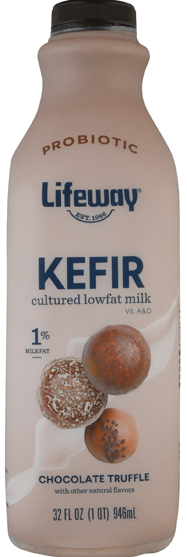
I believe gut health will be the leading mega trend of product innovation this coming year. It includes positive nutrition and may complement other mega trends, such as global inspiration, convenience and better-for-you indulgence. (Lifeway’s new Chocolate Truffle Kefir covers a few of these trends.)


“66% of global consumers say they have become more conscious of their overall health as a result of COVID-19,” according to FMCG Gurus. 


Positive nutrition is all about maximizing intake of healthful foods. Consumers want products that deliver on multiple wellness benefits, including gut health, energy, healthy aging and mental health, a.k.a., positive mood. 

Julie Smolyansky, president and CEO of Lifeway Foods, followed Dr. Ebbel Angle. She explained how “kefir” comes from the Turkish word “keif,” which means feel good.  

“People simply feel good after drinking kefir,” she said. “The connection between the gut and the brain is incredibly strong.

“Staying relevant is the #1 thing for legacy brands like us,” said Smolyansky. “Innovating constantly is very important for us. Innovation is also communicating with communities.

“Staying ahead of trends is important,” she said. “You have to consistently get the word out about science. Bringing wellness to people through food is so important.” 

Happy Gut = Happy Mood. Please commit to marketing gut health in 2022. It might be gutsy for a traditional dairy, but I can promise you that the plant-based and animal-free fermented products will be active in this space.  

And, in case you missed this on the plant-based category, here’s a statement from the National Milk Producers Federation that was issued on Dec. 6, 2021.

Dairy Defined: Tough Times Arrive in Fake-Food Land

The hype couldn’t last forever.

No matter how many celebrity funders are brought on board or “next best thing” pitches are made to launch a product, eventually, over-the-top marketing comes back to bite, and that’s what’s been happening in the world of fake food. Here are a couple recent examples.

Oatly, the darling of the plant-based beverage set, lost one-fifth of its trading value in one day last month after warning it wouldn’t meet revenue expectations. As is the fashion of the day, Oatly blamed the pandemic and supply chains, but the simple truth is, consumer demand isn’t what it was earlier hyped up to be. Third-quarter sales in the Americas, expected at 40 million liters a month, fell short by 3 million.

The company is facing quality control issues as well, with a recall in its native Sweden for potential loose metal in its products. Of all the ingredients seen in plant-based beverages, “loose metal” would be among the least desired, and that’s saying a lot. Oatly’s trajectory toward making oats and chemicals America’s drink of choice is falling like a lead balloon – evidence of that via a battered share price, which has kept falling since the bad news was revealed, is a welcome sign of marketplace sanity.

Beyond Meat is another case study in facts can complicate an all-too-perfect narrative. Last month the company had to dramatically lower its expectations for revenue growth, using the pandemic as a cover for a consumer market that’s fizzled much faster than anticipated. Share prices fell accordingly, and like Oatly’s, they keep heading down. Beyond Meat isn’t in the fake dairy business (though it’s made rumbles), but it’s all the same story in animal agriculture, with so-called “innovators” making a short-term splash, then fading with their ad campaigns.

None of this, to be sure, means these companies are going to disappear. Overpriced, flavored plant water has been around for four decades, and while we still wonder why anyone thought they could improve upon the venerable Boca Burger, Beyond Meat has carved its niche. Consumers want variety, and consumer attraction to alternative products is something P.T. Barnum would have found completely understandable generations ago. Though we regret their effects on public health and the environment, fake foods are likely to proliferate even further, as test tubes and fermentation labs bring new imitators that will employ the same sales tricks as their plant-based predecessors. The imposters, it’s safe to say, are here to stay.

What doesn’t need to stay are lax labeling standards and consumer misinformation. A market functions better when it’s transparent. That’s true at a local supermarket as much as it is on Wall Street. This principle is becoming even more important in dairy as where-your-food-comes-from questions become even more crucial to consumer trust and honest marketing.

Over time, promotional flim-flam gets found out, and investors and the public learn that The Next Big Thing isn’t what it was cracked up to be. But the process would move more quickly--and less painfully--if consumers held a clearer understanding of true food “innovation” and better tools for identifying what a food is and what it isn’t. The sooner the puff-up-and-bust cycle is recognized, the more consumer dollars will be better directed toward more nourishing products, the ones that will survive the ups-and-downs of food fads and cash grabs.


Friday, December 10, 2021

Plant Based World Expo 2021: 10 Take Aways


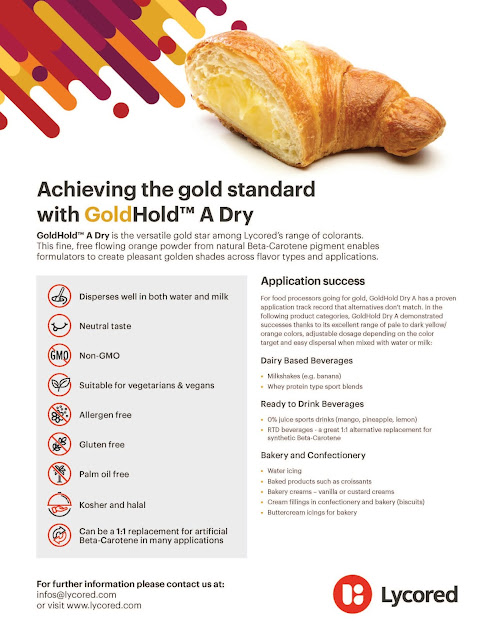
New York City’s Javits Center welcomed the Plant Based World Expo yesterday (Dec. 9), and continues until the end of today. This is only the second installment of this trade fair in North America, with the first one having taken place in June 2019. Proof of vaccination and masks required at all times, unless tasting a sample, the expo was packed. Innovations from brands were plentiful and a number of suppliers also exhibited in efforts to assist entrepreneurs with getting their concept to market. This included today’s blog sponsor, Lycored, which offers a number of plant-based coloring solutions that have application in dairy and meat alternatives, as well as other plant-based products, including condiments and desserts. Thank you Lycored. Visit them at booth #553.

Like with many expos, I sampled, selectively, and focused on the plant-based products intended to replace dairy products such as butter, cheese, ice cream, milk and yogurt. I also found the Opening Keynote session--Growth of the Plant-Based Industry—extremely informative, as it shared perspectives from retail and foodservice. Here are 10 Take Aways.


1. Some of the products are really good, and some are really not very good. I was pleasantly surprised how well a vegan cream cheese tasted in a New York-style cheesecake. There was also a milk alternative that tasted delicious.

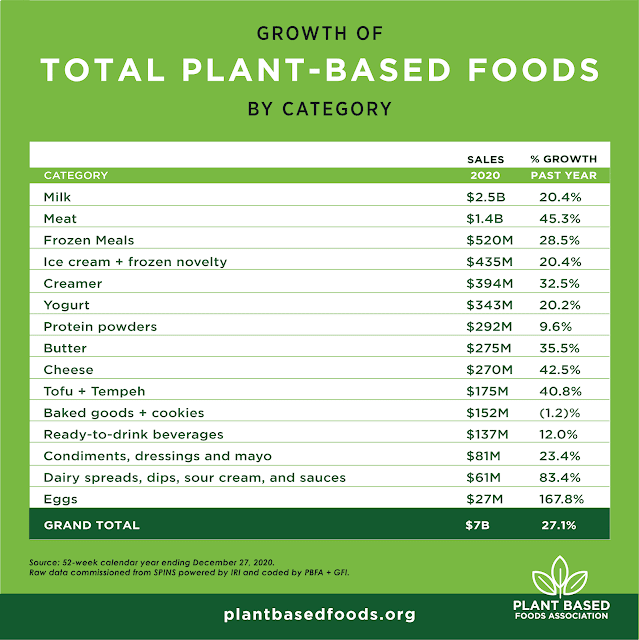
2. During the keynote, Rachel Dreskin, CEO of the Plant Based Foods Association (PBFA) said that plant-based milk currently has 16% share of the milk space at traditional retail and 50% in the natural foods segment. Improved product quality is driving growth. Consumers, especially young consumers, like plant-based milks (with oat the leader) for what they are, not necessarily as an alternative to milk. It’s an evolution in mindset with Gen Z. Whereas Millennials and older consumers see plant-based milk as an alternative, younger consumers just see it as another option. This will only become stronger with sensory and nutrition improvements. 


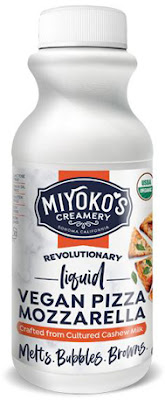
3. And those improvements are happening as innovators think out of the box. Who says mozzarella—dairy or plant based—should be shredded on top of pizza? Miyoko’s Creamery, a leader in the plant-based alternative category, threw away the rule book to craft the finest vegan pizza mozzarella by focusing on the desired end result: delicious meltiness. Rather than creating a solid block of vegan cheese and shred it, Miyoko stripped out the solids and ingredients that hinder meltability, such as anti-caking agents used to prevent clumping, and focused on the melt with this first-of-its-kind, revolutionary liquid cheese. The clean-label perishable product features organic cashews and organic sunflower oil as the top-two ingredients. The formulation includes a touch of mushroom extract for umami and vegan cultures for mozzarella flavor development. When used according to instruction on pizza, you would never know it was plant based. Congrats to Miyoko. 

4. But, then there’s the nutrition component that needs to be addressed. This product is not necessarily more healthful for “you” than the low-moisture, part-skim mozzarella traditionally used on pizza. It’s higher in sodium (791mg vs. 682mg per 100g) and almost void of protein (3g vs. 24g per 100g). Both contain 20g of fat per 100g; however, the plant-based has a notable reduction in saturated fat (2.9g vs. 11g per 100g). It also is a bit lower in calories (250 vs. 300 per 100g). The health of the planet is a big message for many plant-based dairy marketers. So, I guess if sodium and protein are not a concern, and saturated fat and the planet are, this product is a winner. 

5. Then there’s the plant-based bacon strips I tasted. I will start by saying they were all delicious. However, coconut oil melded with smoky flavor and lots of salt is likely going to be yummy in whatever shape it comes in. Enough said. If a vegan or vegetarian wants bacon, there are plenty of options. Flexitarians will often say it is bacon that keeps them from going vegetarian. That no longer needs to be the case. Vegetarians say it’s the cheese that keeps them from going vegan. That may be slowly changing with commodity cheeses, but as of now, nothing beats true blue, brie and aged cheddar.

6. Retailers are looking for plant-based products to fill gaps in their stores, according to keynote speaker Marcellus Harris, assistant commodity manager for poultry at Kroger. The retail giant is committed to the plant-based movement and currently has more than 100 plant-based items in its private-label Simple Truth brand, 30 of which were added this past year. “Plant-based focus extends across all our customers,” he said. It’s driven by flexitarian families, with improved health a priority. “But, the consumer is flipping the package over.” 

7. That back side needs to be clean, simple and not suggest being overly processed. “You have to make plant-based the easy choice,” said Susie Weintraub, CEO of Envision Group/Compass Group, the largest global on-site foodservice company. “It has to taste great and be affordable.”


8. Weintraub shared a very interesting perspective on the role of plant-based in foodservice. She explained that Compass serves about one million meals a day and the company “has the ability to influence, promote, educate and inform.” But this can only happen with partnerships with brands. Compass employs more than 7,000 chefs and the company spends a lot of time training and educating them to help them create plant-based recipes. But they can only do so much. I repeat what she said, “You have to make plant-based the easy choice.” This means taste is paramount and price is a huge factor. Sampling helps.

9. Benjamin Davis, vice president of content, Plant Based World Conference & Expo kicked off the keynote by stating that when the first expo took place in 2019, people were just starting to understand plant based and the pandemic provided time for a global adoption of the trend. “We live in unprecedented time where there’s undeniable social responsibility combined with a massive financial opportunity,” he said. 

10. He also said, “Plant-forward is used to describe cuisine that focuses more on plant-based ingredients than animal-based ones. It’s a great step-in-the-right-direction for both health and sustainability and caters well to a flexitarian audience.” 

Real dairy--delicious and nutritious--can be part of a plant-forward diet. 

Hope this gives you something to ponder for your innovation plans for 2022!


Friday, December 3, 2021

Dairy Foods Flavor Trends 2022: Make it an elevated experience

Photo source: Balchem

It’s that time of year when food and beverage authorities make their predictions for what will be trending the upcoming year. No surprise, plant-based, keto and immunity are the consensus. 

Flavor forecasts are typically not category specific, so I like to review them and make them relevant to dairy. That’s the topic for today. 

But first, on a lighter note (because the emergence of the omicron variant and Thanksgiving COVID cases has many of us very stressed out)…

Yesterday--as was February 12th of this year--was 12022021. It’s a very rare date, and lucky us got to experience it twice this year! It is both a palindrome (reads the same backward as forward) and an ambigram, which is this case, it reads the same right side up and upside down (when viewed in digital typeface). 


If you use a zero with the month, February 2nd of last year provided the same phenomenon: 02022020. It was actually a “universal palindrome” because it reads the same whether written as month/day/year or day/month/year. The last universal palindrome occurred on 11/11/1111. The next one won’t come until 12/12/2121. (I hope the future is warned what comes next.)

Feb. 2, 2020, was a Sunday, in fact, it was Super Bowl Sunday. The Kansas City Chiefs had their first victory in 50 years. It was also the second day of official pandemic reporting, with a total of 11 confirmed cases in the U.S. That seems like a lifetime ago. 

And while it was “the end of the world as we know it” (love that REM song), if you add the numbers together (0+2+0+2+2+0+2+0 = 8), you get the number 8, which in numerology indicates assertion, determination and responsibility. Turn 8 on its side and it becomes the infinity symbol. In astrology, the number 8 often refers to Saturn, the planet of karma, practicality and resilience. In hindsight (2020), that date told us a lot about where we are today. We’ve pivoted, adapted (or still trying to) and recognized that we have to take responsibility for our health and the planet’s health. 

So what does all that have to do with dairy flavor trends? Well, consumers have a new-found appreciation for almost everything, from celebrating holidays in person with friends and family outside their bubble to traveling to in-person tradeshows. They are craving elevated experiences. That’s the flavor connection.  

Flavor development, have it be in milk, yogurt, ice cream or any other dairy product, needs to consider experience. This is delivered through taste, texture, appearance and yes, marketing. The world does not need another vanilla or chocolate ice cream brand, regardless of its nutritional composition or the addition of functional ingredients. 

Photo: Tahini swirled yogurt with cardamom blood orange from Izzyswellness.com

With that said, there are three key flavor trends to consider going forward. All can be part of limited-time and seasonal flavor programs. Aldi’s holiday ice cream flight was one of the most innovative ice cream concepts this year and I hope there are more like it by the private-label retailer and others. 

The three key flavor trends are:

1. Immunity-boosting fruits, namely oranges, specifically blood oranges, are high in vitamin C and have a strong association with immunity. Elderberries, which are high in antioxidants, have become recognized as a superfruit during the pandemic. Using these fruits—alone or in combination with other flavorful ingredients—adds a healthful halo to dairy products.  

2. Mood enhancers, including botanicals and florals associated with states of being, such as relaxation, energy and sleep, readily combine with traditional flavors. Think lavender vanilla. Honey falls into this space, too, as it is a soothing flavor. It also includes indulgent flavors, which are simply meant to be enjoyed.   

Photo: Blood orange ice cream with ginger and dark chocolate chips from wearenotmartha.com


3. Destination flavors, think of everything from cotton candy fairgrounds to a honey tahini Mediterranean cruise to apple picking. Marketing is very important in this concept, with seasonal availability creating an urgency to purchase. And, when there’s a story to tell that brings the flavor back to its origins, everything from the region from where it is sourced and the people who produce it, to how it’s grown and its impact on earth, tell it. 


Friday, November 19, 2021

Something Sweet to Think About (for the ageing population)

If you know me well, you are aware that I have never been a fan of anything chocolate. In fact, I have never been much of a sweets person. I’ve always preferred salty and savory. But, that changed in the past few years and it started before the pandemic; however, the pandemic made me more mindful of my changing tastebuds and the accompanying sugar intake. A lot of us “ageing” folks are with me. 

This is why I found BENEO’s webinar this week on formulating foods for healthy aging so interesting. I was completely unaware that on December 14, 2020, The United Nations General Assembly declared 2021 to 2030 to be the Decade of Healthy Ageing. Three days later, the World Health Organization issued the Baseline report for the Decade of Healthy Ageing, which included data stating that at least 14% of all people aged 60 years and over, which is more than 142 million people, are currently unable to meet all their basic daily needs.

Now, sweets are not a basic daily need; however, for many older adults, it’s the highlight of their day. (I’m not there yet, but I am starting to understand the “sweet treat” daypart.) This presents an opportunity in the category I have long noted as being the most underdeveloped in the U.S.: refrigerated dairy desserts. 


Here’s the deal. It has to taste good. It has to feel good. It has to satisfy. And remember, it’s a sweet treat, so sweet taste is paramount. There are many ways to deliver sweet, and for sweet treats for the ageing population, I highly recommend staying away from sweeteners with off notes, may cause gastrointestinal distress or rapidly raise blood glucose levels. We grew up with sugar and TAB (saccharin) as our benchmarks for sweet taste.  

“Getting older is a privilege,” said Denisse Colindres, manager of nutrition communications for BENEO in North America. “Good choices on nutrition and lifestyle allow us to age optimally.”

I highly encourage you to watch this 45-minute webinar. I watch a lot of webinars and present many as well. It’s not often I can say I’ve heard some new information. This one kept my attention. Link HERE

The fact is, by 2050, 2.1 billion people will be over 60 years old. (I will be 83 years proud!) Product development focused on this age group should be on your radar to aim for positive ageing. 

A leading concern is blood sugar levels rising, and this is without that daily sweet treat. It just happens with ageing. 

Natural Grocers, a chain of better-for-you food and supplement stores founded in 1979 and located across the U.S., issued its sixth annual top-10 nutrition trend predictions for 2022. They were identified by the company’s team of health and wellness experts in collaboration with its purchasing and analytics teams. The predictions include healthspan, sensible indulgences, functional flavors, pet nutrition and saying goodbye to burnout.

“As we look back at another year in which our communities have felt the obvious and hidden effects of a global pandemic, there is no denying that people are changing how they approach their health,” said Shelby Miller, Natural Grocers’ manager of scientific affairs and nutrition education. “People are considering how their everyday choices affect their long-term health, and our trends for the coming year reflect how those decisions are intricately tied together to shape our wellbeing and our ability to thrive and flourish.”

The number-one trend is “From Lifespan to Healthspan.”

“With a growing realization that healthspan is as important as lifespan, in 2022, we will focus not only on how long we can live, but also on how healthy we can live those years. This will look like supporting health with diet, lifestyle and supplements not in mid- to late age, or only when a health issues arises, but throughout our lives,” according to the retailer.

This supports BENEO’s perspective of “Seeking positive ageing in every generational phase of life. People want to enjoy their life and be their best self.” Let’s help them!

Here’s another webinar you won’t want to miss. We will be presenting some never-before-revealed data on the future of dairy foods innovation.

2021 to 2022 Dairy Industry Outlook
Hope you join me on the Dec. 1 webinar hosted by Dairy Processing to discuss the dairy manufacturing economics of this past year and what we can expect in 2022. Cypress Research surveyed dairy processing professionals in June and July of this year and 148 respondents shared their input on their company’s performance in 2021, compared to 2020; the outlook for their company for 2022; and their views on the overall health of the dairy industry in the coming year. Register HERE.