Thursday, May 26, 2022

Foodservice, Sweets and Snacks, Oh My!


It’s been an exhausting food week in Chicago. The National Restaurant Association kicked things off on Saturday. This was followed by Sweets & Snacks opening up on Tuesday and culminated with Chicago Venture Summit Future-of-Food on Thursday.

I encourage you to read my take on the National Restaurant Show, published online by Food Business News HERE. For Sweets & Snacks, you will need to wait until next week’s blog, but I’ve shared a few character pictures. 

The Chicago Venture Summit Future-of-Food, the Windy City’s new flagship food innovation conference led by World Business Chicago, included a live welcome from Chicago Mayor Lori Lightfoot. Here’s what she had to say. 

“Our local food innovation and startup ecosystem is core to our city’s economic progress and future prosperity,” said Mayor Lightfoot. “As the global capital for food innovation with the largest concentration of food and beverage Fortune 500s, I’m honored to welcome more than 600 founders, innovators and investors for our first-ever Chicago Venture Summit Future-of-Food.”

According to Pitchbook data, Chicago food innovation companies raised $732 million in venture capital in 2021 alone, a 508% increase over 2019. In Q1 2022, local companies raised $111 million in venture capital. 

“Growth across all industries and sectors in Chicago is being enabled through tech and innovation,” said Michael Fassnacht, president and CEO, World Business Chicago, and chief marketing officer for the City of Chicago. “Today Chicago’s food, beverage and agriculture sector is the nation’s largest, generating over nine billion annually and employing over 65 thousand people; where over 2,800 companies located here are actively participating and contributing to the city’s vibrant startup and venture ecosystem.”

There’s a lot more for me to recap on this amazing meeting. For now, you can learn more HERE.

Thought you might like this comment from Julie Stamberger, CEO, chair and co-founder, The Planting Hope, a Chicago-based company that develops, launches and scales uniquely innovative plant-based and planet-friendly food and beverage brands. 

“Read the label of (almond milk),” she said. “It’s water that is not good for the environment and is highly unsustainable. There’s no nutrition in almond milk.”

And lastly, before I enjoy some needed rest this long holiday weekend, I want to share details on The California Milk Advisory Board’s (CMAB) annual dairy innovation competition: the Real California Milk (RCM) Excelerator. Created in partnership with innovation consultancy VentureFuel, this year marks the fourth installment of the competition. This year’s event focuses on accelerating ANY dairy-based product, from traditional consumer food and beverage items to textiles, haircare and beyond. The competition will award up to $500,000 in prizes for new innovative dairy products that introduce novel benefits in any form and drive consumption of Real California dairy.

“Real dairy provides a package of functional and practical benefits that’s hard to replicate. We’re seeing an increase in unique products that leverage these benefits emerging in the market. By expanding the competition to all new dairy-based products, versus a specific category, we’re creating more opportunity to make a meaningful difference in consumers’ lives and in the utilization of milk from California’s family dairy farms,” said John Talbot, CEO of the CMAB. “With the Excelerator platforms we’ve established over the past four years, we will be able to support companies as they innovate and establish these products in the market.” 

As one of the biggest dairy competitions in the world, the program seeks early-stage, high-growth potential applicants with a 50% cow’s milk-based product or working prototype. Up to eight applicants will be selected to join the RCM Excelerator program. Each will have access to a group stipend and a robust network of resources to refine and scale their product and business. They will also participate in the CMAB/VentureFuel Mentorship Program, consisting of elite counsel from successful founders, investors, leading corporate executives and experts across design, marketing, sales, manufacturing, distribution, farming and processing industries.

For more information, link HERE. The deadline to apply is July 17, 2022.

Hello Summer! In you are in the U.S., have a nice Memorial Day Weekend!


Thursday, May 12, 2022

Dairy Done Right has a Place in a Plant-Forward Diet


Fun things first. Check out phoodle.net. It’s a daily food-centered word puzzle similar to Wordle. 

On Wednesday I stood in a long line at the coffee shop in the Drake Hotel, Chicago, where Bridge2Food held its Plant & Protein Summit Americas. (Excellent conference and so glad to see so many Daily Dose of Dairy subscribers in attendance.) I am not sure if the 10-plus people in front of me were all attending the conference, but I do know that not a single one ordered their latte, cappuccino or other blended coffee beverage with dairy milk. (I was eavesdropping.) Everyone requested oat milk. I take my coffee black, but just to mix things up for the barista, I ordered a latte and asked for 2% milk. I saw shock cross her face and I queried about the milk preference at this location. She declared oat milk the winner. 

Why share this with you? Because “plant based” is not going away and it is getting smarter. And those that do it right—tasty, nutritious, affordable and profitable—will succeed. For the others, it’s just a matter of time before they pull the plug. Funny thing, dairy is all these things already, yet curious consumers are not satisfied and they are looking for something that claims to be better for them and for the planet. Hybrid products--dairy and plant protein--are a great option. 

Bolthouse Farms has been doing this for some time. One of my favorite workout replenishers is the Bolthouse Farms Protein Plus Shake that contains 30 grams of protein from reduced-fat milk, soy protein concentrate and whey protein concentrate per 15.2-fluid-ounce bottle. The company explains the reason for the blending on side label panels. Consumers get it. 


The company is growing its Breakfast Smoothie line with Mixed Berry Parfait, a blend of berries, yogurt and whole grains. The beverage is an excellent source of fiber, provides 11 grams of protein (from yogurt, whey protein concentrate and soy protein isolate) and 21 essential vitamins and minerals. One of the whole grains is oat flour, which adds an extra layer of functional nutrition to the beverage. 
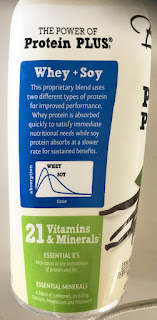
Did you know that while oat milk lacks the amount of complete protein found in cows milk, oat milk does have something not inherent to cows milk? That is beta glucan, a type of soluble fiber with heart health benefits, and enough of a sell for older consumers who have to restrict their caloric intake because of slowed metabolisms. They might choose to get their beta glucans from the white stuff that goes in their coffee and cereal bowl. They may opt for their protein in a beverage like the Bolthouse Farms drinks or even some other format. 

Let me preface and say dairy milk and products made from dairy milk are not going away. There are so many opportunities to improve and speak to health- and planet-conscious consumers that you must think out of the box.  
One way to think out of the milk jug is to think protein beverage mixes. During the past few weeks I have featured three recent introductions as a Daily Dose of Dairy. All are targeted to specific demographics and all contain quality dairy protein. One is even manufactured by a dairy cooperative. 

Organic Valley is rolling out Pre- and Postnatal Support Smoothie Mixes for expecting and new moms. They are made with organic ingredients, including pasture-raised milk from Organic Valley’s small family farms. Consumers are instructed to blend it with 2% milk. The Prenatal Support Smoothie Mix offers important nutrients for expecting moms including DHA, folate and folic acid. The Postnatal Support Smoothie Mix provides new moms with DHA plus fenugreek. 

Health and wellness retailer GNC has released new private-label protein beverage mixes and bars in partnership with Girl Scouts of the USA. The limited-edition spring flavor is inspired by Girl Scout Lemon Cookies.

Whey is the only protein in the GNC AMP Wheybolic Whey Protein mix, while the GNC Total Lean Shake contains an array of whey and milk protein ingredients. The GNC Total Lean Layered Lean Bar is a hybrid, with whey and soy proteins, as well as bovine collagen. 

Nutritional Growth Solutions Ltd., is launching Healthy Heights KidzProtein beverage mixes to support children’s development. The mixes contain a proprietary blend of micro- and macronutrients demonstrated to support optimal childhood growth and development, as well as a fruit and veggie blend. One serving provides 10 gram of protein and an array of vitamins and minerals.

More thinking out of the jug comes from Nestle USA. The company is introducing Boosted Brew Original Keto Coffee Enhancer. It is a shelf-stable, one-step product that gives a boost of energy to a cup of java simply by stirring. Ingredients are: allulose, butter, MCT oil, inulin, buttermilk powder and acacia gum. 
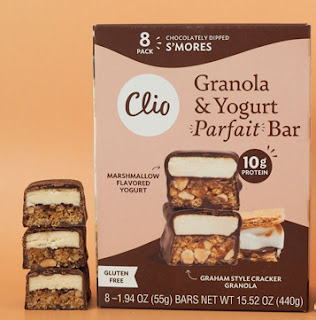
Clio Snacks has also gone where few companies have dared with its refrigerated enrobed yogurt parfaits. New for the summer is limited-edition S’mores Granola & Yogurt Parfait Bars, which pairs together creamy marshmallow-flavored yogurt with a layer of graham-style granola, bringing the benefits of whole milk Greek yogurt—10 grams of protein and probiotics--to this campfire-inspired treat. 

The fact is that many consumers prefer dairy in formats other than fluid white milk. REPEAT after me: “This will not be changing in the near future.” 

But change is constant and that’s why on Wednesday, Chobani announced a $1 million gift to the University of Idaho-led Center for Agriculture, Food and the Environment, better known as CAFE. The gift will be used to help fund construction of the nation’s largest research dairy. 

Located in the south central portion of the state, Idaho CAFE spans three counties with a 2,000-cow research dairy and 640-acre demonstration farm in Rupert, a public outreach and education center in Jerome and collaborative food science efforts developed in partnership with the College of Southern Idaho in Twin Falls. 

With deep roots and a major manufacturing, research and development presence in Idaho, Chobani says it has long been committed to taking a holistic and inclusive approach to sustainability, especially within the dairy industry.

“Sustainability is part of the fabric of Chobani. Caring for our people and animals, conserving resources, putting back what we take, this is how we operate, and this is how dairy farmers operate,” said Hamdi Ulukaya, Chobani founder and CEO. “As more and more people--consumers, investors and regulators--focus on sustainability, the dairy industry must be part of the conversation.”
Sustainability and regenerative agriculture go hand-in-hand. If you regularly read my blog, you have noticed that I am a big believer of regenerative agriculture and soil health, as well as the critical role that livestock play in regenerative agriculture. (I guess you can call me a born-again tree hugger.) I am not the only one. In fact, the topic, along with sustainable manufacturing and over processing of plant proteins was a recurring theme at the Bridge2Food event. This was not some kumbaya conference with attendees and speakers simply singing praise about the plant-based food movement. It was about getting smarter and better in the plant-based space by identifying issues and hurdles in order to help feed the growing population and fight climate change. Dairy processors are already doing this. 

For example, Blue Ocean Barns announced this week that three dairy companies--Ben & Jerry’s, Straus Family Creamery and Clover Sonoma--have signed deals to begin rolling out its natural seaweed (Asparogopsis taxiformis) supplement for their cows as they move to dramatically cut the greenhouse gas footprint of their farm operations.

This dehydrated form of red seaweed has been proven to safely cut cows’ methane emissions from burps by more than 80% without changing the taste of milk or meat, according to peer-reviewed publications. The California Department of Food and Agriculture authorized commercial use of the supplement as a digestive aid for cattle earlier this spring.

A major reduction in livestock-generated methane gases could significantly slow the progress of climate change, according to the United Nations Environment Program. In fact, studies at the University of California, Davis, and the University of Oxford have concluded that methane reductions can actually have a cooling effect on the climate. Global methane emissions are generated predominantly by the agriculture industry and are more than 80 times more potent than carbon dioxide over the first two decades of release. About a quarter of all methane emissions worldwide come from cattle enteric fermentation (cow burps).

“We are working closely with food industry leaders eager to achieve rigorously verified and auditable greenhouse gas reductions within their own supply chains,” said Joan Salwen, co-founder and CEO of Blue Ocean Barns. “Ben & Jerry’s, Straus Family Creamery and Clover Sonoma are pioneering companies directly engaging their farmers and processors to ensure their collective success in direct reduction of methane emissions.”

That’s “Doing Dairy Right.”
Separately, Ben & Jerry’s parent company—Unilever--announced plans to reduce greenhouse gas emissions on 15 dairy farms to half the industry average by the end of 2024 with the help of the seaweed supplement. Ben & Jerry’s plans to then expand successful pilot project initiatives to farms across its global dairy supply chain. 

“We believe in using the power of our business to create positive change,” said Jenna Evans, global sustainability manager for Ben & Jerry’s. “The fact that Brominata (the supplement) is effective in small quantities and easy for farmers to use makes it both environmentally and economically sustainable. We couldn’t be more excited to be an early adopter and to join other businesses in ushering in a new era of sustainable dairy.” 

In California last summer, Straus conducted the first commercial trial using the red seaweed on the Straus Organic Dairy Farm. For the next phase of the Petaluma, Calif.-based company’s rollout of Brominata, Albert Straus’ farm will be the first organic dairy in the United States to feed Brominata to cows as part of its goal of being carbon neutral by 2023. All of the dairy farms that supply Straus Family Creamery will be carbon neutral by 2030. 

“If we can get up to 90% reduction in methane emissions through feeding red seaweed to cows, this is a huge leap forward for us in creating a sustainable farming system that is beneficial to the planet and our communities,” said Albert Straus, founder and CEO. “Red seaweed is the next critical step we need to reach our carbon-neutral farming model.” 

It’s the circle of life. An algae assisting a ruminant animal to feed consumers and heal the planet. 

Clover Sonoma’s Chief Growth Officer Kristel Corson said, “We look forward to being a part of a larger movement to identify and trial sustainability innovations that reduce methane emissions. In 2021, we conducted an emissions and inventory analysis to help us set goals that reduce our climate impact. Our seaweed trial with Blue Ocean Barns is one step in that process and will help us execute a climate solution that will elevate the dairy industry overall. As part of a collaborative effort, we can make significant progress in helping our planet survive and thrive.”






Thursday, May 5, 2022

Dairy is Better Than Ever


Photo source: Tate & Lyle

The past two weeks have been packed with positive dairy information that we can all use to stay motivated. Let’s continue to innovate and keep dairy relevant to consumers during these turbulent times. 

For starters, have you heard that a third (34%) of younger Europeans (18-35-year-olds) are consuming more dairy than they were three years ago? This is according to an online survey of 1,554 consumers (18-65-year-olds) conducted in August 2021 by Tate & Lyle PLC. The survey found that the frequency of young consumers (in the UK, France, Germany, Poland, Spain and Sweden) eating dairy products is high, with 71% eating cheese, 81% drinking milk and 69% eating yogurt at least once a week. Furthermore, 77% of 18 to 35-year-olds said they are happy to consider eating more dairy products if they could try products with less fat, sugar and allergens. 

I am going to take an educated guess that these same preferences hold true in the US and other developed countries. 


“Our research has uncovered some interesting emerging trends when it comes to how and why consumers are purchasing dairy,” says Beth Nieman Hacker, market research director at Tate & Lyle. “It is so important to understand how behaviors, values and appetites are changing and the drivers behind these shifts, so food and drink brands can launch products that meet the needs of consumers today.”

The research uncovered opportunities for food and drink manufacturers to do more to encourage young people to eat dairy products. Health is a key priority for the younger generation, with one in four (39%) 18 to 35-year-olds stating they felt dairy products contained too much fat and 34% claiming that dairy products contain too much sugar. With that said, younger consumers are much more likely to eat dairy alternatives, with 35% eating non-dairy cheese, 33% eating non-dairy ice cream and 46% non-dairy milk at least once a week.

A flexitarian diet seems to be on the rise amongst consumers of all ages. This demographic switches between dairy and dairy alternatives, depending on the meal type. Thirty-nine percent said they eat dairy cheese at dinner, compared to 26% who chose a dairy alternative; 32% preferred dairy yogurt at breakfast, while 26% liked a dairy alternative yogurt as a mid-morning snack.

Consumers are also looking to make more sustainable choices with almost a fifth (18%) of older consumers saying products with environmental certifications would be a big factor in them increasing their dairy intake, while younger consumers were looking for more environmentally friendly packaging (19%) and a longer shelf life (20%).

Speaking of sustainability, the dairy industry aims to be carbon neutral by 2050. HERE is a four-minute interview to learn what this means for farms.

And here’s an excellent read about “What Happens to Your Body If You Drink Milk Every Day.” Written and reviewed by two registered dietitians, this article appeared last week in Eating Well, a premier consumer publication designed to educate about nutrition using scientific facts. You can read the article HERE.

The author concluded that “if you aren’t lactose-intolerant or allergic to dairy, it’s totally OK to enjoy a regular glass of milk each day. From improving bone health to helping mitigate cognitive decline, drinking milk and incorporating other dairy items into your diet can come with some health benefits. Since there are dairy farmers all across the U.S., try choosing milk that is produced locally. Making a connection with a local farmer can help you get a better-quality product that takes less of a toll on the environment, too.”

“While dairy products have long been associated with goodness, in today’s world, the dairy industry must adapt to modern consumer tastes, convenience and healthier lifestyles,” said Delphine Forejt, dairy category development manager at Tate & Lyle.

And processors are doing just that! Congratulations and thank you. 

Wells’ Enterprises is listening. The company’s Halo Top brand has been reformulated. The new recipe features a creamier texture—thanks to the use of ultrafiltered milk--while still staying significantly lower in calories and sugar than regular ice cream. It’s also a good source of protein, enabling ice cream lovers to feel good about every bite. 

Halo Top is debuting its new recipe with a brand new flavor: Chocolate Cake Batter. This chocolaty cake batter light ice cream contains colored sprinkles to transport you back to your childhood kitchen, sneaking batter straight from the bowl. 

Now let’s talk plant-based milks. Rosemary Trout, program director and assistant clinical professor of culinary arts and food science at Drexel University in Philadelphia, analyzes the burgeoning plant-based milk category. I highly recommend watching this 12-minute VIDEO to hear her provide an unbiased description of the various options in the marketplace. She does a fabulous job of breaking down the products, including their nutrition and functional profiles. 

Happy Mother’s Day to all the moms out there!


Thursday, April 28, 2022


Umpqua Dairy’s Protein To Go Cottage Cheese has 22 grams of protein per container. The company markets it as being “packed with protein and calcium, our answer to fast food.” I wish that asterisk were a note on protein quality instead of rBST. Read more.


It was wonderful to see so many of you at the American Dairy Products Institute (ADPI) 2022 Annual Conference this past week in Chicago. There were more than 850 attendees from 21 different countries. The male-to-female ratio was about one-to-nine, which is a lot better from when I was a first-time attendee back in 1994. There had to be only about a dozen of us. 

Things change. 

“In the next 10 years, we are projected to experience more progress and change than in the past 100 years,” said Barbara O’Brien, president and CEO of Dairy Management Inc., and the Innovation Center for U.S. Dairy, at the ADPI event. “Information will be shared at a faster rate, new data will be generated and shared, consumers will want to interact and get their products digitally, and expectations of industries and brands will change. This creates both issues and opportunities for U.S. dairy as we seek to earn a place for dairy foods and ingredients in homes and businesses around the world.”


Protein continues to be a buzz word among consumers. It is a prioritized food component when scanning store shelves and online shopping channels. A thing that has not changed—and really needs to—is educating consumers about protein quality, digestibility, availability and how it’s not just protein, but the whole food package that makes animal proteins so powerful. 

We don’t eat individual nutrients. Even a protein beverage mix labeled 100% whey protein still contains fats and carbohydrates. The body does not digest one type of nutrient in isolation from the others. This means that building proteins from plants or even through fermentation is different from the whole food package, e.g., a glass of milk, an egg, a salmon filet, etc. This could change some day. 


O’Brien explained how more than $1.7 billion has been invested in lab-grown protein and dairy companies as of March 2022. Further, the USDA awarded $10 million to Tufts University over the next five years to launch the National Institute for Cellular Agriculture. 

While cellular proteins are necessary to help feed the growing population, livestock are critical to regenerative agriculture and growing edible food crops. 

“Gen Z and Millennials consider food alternative innovations inevitable and are open to trying lab-grown dairy products but have high expectations,” she said. 

Those expectations include being earth friendly. And that’s where many processors need to up their game. O’Brien said that two out of three Americans report switching their current product for one that has a more positive impact and that climate labels are increasingly helping people make purchase decisions based on carbon footprint.

You may not be aware that Perfect Day Inc., creator of the world’s first animal-free dairy protein, entered the sports nutrition market with a protein mix at the end of 2021. The new line puts Perfect Day’s hallmark ingredient front and center, bringing consumers the taste, performance and nutrition of conventional whey protein powder but with a fraction of the environmental impact, according to the company. 

“After highlighting the functionality of our protein in cream cheese, ice cream and baked goods, this new category brings its nutritional superiority to the forefront,” said Ryan Pandya, co-founder and CEO of Perfect Day, Inc. “We developed this new product line for traditional whey protein and plant-based protein consumers alike, and above all, for anyone conscious about their health and the health of our planet.”

Let’s make sure consumers know that traditional animal proteins are a component of powerful whole foods and that the animals they come from are critical to our soil. 


Thursday, April 21, 2022

Meet the “Climavore,” the climate-conscious consumer that dairy processors need to educate.


Photo source: Lactalis


To hear a 10-minute presentation from Synergy on the five trends fueling dairy and dairy-alternative innovation in 2022, link HERE or on the banner ad in this blog. 

Happy Earth Day 2022!


Just in time for Earth Day 2022--Friday, April 22--global management consulting firm Kearney released its 2022 Earth Day Survey. The report contains great information. You can access it HERE.


The report looks into the climate impact of consumer food-purchasing choices and measures consumer momentum toward “climavorism,” the making of mindful food purchasing and consumption choices based on their impact on climate and the larger environment. 

These decisions make a difference. And the U.S. dairy industry is proactive in this space. 

Did you know?

  • Due to innovative farming and feed practices, a gallon of milk in 2017 required 30% less water, 21% less land and 19% smaller carbon footprint than in 2007.
  • According to the United Nations Food and Agriculture Organization, since 2005 North America was the only region in the world that reduced its greenhouse gas emissions (GHG), even as it increased milk production, making its greenhouse gas intensity for dairy products the lowest in the world.
  • Dairy farms are a powerful tool against food waste by diverting byproducts (such as almond hulls, citrus pulp and brewer’s grains) from other food industries and using them as feed, converting potentially unused resources into high-nutrient foods and beverages. 
  • Dairy farmers can also convert food waste and manure into valuable products such as renewable energy and fertilizer.
  • U.S. dairy has set a goal to achieve greenhouse gas neutrality by 2050, creating a cross-industry Net Zero Initiative that advances research, on-farm pilots and new market development to make sustainability practices more accessible and affordable to farms of all sizes and regions.

Kearney’s Earth Day Survey polled 1,000 U.S. consumers on their awareness of, and attitudes toward, the relationship between their eating preferences and the climate crisis, and found a measurable shift in consumer awareness of the environmental impact of their food-buying choices.

“Daily food choice is a call to action for consumers keen to make a positive impact on climate outcomes, with nearly one-third of consumers in our survey considering environmental impact at the grocery store,” says Corey Chafin, associate partner in Kearney’s consumer practice, and the study’s principal author. “We are entering into a new era of climate-conscious eating--giving rise to the Climavores--with 80% of consumers indicating at least some awareness of the connection between food choice and the environment.” 


Climavores, as you might expect, follow a diet less defined by ingredients, unlike veganism, for example. Instead, Climavores actively make food choices based on climate impacts, practicing climate-conscious eating based on a series of dietary trade-offs intended to benefit the planet. This is not just a niche trend, but rather a steadily growing consumer movement that seeks to understand the climate implications of their food choices. (See graph.)

The study concludes that food processors need to pay attention to the growing Climavore consumer segment for two reasons. First, it is clearly building momentum. Second, since food production is the second-largest source of adverse climate change, things have to change if manufacturers have any hope of hitting their GHG emission targets before those voluntary targets become mandates.

“Food companies must add ‘climate impact’ to their product reformulation and design-to-value campaigns to prepare for the rise of the Climavore consumer,” says Chafin. 

It’s not that easy. The study identifies several major caveats for food companies. For starters, climate-conscious foods that reduce GHG must taste good and be on a par with or below the market cost of products with larger carbon footprints. The U.S. dairy industry, along with many global dairy processors, already deliver on this. 

“Taste is a critical barrier,” said Lorraine Kelly, senior category marketing manager for Synergy. 

Chafin also points to declining interest in plant-based foods and respondents’ concerns about being identified as vegans or vegetarians. 

“Consumers have become alienated by the binary ‘omnivore/vegetarian’ thinking and plant-based burger craze,” he says. “Instead we should focus on climate-conscious food choices of any type.” 
In General Mills’ 2022 Global Responsibility Report, the company states that “regenerative agriculture is the most promising solution to reach our climate goals.” 

Thank you to General Mills, the manufacturer of dairy brands such as oui, ratio and Yoplait. The company has the scale and resources to drive positive change in the food system through its work in regenerative agriculture, sustainable ingredient sourcing and nutrition access. 

Here are some recent production introductions that speak directly to the Climavore. 

This Climavore-friendly milk beverage gets my vote as the “best-tasting, first-of-its-kind” product in the marketplace. (I seldom give out such accolades.) It’s from Clover Sonoma, a third-generation family-owned and operated dairy and Certified B Corporation. The company is taking its brand nationally with the launch of Organic Moon Milks.

Steeped in ancient Ayurveda, one of the world’s oldest holistic healing systems, Clover Sonoma’s Moon Milks blend 2% organic milk with herbs and spices. Available in quart size, Clover Sonoma Moon Milks are debuting at Whole Foods Market in three varieties: Golden Moon (Turmeric Ginger), Blue Moon (Blueberry Lavender) and Pink Moon (Cherry Berry Hibiscus). The soothing botanicals infused in all three flavors of Moon Milks can help promote relaxation and wellness throughout the day and can be enjoyed cold, warm or in a variety of recipes. Oh my, these are amazing!

Mintel named Moon Milks as one of the “Three Drink Trends to Watch Out for in 2022,” stating “over the course of the pandemic, the home has become the center of life, including work and relaxation. As a result, consumers are increasingly looking for rituals combining experience with indulgence and comfort.”

Clover Sonoma Moon Milks are a perfectly balanced, nutritious whole food with eleven naturally occurring vitamins and minerals providing 25% Daily Value of calcium and 9 grams of protein per one cup serving. A 32-ounce carton sells for $5.99.

“We look forward to sharing our organic Moon Milks with conscious consumers who look for wellness products offering unique health benefits,” says Clover Sonoma Chief Growth Officer Kristel Corson. “Consumers can now enjoy a new ritual of drinking Moon Milks morning, noon or night. Moon Milks can elevate any smoothie, transform tea or coffee into a creamy latte, brighten breakfast cereal, boost ice with a pour over or simply warm up for a soothing bedtime treat. Plus, you can also use Moon Milks to add a natural color or flavor boost to a variety of delicious recipes found in our digital recipe book. The versatility of this unique and nutritious dairy beverage is endless.”

Clover Sonoma is all about sustainability. The Petaluma, Calif.-based dairy is taking a big step forward in its new organic gallon milk jug. It supports a closed loop recycling system to ensure that plastic is neither created nor destroyed, but re-used for a single purpose. The company is starting with 30% post-consumer resin (PCR) content  and is committed to increasing the PCR content and extending PCR content use across all Clover Sonoma gallon milk jugs by 2025. The first PCR milk jugs hit the shelf in the first quarter of 2022 with a designated logo to educate consumers about the new packaging’s benefits.

“To reach our sustainability goals, packaging innovation is a priority for us as a company,” says Corson. “Finding sustainable solutions means taking risks and investing in what’s best for the planet. We are focused on improving our packaging across product lines using reusable, recyclable, renewable and environmentally conscious resources. We encourage the food industry to join us in this effort.”

Recycled plastic is less wasteful than new plastic because new plastic mostly comes from non-renewable fossil fuels like petroleum, which are hard on the environment. By contrast, recycled plastics require no virgin petroleum to be sourced and divert recycled materials from ending up in a landfill, so they alleviate much of the environmental burden.

“By closing the loop on gallon milk jugs, Clover Sonoma is helping keep packaging out of landfills,” says California Milk Advisory Board CEO John Talbot. “California dairy producers and processors are committed to providing a sustainable, nutritious product while working together to reduce the environmental impact of milk across its entire lifecycle. This initiative is an important step in that journey.”

Currently, the company’s gallon milk jugs are made of high density polyethylene (HDPE) plastic, commonly referred to as #2 plastic, which is one of the most widely accepted plastics in recycling programs. As Clover Sonoma produces milk gallon jug packaging using more PCR content, the company needs a greater volume of recycled HDPE. If more consumers rinse, cap and place gallon milk jugs in a recycling bin for pickup, the company can produce more milk gallon jugs from recycled PCR content to further support a circular economy.

The company also made the conscious decision to reduce plastic waste by saying “no” to plastic caps on many of its paper milk cartons. These cartons are now fully renewable.

I had the chance to meet the people behind Neutral Milk when I spoke at the Oregon Dairy Industries meeting a few weeks ago. One of the company’s investors is Mark Cuban, owner of the Dallas Mavericks and judge on Shark Tank. 

“Neutral is a game-changer,” says Cuban. “Neutral works with farmers to deploy on-farm carbon reduction projects focused on compost, manure management and feed changes. It’s a unique solution that can feed us while protecting us. It’s a program that I’m proud to be part of.”

Neutral Foods offers Whole Milk, 2% Milk, Fat-Free Milk, Heavy Whipping Cream and Half & Half, and Organic Whole Milk, Organic 2% Milk and Organic Half & Half. Products are available nationally through Whole Foods and other select retailers.

Neutral Foods was founded in 2019 in Portland, Oregon, with a mission to reduce the carbon footprint of agriculture. The company works with dairy farmers to implement a number of strategies to drive down the carbon emissions of milk, and what can't be reduced is offset through the purchase of carbon credits from U.S. dairy farmers who turn cow emissions into renewable energy.

In late October 2021, the company announced it raised $4 million in financing from two venture capital firms, bringing its total funding to more than $4.8 million to date. Breakthrough Energy Ventures led the round with Mark Cuban Companies participating.

“We believe a large number of consumers desire greater control of their climate change purchasing decisions,” says Carmichael Roberts, Breakthrough Energy Ventures. “Neutral’s availability at Whole Foods Market is an opportunity for consumers to consciously choose climate aligned products in their daily lives, and we’re proud to support their mission to reduce the carbon footprint of products consumers know and love.”

The capital raised will be used to support national distribution, driving awareness and trial of the brand, and to make direct investments with farmers on projects to reduce carbon emissions.

“Solutions to reduce agricultural GHG emissions and increase sequestration on agricultural lands exist, but they’re expensive. We’re giving farmers the capital they need to adopt low- or no-emitting solutions,” says Ann Radil, head of carbon reduction at Neutral. “This year we’re investing in family-owned farms in Oregon and Washington, reducing GHG emissions by changing what cows eat and how nutrients are managed. Over their lifetimes, these projects will avoid more than 3,200 metric tons of carbon dioxide equivalent from entering the atmosphere. Next year we’re tripling our investment in family-owned farms across the U.S., funding tactics that reduce operational emissions or increase long-term carbon storage in vegetation and soils.”
There are also two new butters in the marketplace that are Climavore friendly. Anchor, the consumer brand of New Zealand dairy cooperative Fonterra, is debuting Organic carbonzero Certified Butter. Made with cream from independently certified organic farms, Anchor’s Organic carbonzero Certified Butter has a fresh creamy taste and rich golden hue to reflect New Zealand cows’ pasture-rich diet.

New Zealand has one of the lowest on-farm carbon footprints in the world, making Anchor uniquely qualified to offer consumers a butter option that helps reduce their environmental impact. Anchor’s Organic carbonzero Certified Butter has been audited and verified by Toit? Envirocare, an independent certifier that verifies carbon emissions across the product life cycle. In order to meet the carbonzero certification requirements of Toit? Envirocare, Fonterra calculated the carbon emissions required in the distribution of Anchor butter from farm to consumers’ homes, developed a plan to reduce emissions further and supported renewable energy projects to offset emissions that couldn't be reduced.

And Glanbia Ireland now offers Truly Grass Fed Spreadable Butter in the U.S. The butter is made from cows that are 95% grass-fed, Non-GMO Project Verified, Animal Welfare Approved by A Greener World, and free from growth hormones ande art of farming but deeply dedicated t antibiotics. The brand is rooted in tho sustainability, transparency and progress with wholesome dairy from cows living their best lives outside, on pasture on average 250 days a year, grazing on green Irish grass.

“These cows are living their best lives outside, on pasture on average 250 days a year, grazing on green Irish grass,” says Nicola O’Connell, head of marketing. “We work with about 3,000 farmers in southeast Ireland who have 90 to 100 herd sizes.”

The company recently joined 1% for the Planet, and will donate 1% of its annual revenue to Slow Food USA, a nonprofit dedicated to transforming how people produce, consume and enjoy food. The Truly Grass Fed donation will support Slow Food USA’s mission of uniting the joy of food with the pursuit of justice to achieve good, clean and fair food for all. Together, they seek to advance the brand’s commitment to crafting dairy products with integrity and care for people, animals and the planet.

Happy Earth Day!


Friday, April 15, 2022

Plant-Based Dairy 2.0: An Opportunity for Dairy Processors


After spending some time exploring supermarkets and co-ops in the Portland, Oregon, area this week, as well as speaking with Pacific Northwesterners at the Oregon Dairy Industries annual meeting (wonderful to visit with so many of you!), I discovered that while plant-based and vegetarianism/veganism is common in this neck of the woods, the reason for most consumers to follow such a diet is because they believe it is better for the planet. And for many, current plant-based dairy and meat alternatives do not cut it, as they are overly processed and actually creating new waste streams. (Think almonds.) Enter plant-based dairy 2.0.

Plant-based dairy 2.0 focuses on upcycled ingredients. The easiest one is the inclusion of “ugly” fruits and vegetables. But there are other ingredients that may be sourced to be “upcycled,” and with all the supply chain connections dairy processors have, along with the manufacturing know-how, this is the way to enter the plant-based sector and provide a point of distinction. 


According to the U.S. Environmental Protection Agency, food waste accounts for approximately 6% of human-caused greenhouse gas (GHG) emissions. And, with more than 30% of all food produced globally being lost or going to waste, that’s a big problem. Upcycled foods, and upcycled food ingredients, prevent this problem by creating new, high-quality products from surplus food. 


The Upcycled Foods Association reports that 60% of people want to buy more upcycled food products, and that’s because 95% of us want to do our part to reduce food waste. For more information on the association, link HERE.


The association defines upcycled foods as ones that “use ingredients that otherwise would not have gone to human consumption, are procured and produced using verifiable supply chains, and have a positive impact on the environment.”


Upcycled foods appeal to the flexitarian, the consumer trying to reduce intake of animal-based products but does not necessarily avoid them. Flexitarians are interested in their health and the health of the planet; however, they are not willing to compromise on enjoyment. 


The Frozen Farmer presents the perfect example of a dairy using upcycled ingredients to make a non-dairy frozen dessert. With more than 20% of the fruits and veggies in America being “too ugly” to make it off the farm and into the grocery store, this Delaware-based family farm decided to make these ugly produce items the star of frozen desserts. Some are dairy ice cream and others are non-dairy sorbet. The company use the perfectly imperfect produce that tastes delicious despite the way it looks.

HERE is a list of other food companies using upcycled ingredients and marketing products as such. 

There are other ingredients that go into dairy and plant-based dairy foods that may come from upcycled stream, namely fibers and some sweeteners. 

Something for you to ponder this Easter weekend when the littles hunt out eggs in the fields and gardens. With Earth Day being next week, Friday, April 22, 2022, it is time to make a plan on how to make a difference.  


Thursday, April 7, 2022

Dairy Foods Innovations: Consider Making a “Keto-Friendly” Claim


Simply Delish Chocolate Keto Pudding is hitting Costco refrigerators in the South-East Region. It’s a vegan, ready-to-eat product. Dairy should be in this space.


I’ve had numerous industry folks reach out to me this week after reading my article “Going Keto” in Baking & Snack magazine. You can read it HERE


Most are surprised that keto remains a buzz word. In fact, one professional friend stated how shocked she was to see even more keto-labeled products at this year’s Natural Products Expo West show. She thought for sure it would have been a fad that died after the 2019 expo. In fact, most food marketers were skeptical on the longevity of its popularity and only a few jumped on the bandwagon with products marketed as keto friendly.

I’ve always believed it would not go away, as the word keto communicates a food’s composition. It’s less about following a keto diet and more about identifying foods that have low or no sugar and are pumped up with protein and fat. Seeing this four-letter word on foods suggests it has this composition. 

People don’t want “diet foods” or “weight loss foods.” Remember, that’s why Weight Watchers changed its name to WW. 


In general, products sporting a keto-friendly label tend to focus on the amount of a nutrient rather than a content claim, such as “contains 2 grams of net carbs” vs. “low sugar.” There’s also almost always a call out of protein content per serving, too. Keto is not about depriving yourself of carbohydrates. It’s about loading up on satiating nutrients that help you lose body fat and build muscle. 

Keep in mind that keto is not legally defined, nor is the term “net carbohydrates.” The latter refers to carbohydrates that the body digests and includes sugars naturally found in everything from fruit to milk, as well as caloric carbohydrates, such as wheat flour and other grains. Most calculations are made by taking the total carbohydrates in a food and subtracting fiber and sugar alcohols. 

The keto weight-loss regime emphasizes a diet that is about 70% fat, 20% protein, and 5% each simple carbohydrates and non-starchy vegetables. Such a diet forces the body into a metabolic state known as ketosis, which is when the body burns fat instead of carbohydrates for energy. The liver converts fat into fatty acids and ketone bodies, with the latter traveling to the brain and fueling the body, the traditional role of glucose obtained from carbohydrates. Burning ketones in place of glucose is associated with weight loss, reduced inflammation, sustained energy and more. 

There are a number of keto certifications available, which provide a seal for use on product labels and marketing materials. Trimona, for example, recently updated its yogurt packaging to put its use of A2A2-tested whole milk from grass-fed organic cows up front and center. The company also now includes the Keto Project Verified seal. 

Keto-friendly yogurts make sense. They speak to the trends that nutrition experts say are top of mind. 

The 10th annual Pollock Communications and Today’s Dietitian “What’s Trending in Nutrition” survey provides an in-depth look at the trends for 2022 and beyond, as well as a flashback to the past decade. With 1,173 Registered Dietitian Nutritionists (RDNs) responding, this is the most comprehensive collection of data from nutrition experts actively working in the field. RDNs agree that the shift from low-carb to high-fat diets like the ketogenic diet is the most surprising change from the past decade, followed by plant-based eating, which is emphasized by the 2022 Top 10 Superfoods. (See infographic below.) 

“With the focus on health and immunity in the next decade, nutrient-dense options will be an important part of consumer diets, as they embrace food as medicine to help prevent disease,” says Louise Pollock, president of Pollock Communications. “In addition, there will likely be an increased interest in functional foods containing ingredients that provide health benefits beyond their nutrient profile.”

This is what yogurt is all about. 
Register HERE for “High Protein Yogurts--Principles, Challenges and Options.” Attendees will learn about market trends for yogurt. They will explore the importance of taste and texture and how to use the different components of milk to help maximize consumer preference. They will learn to overcome the challenges associated with higher-protein, low-sugar yogurts.

Top 10 Takeaways from the 10th annual “What’s Trending in Nutrition” survey 

1. Trends Throwback: In reviewing the past decade of changes in food and nutrition, RDNs are most surprised by the overcorrection in diet culture, from fat-free everything to the rise of the high-fat, low-carb ketogenic diet. Other notable changes include plant-based eating, nutrition misinformation from social media, gluten-free products, intermittent fasting, gut health and immunity, dairy-free and plant-based milk products, vegetarian and vegan diets, online grocery shopping and the multitude of fad diets that have emerged.

2. Purchase Drivers: As a result of the pandemic, RDNs predict the top-purchase drivers of 2022 will be foods and beverages that support immunity, are affordable and value-based and promote comfort and emotional well-being. Also, RDNs predict consumers will be looking for newer functional ingredients such as CBD, collagen and hemp in 2022 and beyond, continuing their rise in popularity.

3. What’s in a Label: “Convenience,” “healthy” and “taste” are the top attributes consumers look for (in that order) when making a food purchase, followed by “lower cost” and “natural.” Healthy first made the top-three list in 2019, as consumers began to better understand the connection between food and overall well-being.

4. It’s a Digital World: Ninety percent of RDNs cite online food shopping as the biggest trend from the pandemic that they believe will continue, compelling marketers to reimagine ways to reach consumers on virtual shopping platforms, including more online promotions, digital coupons and immersive virtual branding experiences.

5. Snack Attack: Due to the pandemic, 95% of RDNs say that consumers are snacking more. RDNs believe that the increase in snacking is related to more consumers working from home, followed by an increased desire for comfort foods.

6. The 2022 Top-10 Superfoods: Fermented foods are once again number one, likely because of their immune- and gut-boosting benefits. Superfood favorites like seeds, nuts and avocados have consistently made the list over the years, while ancient grains make a comeback for 2022 predictions. 

7. Bad Influence(r): “Influencers” show no sign of slowing down, but be wary of who you follow. RDNs say that consumers receive the most nutrition misinformation from social media with friends and family coming in second, and celebrities a close third.

8. Social Pseudoscience: The digital world is fueling false nutrition news according to RDNs who say these platforms are the top-three sources: Facebook, Instagram and TikTok. TikTok is new to the list this year knocking out blogs/vlogs for the number-three spot.

9. Fast Break: According to RDNs, the popular diet trends for 2022 are expected to be: intermittent fasting, ketogenic and clean eating.

10. Eat Your Veggies: Year after year, the top RD nutrition recommendation is to eat more servings of vegetables per day. RDNs also recommend that consumers limit highly processed foods or fast food as well as foods with added sugars, increase fiber intake and reduce saturated and trans-fats in the diet.

“The predictions of RDNs, the frontline experts in food and nutrition, are always reliable to help food and beverage manufacturers and marketers meet the demands of consumers,” says Mara Honicker, publisher of Today's Dietitian. “Our survey has accurately tracked health and wellness trends for a decade.” 

Don’t forget to register for “High Protein Yogurts--Principles, Challenges and Options.” You can use the banner ad below to link to the registration page.





