Friday, March 31, 2017

Celebrating Caramel—A Delicious Partner to All Things Dairy

Hope to see you this coming week at ProFood Tech in Chicago. It’s not too late to send this Windy City native an EMAIL for restaurant suggestions, grocery store hot spots or just some sightseeing tips. I was happy to assist a number of you already. Just hope my suggestions don’t disappoint.

Make sure you get the Daily Dose of Dairy LIVE on your ProFood Tech calendars. Each day of the expo, which runs April 4 to 6 at McCormick Place, I will be giving trends presentations at the International Dairy Foods Association booth (#910) in the Dairy Pavilion. For more information, link HERE.

Here’s the schedule:
Tuesday, April 4
12:00-12:30 Trends in Frozen Desserts
1:00-1:30 Trends in Fluid Milk and Dairy-Based Beverages
Wednesday, April 5
12:00-12:30 Trends in Yogurt and Cultured Dairy Foods
1:00-1:30 Trends in Frozen Desserts
Thursday, April 6
12:00-12:30 Trends in Fluid Milk and Dairy-Based Beverages
1:00-1:30 Trends in Yogurt and Cultured Dairy Foods

http://sensoryeffects.com/our-company/whats-new/chewy-gooey-wonderful-caramel?utm_source=DB&utm_medium=web&utm_campaign=Caramel
Visit SensoryEffects at Booth 2937 at ProFood Tech.


Now let’s talk caramel, a flavor with Chicago connections. From Werther’s and Brach’s candies to Eli’s Cheesecake to Garrett’s Popcorn (think Chicago Mix: a butter, caramel and cheese popcorn trio), caramel is a part of Chicago’s food history. It also is a very relevant flavor in the ice cream category, with favorites like Praline’s & Cream and more recently, Salted Caramel. But oh, the opportunities are infinite. Here’s why.

Caramel is made by boiling sugar until it turns a light brown color, then mixing in cream, butter and vanilla. Upon cooling, depending on the recipe and the inclusion of other ingredients, it firms up. Consistency ranges from flexible and chewy to syrupy. 

Photo source: Starbucks
Those four key ingredients and the range of consistencies makes caramel an ideal carrier for varied flavors, which together work very well in many dairy applications.
 
The fat components of caramel do a great job mellowing the heat of chilies and spices, while at the same time allowing their flavors to explode. Think chipotle peppers.

The sweetness of caramel serves as an ideal back drop to the contrasting tastes of bitter, salty, sour and umami. Think bacon, coffee, dark chocolate, fleur de sel, Meyer lemon, and more.
 
The vanilla flavor, which varies in strength from caramel to caramel, can enhance some flavors while with others masks their off notes. For example, vanilla enhances the malted flavor of bourbon while subduing its throat-burning bite.   

The overall consistency of caramel makes it an ideal binding agent of other ingredients as well as a coating to protect ingredients. Think crunchy nuts and granola bites. Its high sugar content provides color protection to fresh fruits. Think bananas foster and taffy apples.

Photo source: Daffy Farms
The best way to discover new flavor adventures with caramel is to observe activities in varied food platforms, including baking and confections, as well as BaconFest. Yes, BaconFest. It starts tonight and runs all weekend in Chicago.
 
Lucky me is attending tonight. Check out these flavor creations on the menu, which can all be turned into a system for ice cream:
  • Bacon and apple sticky sorghum cake with honeyed bacon ice cream, bacon rum caramel and bacon Madeira syllabub

  • Bacon brownies with bourbon gelato and bacon caramel sauce
     
  • Bacon foie gras mousse, salted onion caramel, ricotta cheese foam, pickled cherry and pork chicharron
Photo source: BaconFest 2016
  • Buttermilk cake donut topped with a sweet and savory mélange of maple and caramel glaze, fresh pecans and bacon
     
  • Chocolate peanut butter salted caramel bacon fudge
     
  • Homemade chocolate brownie cake topped with house-rub candied bacon with a bourbon caramel glaze
     
  • Popcorn coated with bourbon-infused caramel sauce with bits of maple glazed bacon

Here are 15-plus dairy product innovations that entered the market this past year. The opportunities for greater innovation are infinite.

Ciao Bella, maker of premium, artisan gelato and sorbetto, just completed a packaging overhaul designed to evolve the brand to be more on trend, competitive and approachable. With the new look comes new flavors, including Baileys Sea Salt Caramel. The company partnered with Baileys to blend its rich gelato with Baileys Irish Cream. Then Ciao Bella took it one step further and added sea salt caramel.

Clean, clear packaging depicts instantly recognizable ingredients that tie to the frozen treats’ natural colors. Along with a new logo, Ciao Bella, in an unprecedented move, is replacing its current 14-ounce jar with a larger, cylindrical shaped 16-ounce container without raising prices. 

“The premium segment within the specialty frozen dessert category has witnessed tremendous growth in the last several years, particularly in the pint segment. We believe there is great opportunity to give back to our consumers with the larger container at no cost to them. We expect the introduction of our new design and pint will appeal to new fans while also maintaining our loyal brand fans through extraordinary flavor profiles and value,” says Carlos Canals, CEO. “As a company, it was important for us to create packaging that best reflects who we are as a brand and what we stand for, that means clean, natural, transparent and approachable. Now, you’ll see our unwavering commitment to the best-tasting ingredients from around the world and the excitement and appreciation of what crafting authentic gelato and sorbetto really means to us.” 

Gelato Fiasco is releasing four new flavors as part of its 2017 pint collection. One of them is a unique twist on caramel. Sweet Resurgam Gelato was named for Portland, Maine’s motto, which means, “I shall rise again.” The flavor is burnt sugar almond gelato with swirls of salted caramel and chocolate chips. All of Gelato Fiasco’s gelato pints are made with milk from Maine family dairy farms, natural cane sugar, and no artificial flavors, colors or corn syrup. 

Wells Enterprises made caramel a key flavor in one of its new Blue Bunny Bunny Snacks. Salted Caramel Pretzel is vanilla-flavored reduced-fat ice cream layered with salted caramel and chocolate-covered pretzel pieces enrobed in chocolate-flavored coating with caramel candy drizzle. 

The new ice cream snack comes in a resealable stand up pouch that contains six individually wrapped 2.4-ounce ice cream treats. Both the inner packaging and outer packaging is clear in order to let consumers see the product.


To celebrate National Breakup Day, which was February 15, the day after Valentine’s, Perry’s introduced Bad Breakup. This is sea salt caramel ice cream with milk fudge swirls and fudge-filled hearts. 


Nestle is rolling out Haagen-Dazs Trio, a line of ice cream pints that contains layers of ice cream and crispy Belgian chocolate. To get a taste of all the layers, you have to dig in. The four-variety rollout includes Salted Caramel & Chocolate. These are the ice cream flavor layers, which are layered with the crispy Belgian chocolate. 


The company is licensing the Rolo trademark from The Hershey Company to add a Rolo ice cream to its highly indulgent inclusion-based pint line, which includes Nestle Butterfinger, Nestle Drumstick and Nestle Toll House Cookie Dough. The new Rolo variety is vanilla ice cream with a caramel swirl and mini Solo candy pieces, which are chewy caramel surrounded by milk chocolate. 


Earlier this year Ben & Jerry’s rolled out some new and unusual flavors, unusual even by this adventurous brand’s standards. This includes Urban Bourbon, which features burnt caramel ice cream with almonds, fudge flakes and bourbon caramel swirls. 


Humboldt Creamery is rolling out organic ice cream pints. The company uses locally sourced fresh organic cream from pasture-raised cows, then folds in premium, wholesome ingredients, along with 60% overrun, for more deliciousness and less air. The new seven-flavor line includes Sea Salt Caramel.

Snoqualmie is introducing seven “handcrafted happiness” ice cream pints. The company prides itself on using the best possible ingredients, with many sourced from the Pacific Northwest, including grass-fed milk and cream, eggs, berries and honey. Snoqualmie Organic is a French-style, frozen custard (ice cream). It is vat-pasteurized, slow cooked and crafted in small batches with extra cream and very little air. One of the seven new flavors includes Salty Caramel, which is made with a custom organic caramel using sea salt from Portland’s Jacobsen Salt Co. 


Yasso Frozen Greek Yogurt is introducing a number of new products this season, including Toffee Caramel Chocolate Chip stick bars. With its rich, decadent taste profile, chunks of toffee and chocolate chips, one bar has just 100 calories and 5 grams of protein. 


At the end of 2016, Kemps introduced Yo2. The new frozen yogurt pint line comes in six flavors, including Salty Caramel Cookie Crunch. It is vanilla frozen yogurt with shortbread cookies, chocolaty chunks and salty caramel swirl. 


Nestlé continues to invest in its Skinny Cow frozen novelty line. Caramel is an important flavor in its better-for-you brand, which now comes in simplified recipes and updated packaging. One of the new flavors in its stick line is Salt-Kissed Caramel. 


The brand is also rolling out Crazed For Caramel low-fat ice cream sandwiches dipped in chocolate. The sandwiches are low-fat caramel ice cream with chocolate wafers fully dipped in chocolatey coating. Imagine how amazing this would be if it also had an inside layer of oozing caramel?


Kraft Heinz just rolled out Philadelphia Cheesecake Cups, with one of the four varieties being Salted Caramel. These new refrigerated snacks come in two packs of 3.25-ounce clear-plastic single-serve cups. Packages tout the fact that the snacks do not contain artificial flavors or dyes. Cheesecake filling is the first ingredient, with cream cheese the first component of the filling.


Less than a year ago, Fage introduced Crossovers, a product line described as chef-level snacking. The dual-compartment 150-gram containers have strained yogurt on one side and crunchy toppings on the other. The eight new varieties include Caramel with Almonds.


At the beginning of this year, Chobani added on to its Flip line with dessert-flavored options. The new side-by-side (yogurt and inclusions) product includes Cinnabun Fun, which is cinnamon-flavored low-fat yogurt with a side of pastry pieces, chewy caramels and cinnamon-roasted pecans. 


Also at the beginning of the year, General Mills introduced Yoplait Dippers. The dome-style container includes sweet or savory nonfat yogurt in one part and crunchy dippers in the other. The new single-serve packs come in six varieties. One of them is Caramelized Banana Greek Yogurt and Choco-Drizzled Pretzels.

See you at ProFood Tech in a few days.
http://sensoryeffects.com/our-company/whats-new/chewy-gooey-wonderful-caramel?utm_source=DB&utm_medium=web&utm_campaign=Caramel
Visit SensoryEffects at Booth 2937 at ProFood Tech.

Friday, March 24, 2017

It’s Ice Cream Season!

Where did the first quarter of 2017 go? Yes, it’s almost gone, which means it’s ProFood Tech time. That’s right. In less than two weeks, dairy industry professionals will gather in Chicago—my home town, born and raised and still living in the city. I’m a true Windy City girl. Welcome. If you need any restaurant suggestions, grocery store hot spots or just some sightseeing tips, please don’t hesitate to ask by email HERE.

I highly suggest visiting the new Whole Foods that opened this week at 3201 N. Ashland Ave. At 75,000 square feet of space, it is the 3rd largest Whole Foods in the world (behind London and Austin). It’s in my neck of the woods, not far from Wrigley Field, which is always a nice place to visit.

Make sure you get the Daily Dose of Dairy LIVE on your ProFood Tech calendars. Each day of the expo, which runs April 4 to 6 at McCormick Place, I will be giving trends presentations at the International Dairy Foods Association booth (#910) in the Dairy Pavilion. For more information, link HERE.

Here’s the schedule:
Tuesday, April 4
12:00-12:30 Trends in Frozen Desserts
1:00-1:30 Trends in Fluid Milk and Dairy-Based Beverages
Wednesday, April 5
12:00-12:30 Trends in Yogurt and Cultured Dairy Foods
1:00-1:30 Trends in Frozen Desserts
Thursday, April 6
12:00-12:30 Trends in Fluid Milk and Dairy-Based Beverages
1:00-1:30 Trends in Yogurt and Cultured Dairy Foods

Visit Double H Plastics at Booth 2810 at ProFood Tech.
www.doublehplastics.com


And, if it’s ProFood Tech time, ice cream season is here, too.

According to Ice Cream and Frozen Desserts in the U.S., 9th Edition, from Packaged Facts, the market for ice cream and other frozen desserts is, as it has been for a very long time, an extremely mature market with little room for growth. Occasionally a new product will cause a stir that increases sales, but usually the success of a new product comes at the expense of existing products, rather than as added sales to the category overall.

Make sure you are that new product with sales success, not the one losing share. On-trend flavors, consumer-appealing formulations and eye-catching, convenience packaging may assist. These topics will be addressed at Daily Dose of Dairy LIVE. Let’s take a sneak peek at what we can expect to see this summer ice cream season. 

First, to give you an idea of the ice cream landscape, for 2016, Packaged Facts estimates that the market for all ice cream and frozen dessert sales, including packaged ice cream and frozen novelties sold through retail channels and ice cream purchased at foodservice outlets, was just shy of $28 billion. This figure includes $12.3 billion on the retail side and $15.7 billion from foodservice. Total ice cream and frozen dessert sales are projected to approach $30 billion by 2020. Retail dollar sales are projected as growing to almost $13 billion while foodservice will surpass $16.3 billion.

If you are primarily a retailer player, now’s the time to start exploring foodservice. Convenient, on-the-go-packaging is paramount for this channel.

The Packaged Facts report starts that forces currently shaping the ice cream market are likely to be the same ones that will determine its direction through the next several years. These include the introduction of products that fit in with the “free-from” trend in the food and beverage industry in general; an increase in gelato and superpremium ice cream introductions and sales; reduced sales of packaged frozen yogurts; and more variations on already popular flavors. In addition, the market will continue to see new packaged ice cream and frozen dessert products emerging that feature successful local or regional foodservice brands.

Interestingly, the report explains that while size and shape of package play a part in distinguishing product quality types, the artwork on containers of all quality levels has seen improvement over the last several years, with several premium brands affecting a superpremium style in their graphic presentation. In addition, representation of the flavor sources—fruits, nuts, etc.—has become more common and more appealing through recent years.

Also increasingly common is to carefully—and subtly--make formulation call outs on ice cream packages, with the lid rim proving to be an attractive spot to flag product facts without being overwhelming. That’s what you get with the new organic pint line from Humboldt Creamery.

This is a beautiful package. The real-food photography jumps out at you while the lid conveys important product attributes, such as pasture raised, non-GMO and organic. Read more about this new product line this coming week when it is featured as a Daily Dose of Dairy.

When it comes to package size, small is big, and smaller is often even bigger, in the eyes of the shopper. That’s because many of today’s shoppers appreciate smaller volume packs, which encourages them to purchase more variety to satisfy curious taste buds. An extra bonus is a spoon in the lid for immediate consumption.

Last year, just in time for National Ice Cream Month (July), Yuengling’s Ice Cream launched a new 8-ounce single-size serving cup complete with spoon attached inside the lid. This grab-and-go cup is intended for the convenience channel and made its debut in four of the brand’s best-selling superpremium flavors. They are: Black and Tan, Original Sea Salt Caramel Swirl, Root Beer Float and Vanilla. More flavors may be likely in the works for this ice cream season.

“When we were developing this new size we wanted to cater to families that wanted the option of providing flavor options to each loved one while at the same time feeding the whole family on the go,” says David Yuengling, president “We believe the 8-ounce cups hit the mark.”


Never forget that ice cream is meant to be fun and enjoyed by all.

Taking inspiration from a popular wizarding beverage, earlier this week, the company announced that Butterbeer is joining its pint line. Once described by Harry Potter author J.K. Rowling as “a little bit like less sickly butterscotch,” Yuengling’s take on the flavor will be half buttercream ice cream and half butterscotch ice cream, twisted with a butterscotch swirl. The result is magical decadence that will transport you to another place and time, according to the company.

“We are always looking for ways to inspire our fans and spark creativity. Whether it’s our flavor names and descriptions or the recipes themselves—we’re in the business of having fun,” says Yuengling.

Looking for something a little more fruity? Strawberry was also announced to the Yuengling’s Ice Cream lineup in response to popular demand. That’s right…strawberry ice cream is trending.

Yuengling’s turned to social media to gauge customer interest levels and solicit fan feedback on new flavors and strawberry has been a consistent request since the brand relaunched in 2014.

The two new flavors are currently available in pints, with quarts being made available soon.

Trending flavors and a forecast of flavor innovation will be part of the Daily Dose of Dairy LIVE series at ProFood Tech.


That strawberry trend continues with Graeter’s new Strawberry Cheesecake ice cream that features a rich cheesecake base with sliced strawberries and pieces of buttery graham cracker crust. Like all of Graeter’s ice cream, this product is handcrafted 2.5 gallons at a time using French pot freezers, a 147-year-old technique that five generations of the Graeter family have perfected.


Another on-trend flavor is coffee. Not just ordinary coffee, rather cold-brew coffee.


Blue Marble Ice Cream of Brooklyn, N.Y., is adding this flavor to its organic ice cream line up. The 14-ounce packs of Organic Cold Brew Coffee explain that the ice cream is made with organic 100% Arabica beans from Colombia’s Andean Highlands.

Enlightened continues to grow its pint line of “the good-for-you ice cream,” with seven new flavors, which also includes the on-trend Cold Brew Coffee. The other six newcomers are: Banana Foster, Birthday Cake, Black Cherry Chocolate Chip, Fudge Brownie, Red Velvet and Strawberry Cheesecake. (There’s that strawberry.)

A half-cup serving ranges from a mere 60 calories to 100. Most varieties have 1.5 grams of fat, 5 to 6 grams of sugar and 6 to 7 grams of protein per serving. This is accomplished through a proprietary base mix including skim milk, milk protein isolate, erythritol, soluble corn fiber and monk fruit extract.

San Francisco’s Humphry Slocombe rolled out six new flavors at Natural Products Expo West a few weeks ago. Known for its adult-centric creations (in terms of both taste and flavor names), the company’s bold new offerings continue to target mature taste buds. They are: Black Sesame, Blueberry Boy Bait, Cheesecake Chocolate Wafer, Cinnamon Tres Leches, Dirty Chai and Salted Caramel Cocoa Nib.


Friendly’s Manufacturing and Retail is introducing Signature Sundaes, a new line consisting of four unique, indulgent sundae creations that are the perfect sweet treat for sundae enthusiasts. The 28-ounce clear package enables them to see all their favorite sundae components in one convenient carton.

The flavors are:
Forbidden Chocolate Fudge Sundae: Signature Forbidden Chocolate ice cream loaded with fudge, topped with even more fudge, whipped topping and indulgent brownie pieces

Peanut Butter Fudge Sundae: Premium vanilla ice cream loaded with peanut butter, topped with fudge, whipped topping and chopped peanut butter cups

Vanilla Caramel Sundae: Premium vanilla ice cream loaded with caramel, topped with even more caramel, whipped topping and rich caramel curls

Vanilla Chocolate Chip Fudge Sundae: Premium vanilla ice cream loaded with chocolate chips and fudge, topped with even more fudge, whipped topping and more chocolate chips

The company is also rolling out Naturally Friendly’s, an ice cream line featuring eight flavors made from simple ingredients. Created with ingredient-conscious consumers in mind, Naturally Friendly’s does not contains any artificial colors, flavors, preservatives, corn syrup or GMO ingredients. The flavors are created using only the finest, uniquely sourced ingredients from natural sources like fresh milk, cream, cane sugar, vanilla and carob bean gum, according to the company. Packages communicate this.

The flavors are: Chocolate, Chocolate Fudge, Chocolate Peanut Butter, Mint Chocolate Chip, Vanilla, Vanilla Caramel, Vanilla Blackberry Swirl and Vanilla Peanut Butter Fudge. The 48-ounce cartons range in price from $4.49 and $4.99 and boast 12 individual servings per package.

“We developed these new ice cream product lines to address two key trends driving ice cream consumption,” says Tim Hopkins, president and general manager. “We know there are consumers who are now looking for clean-label products with simple ingredients, and on the other hand, there are consumers who want unique and highly indulgent ice cream products that take dessert to another level.”

Need some innovation ideas? Plan to attend the Daily Dose of Dairy LIVE during ProFood Tech. See you soon!

www.doublehplastics.com
          Visit Double H Plastics at Booth 2810 at ProFood Tech.

Friday, March 17, 2017

The Luck of the Dairy Industry: Go Green—and Clean—for St. Patrick’s Day 2017

“Top o’ the mornin’ to ya’,” which is how non-Irish folks like me—trying to sound like the real deal—say “good morning to you on this St. Patrick’s Day!”

(Pictured: Kellogg Company is serving Green Goodness Parfaits in New York City’s Times Square starting today, St. Patrick’s Day, through April 1. The parfaits are made with Greek yogurt mixed with moringa green vegetable powder, Special K cereal, banana, dark chocolate chips, honey, mint and pistachios.)

As I enjoyed a McDonald’s Shamrock Shake on Thursday afternoon while sorting through the stack of materials collected at Natural Products Expo West a week ago, I reflect on the “luck of the dairy industry.” Yes, indeed, the dairy industry is in a very good place.

Though Expo West had ample share of dairy alternatives in fluid, cultured and frozen formats, I do believe there was more REAL dairy at the exhibition this year. And why? Because dairy is inherently, simple, pure and nutritious. It’s just what many consumers want.

Now, as anyone in the food industry knows, distribution and retail merchandising puts stress on foods, dairy foods included, and additives are often necessary to maintain quality and ensure safety. It’s paramount that those ingredients be chosen wisely in order to keep labels clean and simple.

http://info.ingredion.com/NonGMOi2sBrief2016?utm_source=DonnaBerry_DairyInnovationsBlogSponsorship&utm_campaign=Clean%20Label&utm_medium=728x90_DairyCapabilities&utm_content=NonGMOi2sBrief


Research from Ingredion reveals what consumers want to see—and not see—on food and beverage labels. U.S. consumers aren’t just reading labels, they’re scrutinizing them. Standing in the grocery aisles with heads bent and products in hand, they are searching for claims and ingredients that make their buying choices easy.

This product goes in the cart; this one goes back to the shelf. Is your product making the cut into the cart? And after that, does it pass the taste test and make it into the cart again and again?

http://info.ingredion.com/NonGMOi2sBrief2016?utm_source=DonnaBerry_DairyInnovationsBlogSponsorship&utm_campaign=Clean%20Label&utm_medium=728x90_DairyCapabilities&utm_content=NonGMOi2sBrief
Ingredion’s research shows that the drive for clean and simple continues to expand, with nearly three-quarters of U.S. consumers finding it important to recognize the ingredients used in the products they buy. While the majority of consumers look at front-of-pack claims, many also are interested enough to turn packages over to look for the ingredients that led to the claim—and to see if they can find other reasons to buy or not. Interestingly, the ingredient list helps justify price in the minds of consumers and is of particular interest to shoppers over age 30. This is important to note. It’s not just a millennial thing!

Forty percent of survey respondents ranked the descriptor “natural/all natural” number-one in terms of appeal on the front of packaging. “No artificial ingredients” came in second (31%). This is challenging for marketers who know the term natural is ambiguous and can stir up controversy with watch-dog groups.

However, what is encouraging is that data also showed that 58% of consumers ranked “no artificial ingredients” as the claim most likely to make them consider switching brands. 
 
(For detailed survey results, please contact Ingredion at 1-866-961-6285.)

Many of the innovations that debuted at Expo West included claims of “natural,” “organic” and “no additives/preservatives.” In fact, all products exhibited at Expo West must meet certain criteria established by the event organizer, criteria that in fact renders the product clean label. It’s like Expo West organizers are the clean-label police.

According to Supermarket News’ Whole Health Survey 2017 of retailers, wholesalers, manufacturers and sales agencies, clean label was the strongest wellness trend in 2016, followed by organic, then natural/organic private label. It’s no wonder the expo floor was packed full of buyers and brokers from around the country and beyond.

Dairy ranked third in terms of the greatest increase in consumer demand for natural/organic/green products. Produce ranked first, while grocery/snacks came in second. Meat was fourth.

Seventy-five percent of respondents said sales in health- and wellness-related categories increased this past year. And here’s something to take note of: only 29% of respondents said that conventional products remain strong in the dairy category. It’s no wonder there were so many new—and improved—dairy products at Expo West. Here’s a sampling.

Lifeway debuted Ceremonial Matcha Organic Kefir. This new kefir variety is packed with protein—11 grams--and 30 milligrams of caffeine (from the addition of organic matcha green tea powder) per 8-ounce serving. Matcha is an antioxidant-rich superfood known for its ability to boost memory, energy, alertness and mood. The product is naturally gluten free, low in fat and 99% void of lactose. The 15 to 20 billion colony-forming units (CFUs) of 12 live and active cultures may help support immunity and digestion.

The company fills the new variety of kefir, as well as its other kefir products, in bottles that are made of plant-based materials. This renders them 100% recyclable.

On Thursday, my friend Julie Smolyansky, CEO of Lifeway, spoke with other industry leaders on the role of “big food” in today’s food world at the Good Food Festival & Conference in Chicago.

“Today’s consumers have lost trust in big food, rightfully so,” she said. “So much so that big food lost 20 billion dollars last year, with many consumers migrating to smaller, community driven, nimble, innovative companies that have soul and passion.”

This includes companies such as Lifeway, as well as most of the other Expo West exhibitors.


“Big food is risk averse, and scaling clean ingredients is challenging, and frankly, they are incapable of innovation for a variety of reasons,” she said. “But what they have is efficiency. They have incredible supply chain know-how and they have incredibly smart multi-national teams. If big food wants to regain the trust of today’s consumer, they are going to have to take a long hard look at themselves, hold themselves accountable and own what they have contributed to.”

This includes obesity and diabetes epidemics, climate change, and malnutrition and famine around the world.

“We have a billion people in the world who are obese and a billion people in the world who are malnourished; 20 million people in the world are at risk for famine this year,” she said. “In 2017, we have the ability to prevent catastrophic starvation of people. Now more than ever we need big food to step up and help solve the greatest challenges of our time in a sustainable way. They need to take the long view and make some investments in local, national and international communities.”

These are many of the communities represented at Expo West.

Straus Family Creamery, the first 100% certified organic creamery in the U.S., is expanding its line of premium organic Greek yogurt. The yogurts are made with simple organic ingredients and live active cultures. The vat-set yogurt is carefully strained, which gives it a thick and creamy texture without the addition of thickeners or stabilizers. New Lowfat Plain and Whole Milk Vanilla are joining Nonfat Plain and Whole Milk Plain. Strauss uses sweet cream buttermilk in its Greek yogurts to add an extra touch of deliciousness.

Last year the company added two refreshingly simple ice cream flavors--Lemon Gingersnap and Strawberry—to its frozen dessert lineup. Both flavors are made from organic milk and cream supplied by local family farms in Marin and Sonoma Counties.

The Lemon Gingersnap features smooth, creamy organic lemon ice cream, blended with gluten-free cookies from Ukiah, California-based Pamela’s Products. The Strawberry ice cream combines organic strawberries with a sweet cream base made from only a few simple, organic ingredients: cream, milk, sugar and egg yolks.

“We are excited to introduce new ice creams made with milk from local family farms,” said Albert Straus, Founder and CEO of Straus Family Creamery. “When consumers enjoy our ice creams, they are also helping to sustain family farming, revitalize rural communities and support a thriving regional food system.”

Organic Valley, the U.S.’s largest cooperative of organic farmers and a leading organic brand, is growing its Grassmilk Yogurt line. The yogurts are made from milk produced by cows that are 100% grass-fed, with no supplemental feed, grain or soybeans in their diet, just lush, fresh pasture and dried forages, according to the company. This diet produces milk that naturally contains calcium, conjugated linoleic acid and omega-3 fatty acids.

Crafted in small batches, the yogurt is minimally processed, cream-on-the-top yogurt made from non-homogenized whole milk. Black Cherry and Peach are now part of the 6-ounce single-serve cup lineup, which debuted a year ago in Plain, Strawberry, Vanilla and Wild Blueberry flavors.


JC’s, a brand known for dreaming up classic frozen treats and decadent candies with a modern twist, added Coconut Cream and Chocolate Peanut Butter to its JC’s Pie Pops frozen novelty line. The brand’s signature JC’s Pie Pops combine the taste of classic pie favorites, topped with crumble, all on a stick. The new flavors join Banana Cream, Caramel Apple Crumble, Caramel Turtle, Chocolate Silk, Key Lime, Mint Chocolate Chip, S’mores and Strawberry Cream.


Morinaga Nutritional Foods introduced Alove, a yogurt snack that contains real bits of aloe. The yogurt is made using Morinaga’s proprietary process of removing fresh aloe from aloe plant leaves, the best and tastiest parts. This then gets mixed into creamy yogurt. The product is made in the U.S. using locally sourced California milk. It does not contain high-fructose corn syrup, artificial flavors or gluten and is a good source of protein and calcium. Alove comes in Blueberry, Original Aloe and Strawberry flavors.

Morinaga Nutritional Foods is the U.S. arm of Japanese dairy giant Morinaga, which has been successfully selling aloe yogurt in Japan for years. Consuming aloe is associated with internal healing, cleansing and repair. Some studies show an association with boosting immunity and heart health.


Dreaming Cow Creamery, the maker of grass-fed and 100% pasture-raised cream-top yogurt, is introducing a new line of products. LUSH is a nutrient-dense yogurt drink made from the same milk used for its yogurts and combined with fruits, one full serving of vegetables and more than 20 billion probiotics (Bifidobacterium-12), which have been clinically shown to promote immunity and digestive health.

LUSH is a full-fat yogurt drink that contains antioxidants, vitamins A and C, iron, calcium, potassium and B vitamins. It comes in a square-round 12-ounce plastic bottle designed for merchandising in either the refrigerated produce section or the yogurt aisle. The four varieties are: Blueberry, Boysenberry, Purple Carrot & Beet; Lemon, Passionfruit, Carrot & Pumpkin; Peach, Ginger, Pumpkin & Carrot; and Strawberry, Raspberry, Purple Carrot & Beet. A single bottle contains 230 to 250 calories, 9 to 11 grams of fat, 11 to 13 grams of protein and 15 to 23 grams of sugar, depending on variety. LUSH is made with only natural ingredients, without any preservatives or stabilizers.

“We spent some time over the past few years in research and development to define and create a product that aligns with the tastes and attitudes of today’s health-conscious consumers,” said Kyle Wehner, co-founder and CEO. “We found that most Americans are not getting enough fruit and vegetables a day, but they are more thoughtful than ever before about what they’re putting into their bodies. Flavor and convenience seem to be the biggest obstacles. Seeing a major void in the market, our vision and purpose behind LUSH is to bring a convenient and delicious ‘wellness on-the-go’ yogurt drink with noticeable nutritional increases that everyone can enjoy anytime. It’s like a Farmer’s Market in a bottle.”

Dreaming Cow is the only national yogurt brand that exclusively sources its whole milk from its own family dairy farms, which have been focused on the humane treatment of cows and sustainable farming since 1993. Dreaming Cow’s cows are not treated with artificial growth hormones.

“As Millennials become a bigger buying segment in the marketplace, they are demanding better nutrition from the foods they eat. They are driving companies to be more innovative and are challenging the status quo in nearly every category throughout the grocery store,” says Jason Therrien, national account director. “They also want to see complete transparency of how the food they eat is made, and who makes it. We strive for transparency by communicating our commitment to the humane treatment of cows and sustainable farming through our packaging, website and social media platforms.”

It’s time to go clean and green. That includes Big Food, too. May the luck of the dairy industry be with you.
http://info.ingredion.com/NonGMOi2sBrief2016?utm_source=DonnaBerry_DairyInnovationsBlogSponsorship&utm_campaign=Clean%20Label&utm_medium=728x90_DairyCapabilities&utm_content=NonGMOi2sBrief


Friday, March 10, 2017

Dairy Foods Snacking: Why Sugar Content Matters

The modern era of snackified eating has fully emerged, according to The Hartman Group. And based on the innovations debuting at Natural Products Expo West today, the snack food industry is in for a real shake up.

Yesterday was the soft-start to Expo West, with attendees able to explore innovations from many of the 600 first-time exhibitors in the Fresh Ideas tent and the satellite exhibit halls. From plant protein bites to meat jerkies to pulse chips, these exhibitors are targeting the growing the snack daypart. They are smart.

Research from The Hartman Group shows that 91% of consumers are snacking multiple times throughout the day. (This figure was 90% less than a year ago.) Snacking is essential to daily eating for most Americans and accounts for 50% of all eating occasions. In fact, about 7% of these snacking consumers forego meals all together and instead graze their way through the day. This is being driven by Millennials, which means it’s a trend that is going to intensify in the next few years.

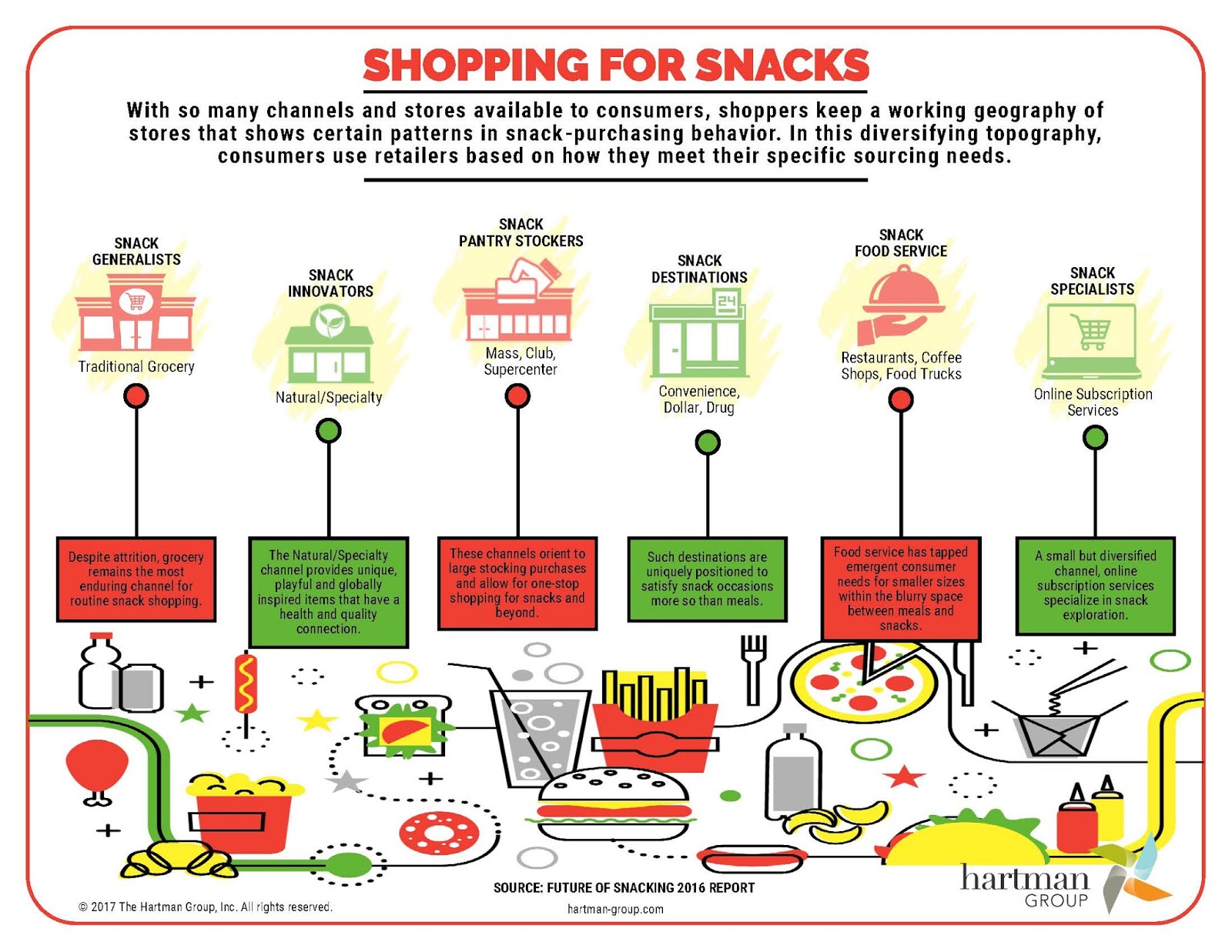
With snacking being an all-day affair, snacks must be tailored in appearance, calories, nutrition, taste and texture to meet consumers’ expectations. The Hartman Group identified three key snacking drivers—nourishment, optimization and pleasure—that represent a thematic shift towards individualized and intentional snacking.


http://www.beneo.com/Benefits/Sugar_Replacement/BENEO_factsheet_Fibres_in_sugar_reduced_yoghurt_EN_201607v1_web_2.pdf?utm_source=BerryOnDairy&utm_medium=BerryOnDairyBlog&utm_campaign=SC1 Sugar replacement


“Many companies continue to market to what we imagine when we think of meals and snacks: the bowl of cereal, the lunchtime sandwich, a quick bag of chips and the family to share the meat and potatoes,” writes The Hartman Group in its hot-off-the-presses “The Future of Snacking 2016” report. “By speaking only to these images, companies are missing out on new opportunities emerging from the dynamic changes taking place in American culture (in general) and our eating culture (specifically).”


The report explains that there’s a confluence of several cultural shifts that have led to the prominence of snacking. 

  • These shifts include the erosion of food rituals centered on the nuclear family, rapidly changing wellness and culinary trends, and the growing access people have to food and food types.
     
  • As eating experiences that tend to be individualized and not shared, snacks are able to address consumer needs in ways that traditional meals often cannot.
     
  • The boundary between meals and snacks is blurring, but most people understand a meal to be shaped by cultural traditions around timing, setting and food groups. Snacks, on the other hand, are highly personalized and variable.
     
  • Snacks often punctuate and bridge larger eatings but happen fluidly and spontaneously, often during other activities. As such, they are low or no prep and more easily satisfy demands for immediacy.
     
  • They are likewise less substantial, often containing fewer than 200 or 300 calories, and people do not hold snacks to the same nutritional standards as meals.

Dairy foods are well poised to take charge of the snacking daypart. There are products that talk to all three drivers: nourishment, optimization and pleasure.

When it comes to nourishment, the inherent, as well as added protein in dairy foods assists with hunger abatement. Dairy’s natural, as well as added sugars, combined with the protein and fat provides sustained energy to help maintain one’s reserves of stamina to meet the demands of life. Dairy beverages address hydration, another critical nourishment need.

Regarding optimization, dairy products can be formulated to provide quick energy, bringing energy back to one’s baseline or even provide an extra boost of strength and vitality. What’s key here is the product should not raise blood sugar and then take the consumer into a quick crash and burn. Sugar management is paramount.

“Lowered sugar contents for optimum energy,” this is a key message being communicated by exhibitors at Expo West. It also speaks to the Nutrition Facts label that will soon require a separate line for “added sugars.”

And finally, there’s the driver of pleasure. Consumers find comfort in dairy foods and can satisfy their cravings with the many varied tastes and textures. This past week at the International Dairy Foods Association Ice Cream Tech conference in Las Vegas, I discussed how ice cream needs to be made into a snack. There are so many options in the novelty format. Load them up with fruits and nuts, keep added sugars low, and you have the ideal “craving” snack.

Sugar content and sugar form matters. Research commissioned by BENEO in 2016 and conducted by Ipsos showed that consumers are gaining a better understanding that not all sugars are alike. The study of 1,000 U.S. consumers was undertaken to obtain a better understanding of consumers’ perceptions of sugar, carbohydrates and the benefits of nutrition that supports a lower blood glucose response and energy management. Those surveyed indicated that along with looking for foods that are natural, clean label and nutritious without “empty calories,” they also pay close attention to the levels of sugar that are contained in their food choices. Consumers prefer nutritional foods that not only sustain energy throughout the day, but also help with weight management, healthy eating and disease prevention.

Additionally, the results revealed that consumer health concerns in order of importance are weight management (38%), stress (35%) and fatigue (33%). Respondents indicated they are aware that the amount and type of sugars play a major role in coping with these health issues. In fact, 57% of the consumers polled said they try to cut their sugar intake. A healthy diet (58%), weight management (56%) as well as tooth decay and diabetes (37% and 28%, respectively) were named by respondents as concrete reasons to limit sugar intake. On the other hand, respondents said they are not prepared to completely forego sugar, with taste being the number one reason at 58%. Twenty-four percent said sugar provides essential energy and 20% indicated that sugar acts as a mood food.


While consumers said they have an ambivalent relationship to sugar, they indicated that there is awareness that some sugars are better for their health than others. Sugar from honey for example, was perceived as the most appealing sweetener in the U.S because it is natural. Furthermore, about two out of three respondents agreed that naturally derived sugars from fruits, vegetables and plants are healthier (64%). A similar number also said they preferred natural sugars to low calorie sweeteners (65%). Finally, 60% of the consumers polled indicated their ideal sweetener would not lead to a “sugar boost and crash effect.”


Many of the products being debuted at Expo West address sugar content. For example, Yooli artisan-style farmer’s cheese, which made its debut at the 2016 expo tweaked its formula over the past year to be lower in added sugars. This protein-packed snack delivers 17 to 18 grams per 4.4-ounce container. The product comes in Honey Lemon Zest (super yummy!), Strawberry and Vanilla varieties, delivering 170 to 180 calories, 2.5 grams of fat and 15 grams of sugar.

The Yooli Bars are all about on-the-go snacking. These are farmer’s cheese with coconut, strawberry or vanilla and enrobed in dark chocolate. A 50-gram bar contains 100 to 130 calories, 10 to 11 grams of sugar and 6 to 7 grams of protein. Check them out at the satellite expo hall in the Hilton at booth 529.


Naturi (booth 8924) is another exhibitor that emphasizes the lower sugar content of its yogurts. The company’s newest flavors are Coffee + Chicory and Pineapple + Coconut, each with 13 grams of protein and a mere 12 grams of sugar per 5-ounce container.


Hope to see you on the Expo floor today or tomorrow.
http://www.beneo.com/Benefits/Sugar_Replacement/BENEO_factsheet_Fibres_in_sugar_reduced_yoghurt_EN_201607v1_web_2.pdf?utm_source=BerryOnDairy&utm_medium=BerryOnDairyBlog&utm_campaign=SC1 Sugar replacement


Friday, March 3, 2017

Embrace National Nutrition Month: Milk Is Already Great. Here Are Tips to Make Milk Better.

Photo source: California Milk Processor Board


Data show that today’s consumer is more than ever aware of how diet influences short- and long-term health and wellness. Shoppers are seeking out nutrient-dense foods to attain benefits beyond basic nutrition.

Inherently nutritious milk and beverages made with milk or dairy ingredients appeal to these consumers. The correlation of calcium to bone health is ingrained, while an understanding of the many benefits of dairy protein resonates with more and more consumers.

www.ingredia-functional.com

Thank you to my friends at Midwest Dairy for sharing recent USDA Economic Research Service data that show both total and domestic commercial disappearance of milk grew in 2016. In total, it was up 3%, while domestically it increased 2.9%.

Dairy remains a vital part of people’s lives. The numbers show it. USDA-ERS data show milk used in all dairy products continues to increase on a total volume and per capita basis. During the 20-years from 1995 to 2015, average annual growth in disappearance was 1.5%. During this time frame, per capita consumption increased by 57 pounds on milk equivalence. That’s a lot of milk. 


Though I’m sure most of you know this, that milk is being consumed mainly in the form of cheese and yogurt. Per capita cheese consumption increased by 8 pounds during this 20-year period, while yogurt increased by 8.6 pounds. Cheese consumption continues to show healthy growth, yogurt, however, has slowed.

This is my favorite. Butter is back. Per capita butter consumption is at its highest point--5.6 pounds--since 1969. From 1995 to 2015, it grew by one pound.


Then there’s milk. The base ingredient for dairy foods, and an incredible powerhouse beverage all on its own. From 1995 to 2015, per capita consumption decreased by 5.7 gallons. I repeat myself…that’s a lot of milk!

Data analysis by my friends at Midwest Dairy shows that the milk segments that are growing and off-setting part of the milk decline include lactose-free, flavored, refuel and whole. Further, milk as an ingredient is growing through lattes. Think all those ready-to-drink cold-brew beverages finding their way into the convenience channel.

In less than a week, Expo West will take place in Anaheim. I’ve received MANY previews of innovations that will be rolling out at the show, dairy and dairy alternatives. Many of these will be featured as a Daily Dose of Dairy over the next month. These are out-of-the-gallon innovators, something I encourage all processors to be.

Photo source: Starbucks

It’s time to get creative with milk. Here are some tips.

1. Concentrate the protein content. This can be achieved through filtration or protein addition. Flag it on product labels. Talk about the benefits, which range from satiety to refuel.

2. Boost health and wellness attributes. Consider adding DHA omega-3 fatty acids, probiotics and/or prebiotic fibers, among others. Identify your target consumer and formulate a milk beverage to meet their nutritional needs.

3. Go lactose free. Real or perceived lactose intolerance, there’s a (rapidly) growing number of consumers who believe they feel better without lactose in their diet. So just do it already. I believe that all milk beverages should be lactose free. This eliminates a barrier to trial. If you use lactase enzyme to breakdown the lactose, it also assists with building natural sweetness.

4. Reduce added sugar in flavored beverages. Stevia, monkfruit and erythritol are all sensible natural sweeteners. Keep it simple and label friendly. A little sugar in combination with these high-intensity works, too.

5. Make fruits and vegetables work for you. Juices, concentrates and purees add sweetness, boost fiber content and, if added in sufficient quantities, deliver a serving or two of produce. They also provide natural color. Artificial colors are no longer acceptable by many consumers, especially in dairy beverages, which possess a healthful halo.

Give consumers the beverages they are looking for so they can raise their glass and toast to good health. Let them have their own daily dose of dairy.

www.ingredia-functional.com