Thursday, April 24, 2014

Probiotics Thrive in Yogurt

It’s been more than a decade since the International Scientific Association for Probiotics and Prebiotics was formed with the intent to raise scientific credibility of the field so that marketers could put these beneficial ingredients to action in the consumer packaged goods industry.

Globally, dairy, and specifically yogurt, lead the way in regards to being enhanced with probiotics. This is because yogurt is a natural fit. It is an innately healthful food made with starter cultures, so it makes sense to add some extra good ones.

What are probiotics?  They are live microorganisms, which when administered in adequate amount, confer a health benefit on the host. They positively alter the body’s bacterial composition to encourage overall wellness. Some strains provide specific benefits such as improved intestinal function and increased immune response.


http://www.chr-hansen.com/products/product-areas/dairy-cultures/our-product-offering/nu-trishr.html

To read an article I just wrote for Food Business News entitled “Probiotics and prebiotics: The future is now,” link HERE.
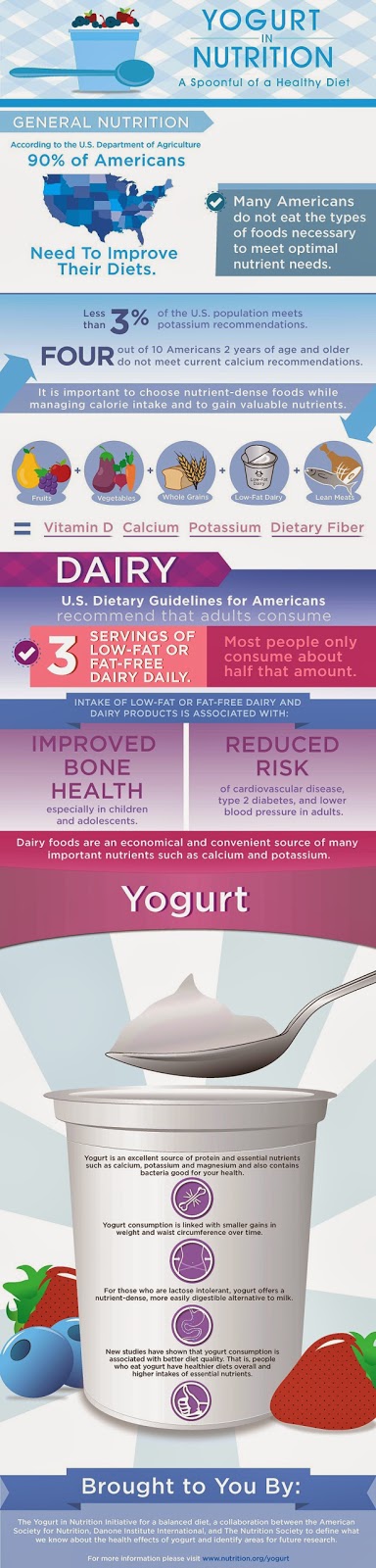
https://www.multivu.com/assets/61206/documents/61206-YogurtInfographic-Final-5-28-original.pdf

(To view a larger version of the infographic to the right, clink on it or link HERE.)

Proceedings from last year’s First Global Summit on the Health Effects of Yogurt have just been published as a supplement to the May 2014 issue of the American Journal of Clinical Nutrition. You can view the contents HERE.

The Summit addressed the growing body of evidence linking yogurt consumption to improved health and identified additional research needed to establish a scientific link between yogurt and potential health benefits.

“Current research on the potential impact of yogurt on health is encouraging and we look forward to learning more about the unique contribution that yogurt offers to individuals and overall public health,” said Sharon Donovan, PhD, RD, past president of the American Society for Nutrition and professor of nutrition at the University of Illinois, at the Summit. “Our goal in this initiative is to document what we know and what we do not know to guide future research efforts.” For more information, link HERE.


Donovan writes in the proceedings that yogurt has been part of the human diet for thousands of years, and during that time a number of health benefits have been associated with its consumption. She explains that when assessing a complex food matrix such as yogurt, which is typically a living system, it is important to not just look at specific nutrients, rather how the food influences the whole diet.

The role of probiotics is an important consideration.

One of the papers in the proceedings was written by Lorenzo Morelli, professor and chair of Food Microbiology and Biotechnology at the Istituto di Microbiologia, Università Cattolica del Sacro Cuore, Piacenza, Italy. Entitled “Yogurt, living cultures and gut health,” Morelli explains that bacteria used to ferment milk to obtain yogurt belong to a thermophilic, bile-sensitive species of lactic acid bacteria, which are not ideally suited for survival into the human gut. However, assessing the viability of these bacteria through the digestive tract may be relevant to evaluate their potential to deliver some beneficial effects for the well-being of the consumer. The well-known reduction in the symptoms caused by lactose maldigestion is not the only benefit provided by yogurt starter cultures. He reviews additional effects, emphasizing data that suggests strain-dependent effects.

Other papers in the proceedings include:
  • Dairy products in global public health (Andrew Prentice)
  • How sound is the science behind the dietary recommendations for dairy? (Connie Weaver)
  • Nutrient density: principles and evaluation tools (Adam Drewnowski and Victor Fulgoni III)
  • Yogurt and weight management (Paul Jacques and Huifen Wang)
  • Yogurt and dairy product consumption to prevent cardiometabolic diseases: epidemiologic and experimental studies (Arne Astrup)
  • Yogurt consumption and impact on health: focus on children and cardiometabolic risk (André Marette and Eliane Picard-Deland)
  • Lactose digestion from yogurt: mechanism and relevance (Dennis Savaiano)
  • Dairy products, yogurts and bone health (René Rizzoli)
  • Yogurt: role in healthy and active aging (Naglaa Hani El-Abbadi, Maria Carlota Dao and Simin Nikbin Meydani)
  • The future of yogurt: scientific and regulatory needs (Bruce German)
An interesting and very positive consumer piece on yogurt was published is January on the website Vkool.com. Entitled “Yogurt and the human health: surprising benefits of yogurt that everyone should not overlook,” the article addresses the nutritional benefits of eating yogurt, including the health and wellness benefits of probiotics, such as aiding in digestion and irritable bowel syndromes, abdominal pain and diarrhea. Additionally, the article discusses immune system promotion, cholesterol level reduction and yeast infection prevention. You can view the article HERE.

And here are some recent global innovations touting the inclusion of probiotics.


U.S. consumers looking for new ways to get their daily dose of immunity-building probiotics can turn to recent innovations from leading kefir manufacturer Lifeway Foods Inc. The company has developed three new varieties of its dairy-based kefir smoothie that deliver a trio of fresh choices for drinking to your health. The new veggie, oat-enriched and stevia-sweetened kefir lines are rolling out right now.

Lifeway Veggie Kefir is a savory alternative to fruit-flavored kefirs that lets you drink your probiotics and your veggies at the same time. This new blend of vegetables juices and kefir delivers one full serving of vegetables as well as the full nutritional kick of kefir in every 8-ounce glass. It comes in Beet, Cucumber and Tomato varieties, each bursting with garden-fresh flavor and with no added salt or sugar. It is sold in 8-ounce individual bottles and four-packs.

Lifeway Kefir with Oats is a fiber bonanza featuring 1.5 grams of soluble oat powder that packs the nutritional punch of oatmeal without the cooking. With a smooth texture and a hint of oat flavor plus 11 grams of complete protein, this “oat kefir” comes in Apple Cinnamon, Blueberry Maple and Vanilla Plum flavors for an on-the-go breakfast or a great midday pick-me-up. It comes in 8-ounce individual bottles and four-packs.

Lifeway Perfect 12 Kefir is sweetened with stevia. It is suited for diabetics or those watching their sugar intake. With 12 probiotic cultures and 12 grams of carbs, the line features all-natural sweetening with no-calorie stevia leaf extract and no added sugar, according to the company. An 8-ounce serving contains 110 calories. The kefir comes in 32-ounce multi-serving bottles in four flavors inspired by dessert favorites: Apple Pear Cobbler, Key Lime Pie, Orange Cream and Triple Berry Tart.

“As the popularity of probiotics and kefir continues to climb, there’s room in the market for new permutations that provide variety as well as appeal to consumers with different nutritional needs and priorities,” says Julie Smolyansky, president and CEO of Lifeway Foods. “These three new lines deliver imaginative new formulations and flavors that offer innovative solutions for healthy meals and snacking.”

The company just announced it will launch its largest national print advertising campaign in the company’s 28-year history on May 5 with full-page ads focusing on the theme #MotherCulture, which is a play on words invoking both the company’s cultured dairy products and the maternal nurturing of healthy children and society through food, attention and love.

Images in the initial ad feature Smolyansky exposing a pregnant belly as well as snapshots of her two young daughters, including one sipping the company’s organic ProBugs kefir product from a colorful no-spill pouch. (By the way, Lifeway was the first U.S. yogurt manufacturer to use the pouch.) May and June ad placements will include American Baby, Health, InStyle, People and Shape. The ads invite readers to share their parenting stories, photos, recipes and other contributions expressing what the term MotherCulture means to them at the hashtag #MotherCulture, with the goal of creating an interactive dialogue about the parenting experience.

“This campaign was inspired by the fact that everything starts with a mother. That includes kefir, which is made from milk fermented with kefir ‘mother’ cultures,” says Smolyansky. “As a mother of two myself, I’m interested in feeding my children nutritious foods, creating a healthy environment for them to grow up in, and empowering other mothers and fathers to do the same. With #MotherCulture, we can share our experiences to collectively build a healthier and more empowered community.”

The ads support Smolyansky’s other efforts to empower women around the world. The youngest female CEO of a publicly held company when she took over her father’s kefir business in 2002 at the age of 27, Smolyansky is currently a member of the United Nations Foundation’s Global Entrepreneurs Council, a maternal health advocate with Christy Turlington Burns’ Every Mother Counts organization, and an advisor to the 1,000 Days advocacy group dedicated to promoting better nutrition during the critical 1,000 days from pregnancy to age 2. She is also the founder of Test400k, a nonprofit organization dedicated to ending the backlog of 400,000 untested rape kits in the U.S. as well as ending violence against women both domestically and globally. Congratulations Julie. It is an honor to be your friend.


In South Korea, Purmil offers Premium Bifidus Apple Flavour Drinking Yogurt. It is made with recombined milk and 7% apple juice. To encourage growth of the added Bifidus bacteria, it is enhanced with the prebiotic fructooligosaccharide. To keep calories low, it is sweetened with sucralose. The product comes in 300-milliliter bottles. A 100-milliliter serving contains a mere 65 calories.


In Japan, the private-label Châteraisé brand offers BB12 Probiotics Yogurt, a low-calorie, low-sugar and fat-free product. The unflavored yogurt comes in 80-gram containers and contains a mere 30 calories and 3 grams of fat. Erythritol and sucralose keep calories down.


In Canada, the Loblaw’s supermarket chain sells private-label President’s Choice Probiotic Greek Yogurt. The product comes in 500-gram multi-serve containers in three flavors: Mango, Strawberry and Vanilla. There are also three combination packs, containing eight 100-gram cups. The combos are: Black Cherry and Strawberry, Blueberry and Raspberry and Strawberry and Vanilla. Labels tout the fact that a 100-gram serving provides one billion colony-forming units of the probiotic cultures Lactobacillus acidophilus and Bifidobacterium lactis, which contribute to healthy gut flora.


In Peru, Misky Food offers five varieties—Guanabana, Mango, Passionfruit, Peach and Strawberry—of drinkable yogurt. Sweetened with stevia, product labels tout that the drink contains beneficial bacteria to help regulate intestinal flora and fortify the immune system.


Back in the States, Origin Food Group is rolling out Vida, a line of probiotic drinkable yogurts enhanced with functional ingredients. There are three formulations, all of which are a good source of fiber and high in calcium. A serving also contains 200 million live and active cultures.

Awaken is positioned as a breakfast drink. It contains real bananas and strawberries and is fortified with essential vitamins.

Invigor contains plant-based, heart-healthy phytosterols. It is flavored with mango and guanabana.

Rejuvenate is made with acai, blueberries and pomegranate. It is enhanced with CoQ10 and vitamin E, both of which are associated with producing energy for cell growth.

Vida comes in multi-serve 32-ounce plastic bottles.


At the beginning of the year, Cacique rolled out a namesake yogurt smoothie line in eight varieties. There are five fruit-only varieties and three that are blended with cereal (wheat bran). They are: Guava, Mango, Pecan with Cereal, Pina Colada, Prune with Cereal, Strawberry, Strawberry-Banana and Strawberry-Banana with Cereal. The pecan variety contains real dry-roasted pecans. Each single-serve 7-ounce bottle contains 8 grams of protein and 120 to 150 calories, depending on variety. Calories are kept low through the use of a blend of sugar and sucralose. Product labels tout the fact that they are made with “real fruit” and “real California milk.” Labels also claim the inclusion of live and active cultures that help support digestive health. A logo states: Probiotics at work.

It’s time to put probiotics to work in your dairy foods.

http://www.chr-hansen.com/products/product-areas/dairy-cultures/our-product-offering/nu-trishr.html

Thursday, April 17, 2014

Flavors Make Milk Yummy


Prairie Farms Dairy made national headlines this Easter week for its new seasonal flavored milk: Jelly Bean. This low-fat milk delicately sweetened with a sugar and monk fruit juice combination is bursting with fruity jellybean flavor.

At only 150 calories per 8-ounce serving, it’s the perfect guilt-free sweet treat anyone can enjoy. Jelly Bean is joined by two other limited-edition concepts: Chocolate Marshmallow and Easter Eggnog.

“Consumers are looking for new and exciting flavors of milk,” says Rebecca Leinenbach, sales program director at Prairie Farms. “Our newest flavor creations capture the essence of spring and are sure to become family favorites for years to come.” These products combine real milk with just the right amount of flavoring to create tasty, fun treats that also provide essential nutrients like protein and calcium.

Less than a month ago, a first in the dairy industry rolled out: MilkSplash. Created and marketed by North Carolina-based S&D Beverage Innovations, MilkSplash comes in a variety of great-tasting flavors, fun colors and engaging characters such as Cocoa Loco, Cookies ‘N Cream, Jammin’ Banana, Orange Cream Dream and Sir Strawberry Swirl.

http://www.idfa.org/forms/meeting/Microsite/2014_Milk_and_Cultured_Dairy_Con

The innovative new milk flavorings debuted in select Target stores at the end of March. They are rolling out this week nationally at Walmart and other retailers.


“We created MilkSplash to give kids lots of wonderful options to flavor their milk because research shows nearly seven in 10 kids drink more milk when it’s flavored--and we know that kids need to drink more milk,” says Maya Zuniga, director of product innovation at S&D. “With milk consumption declining for decades, many children miss out on the recommended amount of milk and its essential nutrients, including three that are of most concern: calcium, vitamin D and potassium.

“Moms are also concerned about the amount of sugar in the beverages their children drink according to a recent nationwide survey, so they’ll be pleased to know that MilkSplash is zero calorie,” she adds.

Following in the footsteps of liquid water enhancers and the positive impact they have had on water consumption, MilkSplash milk flavoring is doing the same for kids and milk.

“We’re defining a new category of highly concentrated liquid milk flavorings and offering more choices than kids have ever had before,” says John Buckner, vice president of marketing at S&D, who is overseeing the MilkSplash launch. “Chocolate and strawberry syrups and powders have been among the limited options for adults and kids alike, until now. MilkSplash is launching with five flavors but there are many more in the pipeline, as well as all-natural versions of MilkSplash in development.”

Every small bottle of MilkSplash makes at least 24 servings, requiring just a gentle squeeze and simple stir to turn white milk into a delicious treat kids love that lets them enjoy milk on their own terms. The suggest retail price is $4.50.


“Moms love MilkSplash because it encourages kids to make healthier beverage choices,” says Zuniga. “They also appreciate that it’s not messy like powder or syrup flavorings and can be taken to school in a backpack or lunchbox, or dropped in a bag for a trip to the mall or the park.”

It’s time to shake things up and add variety, delicious flavors and cute characters that will get kids excited about milk and flavoring it their way. The company’s dream is to have kids ask mom: May I have some more milk, please?

Buckner says that even in the very short time that MilkSplash has been available, consumers are already telling the company that MilkSplash is the reason their children are drinking, finishing and returning to milk. Many parents report buying as much as twice the amount of milk that they were previously purchasing, he says.

“We hear that kids love the unexpected flavors,” says Buckner. “It is gratifying to offer a product that increases milk consumption.”

The company is interested in all types of partnerships to get kids to drink more milk. This includes in-store cross promotions such as on-pack couponing, co-merchandising and sampling. “We also want to participate in events and education that promote drinking milk,” says Buckner.

The trade has been very receptive to MilkSplash, which is the first product in a long time to bring innovation to the milk flavoring category. “Retailers love the MilkSplash brand name, the shelf presence of our cute flavor characters and the way MilkSplash drives milk sales,” says Buckner.

So just how did MilkSplash come to life? “In our research we found that consumers love the compact size and portability of some of the miniature bottles of water enhancers that you in the marketplace today,” says Buckner. “They fit in a purse, lunchbox or back pack. We picked our teddy bear-shaped bottle because it was both distinctive and ergonomic, fitting perfectly in small hands.

“The bottle shape inspired our CEO, who immediately saw a character personality on the packaging,” he adds. “Since kids love flavored milk, we decided that we would give them all the flavors they always imagined but until now, never believed were possible. The flavor names double as the names of our characters.”

The characters come to life in a village called Splash Landing and kids can visit this special place when a parent assists them in finding MilkSplash at www.milksplash.com.

“Our formulations required many months of research and development,” he says. “After extensive testing, we feel we achieved the perfect balance of sweetness, flavor, color and creaminess to compliment milk.”

For more information about MilkSplash, including how dairy processors can partner with the brand, click HERE, or call 855-MILKPLZ855-MILKPLZ.

http://www.idfa.org/forms/meeting/Microsite/2014_Milk_and_Cultured_Dairy_Con


Friday, April 11, 2014

100-Calorie Greek Yogurt

This year marks the 10th anniversary of the 100-calorie single-serve snack pack. Kraft Foods popularized the concept in 2004 when it offered sweet and savory snacks in portion-controlled packs.

Dairy foods manufacturers have learned that creating a 100-calorie product line is challenging, as calories can fluctuate by 10 to 20 when you change the characterizing flavor ingredients. For example, Yasso Frozen Greek Yogurt, the pioneers of frozen Greek yogurt, have a number of novelty bars that come in at 100. They also have some as low as 80 and a few that jump to 130.

www.sensus.nl


As the 100-calorie pack trailblazer, Kraft has had the most activity with this concept in the dairy category. There have been some wins and some not so successful launches.


The company still offers 100-calorie single-serve cottage cheese options under the Breakstone’s and Knudsen brands. However, the Cheese Bites line, which debuted in early 2010, barely lasted a year in the marketplace. The single-serve “pasteurized prepared cheese snacks” were sold in bags containing five snack packs. Varieties were Cheddar; Cheddar & Monterey Jack; Mozzarella, Garlic & Herb; and Three Cheese Blend (mozzarella, Parmesan and white Cheddar).

Kraft, as of right now, is not in the yogurt business. I am sure there are regrets for selling the Breyers and Light ‘N Lively brands, as the 100-calorie platform is becoming increasingly popular in the yogurt category, particularly with Greek yogurt. Ironically, Kraft sold those brands in 2004, the same year it entered the 100-calorie pack business.


When it comes to 100 calories in yogurt…Greek is the word. The most recent player to enter this category is Prairie Farms Dairy, who has product hitting store shelves this week.

“Our loyal consumers asked for this product and we’re pleased to deliver a high-quality Greek 100 Yogurt made without the use of artificial sweeteners,” says Rebecca Leinenbach, sales program director. “Our new 100 Calorie Greek Yogurt is a great addition to our popular Greek yogurt line that was introduced last April.”

Prairie Farms 100 Calorie Greek Yogurt comes in five varieties: Blueberry, Cherry, Key Lime, Peach and Strawberry.

The ingredient legend for Blueberry reads: Cultured Pasteurized Skim Milk, Blueberries, Sugar, Fructose, Natural Flavor, Locust Bean Gum, Pectin, Sodium Citrate, Citric Acid, Calcium Chloride, Stevia Extract, Fruit and Vegetable Juice for Color. Contains Five Live Active Cultures: S. thermophilus, L. bulgaricus, L. acidophilus, Bifidus and L. casei.

The key nutritionals are: 0 grams fat, <1 gram fiber, 12 grams sugar, 12 grams protein, per 5.3-ounce cup.

All of the 100-calorie Greek yogurts in the marketplace differ ever so slightly in formulation. The brand most touting its naturalness is Chobani.

Check out this ad:

Chobani Simply 100 Greek Yogurt comes in six varieties: Black Cherry, Blueberry, Peach, Pineapple, Strawberry and Vanilla.

The ingredient panel for the Black Cherry variety reads: Nonfat Yogurt (Cultured Pasteurized Nonfat Milk), Live and Active Cultures: S. thermophilus, L. bulgaricus, L. acidophilus, Bifidus and L. casei, Chicory Root Fiber, Black Cherries, Water, Cherry Juice Concentrate, Evaporated Cane Juice, Pectin, Natural Flavors, Locust Bean Gum, Monkfruit Extract, Stevia Leaf Extract.


It is the only 100-calorie brand to use chicory root fiber, monkfruit extract and stevia to keep calories low and add fiber. In fact, Chobani is the only 100-calorie Greek yogurt to be enhanced with fiber. The chicory root does that and more. It also enhances and rounds out sweetness. The key nutritionals are: 0 grams fat, 5 grams fiber, 6 grams sugar, 12 grams protein, per 5.3-ounce cup.


The other national brand competing in the 100-calorie Greek yogurt segment is Yoplait. Yoplait Greek 100 comes in 10 varieties: Apple Pie, Black Cherry, Key Lime, Lemon, Mixed Berry, Peach, Strawberry, Strawberry Cheesecake, Tropical and Vanilla.

The ingredient legend for Black Cherry reads: Pasteurized Grade A Nonfat Milk, Fruit Blend (Water, Black Cherries, Tart Cherries, Sugar, Corn Starch, Lemon Juice Concentrate). Contains 2% or less of: Sugar, Corn Starch, Potassium Sorbate added to maintain freshness, Natural Flavor, Yogurt Cultures (L. bulgaricus, S. thermophilus), Sucralose, Acesulfame Potassium, Vitamin A Acetate, Vitamin D3.
The key nutritionals are: 0 grams fat, 0 grams fiber, 9 grams sugar, 10 grams protein, per 5.3-ounce cup.

Dannon is not on board with the 100 calorie concept. The company chose to go lower than 100. It has two 80-calorie Greek yogurt lines, one under its Light & Fit brand and another under Activia.
The Activia Greek Light line has five varieties: Blueberry, Cherry, Peach, Strawberry and Vanilla.

The Light & Fit line includes Banana Cream, Blackberry, Blueberry, Cherry, Cherry Chocolate, Key Lime, Orange Cream, Peach, Pineapple, Plain, Pomegranate Berry, Raspberry, Raspberry Chocolate, Strawberry, Strawberry Banana, Strawberry Cheesecake, Toasted Coconut Vanilla and Vanilla, as well as two seasonal flavors offered through Target stores only. They are Caramel Macchiato and Citrus Blend.

Neither product contains fiber. Both are sweetened with acesulfame potassium and sucralose.

There are a number of private-label options, again, all ever so slightly different. Safeway offers Lucerne Greek 100 Calorie in four varieties: Black Cherry, Blueberry, Strawberry and Vanilla.

The ingredient legend for Blueberry reads: Cultured Pasteurized Grade A Nonfat Milk, Blueberry Base (Water, Blueberries, Fructose, Natural Flavor, Locust Bean Gum, Pectin, Calcium Citrate, Sucralose, Acesulfame Potassium, Lemon Juice Concentrate), Milk Protein Concentrate, Modified Corn Starch, Vitamin A Acetate, Vitamin D3, Live Cultures (L. bulgaricus, S. thermophilus).

The key nutritionals are: 0 grams fat, 0 grams fiber, 10 grams sugar, 11 grams protein, per 6-ounce cup.


Aldi offers Friendly Farms Greek 100 Calories in two varieties: Mixed Berry and Tropical Fruit.

The ingredient legend for Mixed Berry reads:  Cultured Pasteurized Grade A Nonfat Milk, Strawberries, Sugar, Blueberries, Raspberry Puree, Corn Starch, Pectin, Natural Flavor, Lemon Juice Concentrate, Sucralose, Acesulfame Potassium. Contains Five Live Active Cultures: S. thermophilus, L. bulgaricus, L. acidophilus, Bifidus and L. casei.


The key nutritionals are: 0 grams fat, <1 gram fiber, 9 grams sugar, 12 grams protein, per 5.3-ounce cup.

The Roundy’s version comes in Black Cherry, Peach, Strawberry and Vanilla. The ingredient legend for Black Cherry reads:  Cultured Pasteurized Skim Milk, Cherries, Fructose, Cherry Juice Concentrate, Natural Flavor, Pectin, Locust Bean Gum, Sodium Citrate, Citric Acid, Fruit and Vegetable Juice for Color, Calcium Chloride, Stevia Extract. Contains Five Live Active Cultures: S. thermophilus, L. bulgaricus, L. acidophilus, Bifidus and L. casei.

The key nutritionals are: 0 grams fat, <1 gram fiber, 13 grams sugar, 12 grams protein, per 5.3-ounce cup.


The 100-calorie concept has definitely found a place in the dairy case. It will be interesting to see how companies begin to differentiate through the addition and subtraction of ingredients for value-added content claims.

www.sensus.nl

Thursday, April 3, 2014

Powerful Proteins Come from Milk

In addition to making practically every 2014 food trends list, protein was the topic of an entire day-long track at IFT Wellness14 at the end of March. The week prior, it was also a dominant call out on innovations that debuted at Natural Products Expo West.  (Check out some innovations at the end of this blog.)

The month before, MilkPEP launched the Milk Life campaign designed to reinforce how milk’s many nutritional benefits--including high-quality protein--can help power the potential of every day.

With 8 grams of high-quality protein in each 8-ounce glass, milk is a natural source of protein, a nutrient most Americans are trying to increase in their diets because of the benefits associated with intake, which include exercise recovery, healthy aging, muscle building and weight management.

The appeal of milk proteins is so strong that developers of all types of foods and beverages are including isolated and concentrated varieties in product formulations. All types of dairy foods can benefit from a boost of dairy proteins, in particular whey, the most powerful of them all.

To read more about “Innovative ways to formulate with whey” click HERE.

http://bit.ly/1dV0UrB

At the same time dairy proteins have been receiving accolades in the media and at industry events around the country, some folks have been trying to undermine dairy proteins’ value. Most recently there was an article published in Cell Metabolism (19, 407-417, March 4, 2014) that included this statement in the summary: “Respondents aged 50 to 65 reporting high-protein intake had a 75% increase in overall mortality and a four-fold increase in cancer death risk during the following 18 years. These associations were either abolished or attenuated if the proteins were plant derived.”
You can view the paper HERE.

Fortunately, a team of protein experts quickly convened and wrote a letter to the editors of Cell Metabolism explaining that the conclusions and analyses of the study were biased and flawed and not supported by the researchers’ own analyses or the greater literature. The experts explained that in their opinion, the peer-review system failed to adequately evaluate this paper. When this happens, the scientific community has the responsibility to provide additional oversight with scholarly evaluation and debate, which is what they tried to do with their letter. Unfortunately, the editors declined to publish the letter, recommending that the authors simply post their comments on the journal website.

The authors declined that approach. Instead, they made their unpublished letter available through social media and would like to spread the word. You can view the letter HERE.

Understanding protein quality

Separately, by any measure, whey proteins have consistently been found to be among the highest quality proteins. According to the Food and Agriculture Organization of United Nations (FAO), high-quality proteins are those that are readily digestible and contain the dietary essential amino acids in quantities that correspond to human requirements.

Until about a year ago, protein quality was quantified by its Protein Digestibility Corrected Amino Acid Score (PDCAAS). Since, a new, advanced method--the Digestible Indispensable Amino Acid Score (DIAAS)--is recommended by FAO for assessing the quality of dietary proteins.

Using the PDCAAS method, values are “truncated” to a maximum score of 1.00, even if scores derived are higher. Because protein quality varies according to origin (animal vs. vegetable), their individual amino acid composition and their level of amino acid bioactivity, it is essential to document the quality of protein ingredients to best formulate nutrient-dense foods.

“Over the next 40 years, three billion people will be added to today’s global population of 6.6 billion. Creating a sustainable diet to meet their nutritive needs is an extraordinary challenge that we won’t be able to meet unless we have accurate information to evaluate a food’s profile and its ability to deliver nutrition,” says Paul Moughan, co-director of the Riddet Institute, Massey University, New Zealand, who chaired the expert panel that recommended to FAO the new method for evaluating protein quality. “The recommendation of the DIAAS method is a dramatic change that will finally provide an accurate measure of the amounts of amino acids absorbed by the body and an individual protein source’s contribution to a human’s amino acid and nitrogen requirements. This will be an important piece of information for decision makers assessing which foods should be part of a sustainable diet for our growing global population.”

http://bit.ly/1ouaWVc

Supporting the power of whey proteins, and at the same time recognizing the value of other sources of protein to help feed the booming population, Dr. Craig Sherwin, director of protein technology center at Davisco Foods International Inc., spoke at IFT Wellness14 on the topic of blending proteins. He explained how whey proteins are known for their clean flavor and high solubility, particularly at low pH. To achieve additional goals of thermal stability and improved economics, product developers often look to blends of whey proteins with other protein sources.

Sherwin explained to attendees that data from FAO shows that whole milk powder has a DIAAS score of 1.22, far superior to the DIAAS score of 0.64 for peas and 0.40 for wheat. When compared to the highest refined soy isolate, dairy protein DIAAS scores were 10% to 30% higher. Specialty dairy proteins designed to contain higher levels of functional amino acids such as leucine, a metabolic trigger for muscle protein synthesis, or tryptophan, a sleep aid, also scored well over 100. Precise values for protein quality and digestibility can differ among suppliers based on level of purity since each product has a slightly different amino acid profile.

In his presentation, Sherwin demonstrated how blends of high-quality whey protein with caseins, soy protein or collagen can still deliver theoretical DIAAS scores of 100. This suggests that whey proteins can easily be the foundation of a beverage or snack formula up to even the highest fortification levels. This includes protein-enhanced dairy foods.

Check out these innovations


Beyond Better Foods is growing its Enlightened frozen novelty line with new flavors and forms. Peanut Butter and Toasted Almond join Coffee, Fudge and Orange Cream in the stick bar lineup. Chocolate wafer sandwiches are the new form. The first two varieties are Mint and Vanilla Bean.

These ice cream novelties deliver protein and fiber with less sugar and fewer calories than most other novelties. Each 75-gram stick novelty contains a mere 70 to 80 calories and 8 to 9 grams of protein, depending on variety. The sandwiches contain 100 calories and 7 grams of protein. Skim milk and milk protein isolate are the sources of protein.

All of the novelties are a high source of fiber, which comes primarily from soluble corn fiber. Erythritol and monk fruit extract keep calories and sugar content at appealing levels.
For more information, visit HERE.

Arctic Zero is also expanding its frozen dessert pint line with three new flavors: Coconut, Orange Cream and Sea Salt Caramel. The company has tweaked all of its formulations to offer consumers creamier, smoother protein-packed, low-calorie frozen desserts.

“I have an insatiable appetite for inventing new and unique flavors, and improving upon existing fan favorites to evolve our line of frozen desserts,” says Founder Greg Holtman. “We listen closely to what our loyal customers say about our functional foods and are excited to introduce them to our new pint flavors. We’re also proud to share our newly enhanced formulation with Arctic Zero fans everywhere, so they can enjoy a creamier, smoother texture and richer taste in every pint.”

The new flavors join Chocolate, Chocolate Peanut Butter, Coffee, Cookies & Cream, Mint Chocolate, Strawberry and Vanilla Maple. All of the pints contain a mere 150 calories and a whopping 12 grams of whey protein and 8 grams of fiber. The latter comes from the addition of chicory root and sugar cane fiber. The company touts the fact that the product is made with high-quality whey protein and that it is gluten free and lactose-intolerant friendly. For more information, visit HERE.

The Powerful Yogurt Company is growing, too. At Natural Products Expo West the company unveiled two new product lines: Powerful Yogurt PLUS+ and Powerful Yogurt Protein Bars.

The Powerful Yogurt PLUS+ line of Greek yogurts adds hearty whole grains to the company’s signature high-protein Greek yogurt. Powerful Yogurt PLUS+ has 21 grams of inherent milk protein per 8-ounce serving. It comes in there varieties: Coconut + Quinoa, Tropical Fruit + Oats and Lemon + Chia.


The company is expanding beyond the dairy case with Powerful Yogurt Protein Bars. Developed by an award-winning bar maker, Powerful Yogurt Protein Bars feature 20 grams of protein from a proprietary protein blend of whey protein concentrate, milk protein concentrate and whey protein isolate, along with nonfat dry milk and soy protein isolate. The bars are also a source of probiotics and are low in sugar (4 grams). Varieties are: Chocolate Coconut, Peanut Butter & Jelly and Yogurt Crème.

“We are very excited to be evolving into a company with a strong portfolio of great-tasting, all-natural, high-protein foods that fuel the active lifestyle,” says Founder and CEO Carlos Ramirez. “One year ago we launched Powerful Yogurt with one product line. The success of our high-protein, award-winning Greek yogurt led to the strong growth and innovation that you see today, but this is just the beginning.” For more information, visit HERE.

This last item is also not a dairy product, but worth a mention because it epitomizes the power of protein. Sport Beans Protein Recovery Crisps from Jelly Belly Candy Company delivers a new option for muscle recovery following intense training or competition. These post-performance crisps are formulated with proteins to rebuild muscle, and balanced with carbohydrates to replenish energy stores. They combine two sources of protein—pea on the inside and whey on the outside--in a bite-sized crisp that mimics a malt ball. Each 1.5-ounce bag provides 10 grams of protein. Varieties are Berry Smoothie, Chocolate and Vanilla. For more information, visit HERE.

TO START RECEIVING THE DAILY DOSE OF DAIRY, SUBSCRIBE HERE.

http://bit.ly/1dV0UrB


Thursday, March 27, 2014

Feed Them Milk: A New (and Needed) Approach to Nourishing Americans

It is very gratifying to watch my sons eat their cereal and milk every morning; how with every spoonful their bodies awaken a little more. They might have dragged themselves to the kitchen table, but they usually leave with a skip in their step thanks to the nourishment they received.

Milk is a key component of their breakfast. In fact, milk makes every meal more nutritious. It contains nine essential nutrients, including 8 grams of high-quality protein per 8-ounce serving and three of the top nutrients most likely to be missing in the American diet: calcium, vitamin D and potassium.

Starting the morning with a nutritious breakfast that includes milk is a great way to get ready to tackle the day. I see the difference milk makes in my boys every morning.  

milklife.com/give

Sadly, perishable items such as milk, which many of us consider a staple, are absent from homes across the country because they are not available in many of America’s food banks. According to Feeding America, the nation’s largest domestic hunger-relief organization, milk is one of the items most requested by food bank clients, yet there is a nationwide shortage because it is rarely donated. (See infographic.) The refrigerated distribution logistics from warehouse to kitchen are very challenging.

Feeding America participants currently receive the equivalent of less than one gallon of milk per person a year. That’s far short of the recommended three servings of milk a day.

Many of us learned about this during the 2014 Dairy Forum in January. That is when the MilkPEP folks unveiled their new milk marketing campaigns, one of which is in collaboration with The National Dairy Council and is called The Great American Milk Drive. This first-ever national program is designed to help deliver highly desired and nutrient-rich gallons of milk to hungry families who need it most.

You can access a video explaining the situation and the program HERE.

Did you know that hunger impacts one in six Americans, including 12.5 million families who do not have access to adequate nourishment to help them reach their full potential? Hunger has no boundaries and is a problem that exists in urban, suburban and rural communities.

When the MilkPEP team presented the campaign at Dairy Forum, I got goose bumps. This is one of the best feel-good programs I have heard about in a long time. I hope you agree. I also hope that all U.S. subscribers of the Daily Dose of Dairy get on board. There are many ways for local milk companies and farm families to get involved with The Great American Milk Drive, including retail activations, on-pack promotions and social communications. 

You are cordially invited to hear more this Wednesday, April 2 at 11:45am EST during a live stream of the official launch of the campaign. You can experience this event by clicking HERE.

The Great American Milk Drive brings the dairy industry together around the issue of hunger. Together, MilkPEP and The National Dairy Council have created this national campaign to elevate awareness of the need for milk in the nation’s feeding programs, allowing milk companies and farm families to join in together to provide Americans a simple way to help. It’s a program that does good and helps the industry benefit, as well.

The program is designed to encourage consumers to make a simple donation--purchasing an extra gallon of milk--that Feeding America will make sure gets on the table of local families who need it most.

Here’s how the program works. It’s Americans feeding Americans. We the people can lend a hand and contribute nutritious milk to feed families in need. Initially the campaign will instruct Americans to make a financial donation via website site or text message. By entering their zip code, the milk donation goes to their own community’s food bank. Food bank clients will receive a voucher to purchase any brand and any type of gallon of milk (up to $5.00) at their retailer of choice.

A robust national program (including TV advertising, retail support, social media and local events) will encourage Americans to support the drive. Over time, additional ways to donate will be made available. The tear pad is what I am most excited about. Milk marketers will work with their retailers to add a scan code to the tear pad. Shoppers can pick up a sheet, hand it to their cashier to be scanned and a have a donation added to their grocery bill. The donator’s name can then be added to the tear pad and displayed in recognition of their donation. Talk about a feel good…while you buy your own family a gallon of milk you can buy a gallon for a family in need.


At the same time The Great American Milk Drive was unveiled in January, MilkPEP also introduced the Milk Life campaign, which is designed to promote the consumption of protein-rich milk at breakfast. Together, the two campaigns will “propel milk back into a position of power,” according to Julia Kadison, interim CEO of MilkPEP. “We know that to achieve this, milk has to have a really strong positioning.


“Not only do we have to capture the minds of people by making sure they understand why it’s relevant and important for them to drink milk--and in 2014 and for the foreseeable future we will be talking about protein and the benefits of protein--but we also have to capture their hearts,” she said.

Milk Life was officially launched on February 24. You can view two of the TV commercials by clicking on the images below:


Milk Life Breakdancer

http://www.youtube.com/watch?v=PfCSnA2AHDM


Milk Life Dog Walker

http://www.youtube.com/watch?v=iByun7l3spM


Kadison's closing comment on The Great American Milk Drive is:  “It’s going to give them another reason to purchase another gallon of milk, not for their own consumption but to help other families who cannot afford it themselves.”


Let’s feed them milk.


milklife.com/give


Friday, March 21, 2014

Clean Label Dairy Series: Opportunities in Process Cheese

Products like Cheez Whiz, Easy Cheese and Velveeta—all Kraft/Mondelez brands and actually quite yummy—are considered by many as being responsible for the bad rap that the term “process cheese” has among American consumers. All three products are often criticized for how little cheese they might contain.

I’m not here to debase these products, because I have been known on occasion to squeeze some Easy Cheese right into my mouth. And…my favorite childhood lunchbox sandwich was white bread with a thick slice of Velveeta loaf and smashed nacho cheese Doritoes…all washed down with a carton of chocolate milk.

I hope to remove the stigma of the term “process” as it relates to cheese. What most Americans don’t understand is that cheese terminology, including this term, is highly regulated in the United States, but not elsewhere. (This is not taking into consideration common food names. That’s an entire different conversation. For the U.S. perspective on why U.S. cheesemakers should be able to call feta cheese feta and parmesan cheese parmesan, visit HERE.)


http://www.foodinnovation.com/foodinnovation/en-us/Applications/Pages/Dairy.aspx?


The fact is, process cheese products can be clean label and natural, per definitions recognized by the industry. They are not “processed,” per the definition some consumers use interchangeably with “Frankenfoods” and laboratory experiments.

The beauty of process cheese is that it serves as a beautiful base for innovative dairy foods formulators to add layers and layer of flavors.

At IFT Wellness, which took place this week in Chicago, my friend Lu Ann Williams, director of innovation, Innova Market Insights, The Netherlands, shared this. “Process cheese is not flagged as such in most countries. In Europe, especially, such soft, spreadable cheeses are used as flavorful condiments in sandwiches. They are also used as dips and for snacking."

Process cheese technology allows for a great deal of flavor and texture innovation…something not typically possible with natural cheese, which is a living system.”

Process cheese products are also highly regarded by prepared foods manufacturers and foodservice professionals, as these cheeses typically provide superior meltability and improved versatility in a wide array of applications, as compared to natural cheeses.

The Code of Federal RegulationsMost natural cheeses, which are living systems that evolve over time in terms of flavor and texture, are made from only four ingredients: cultures, enzymes, milk and salt. In Title 21 Part 133 of the Code of Federal Regulations (CFR), FDA legally defines cheese and outlines the requirements for more than 90 standardized cheeses, including natural varieties such as cheddar and mozzarella, as well as various process cheeses, including those that undergo heat treatment as well as those comminuted without the aid of heat.

Though natural cheeses can be and are used in food processing, more often than not, formulators rely on pasteurized cheeses. The heat treatment these cheeses undergo enables better control over functional properties. 

Pasteurized cheeses start out by blending a minimum amount of specified natural cheese with other ingredients, including those with emulsifying properties. The pasteurization (high-heat treatment) step deactivates the enzymes and cultures, which stops the cheese from changing.

As mentioned, the CFR provides standards for a number of pasteurized cheeses, but there are also many such cheeses that are non-standardized, allowing for additional ingredients and process modifications to meet finished product specifications. This includes functional properties such as restricted melt, enhanced flavor and controlled browning. Because of the ability to control functionality, most cheeses used in food processing tend to be pasteurized.

The CFR provides a number of standards for pasteurized cheese based on total cheese solids content. This includes pasteurized process cheese, pasteurized process cheese food and pasteurized process cheese spread. Cold-pack and club cheese are also considered by many as process cheeses. These products are comminuted without the aid of heat.

Process cheeses almost always requires the use of texturants and stabilizers. Clean-label native starches and select gums can assist with texture and melt management, without compromising key sensory attributes and consumers acceptance.

Noteworthy innovations
One of the most recent innovative U.S. introductions comes from BC-USA. Its Alouette Cheese, America’s number-one spreadable cheese brand, introduced four exciting flavors to its product line: Smoky Jalapeño, Flame-Roasted Red Peppers, Buffalo Cheddar and Wasabi Cheddar Soft Spreadable Cheeses.

“Today’s consumers are looking for unique, bold flavors that enhance their snacking and entertaining experiences,” says Jeff Magnuson, associate brand manager. “Alouette is dedicated to great flavor and our new cheeses deliver. These four cheeses will give consumers an exciting new experience while bringing big, fresh flavors to the deli section.”

The Smoky Jalapeño Soft Spreadable Cheese features a unique blend of jalapeños, cilantro, onion and grilled charcoal notes, while the Flame-Roasted Red Peppers Soft Spreadable Cheese offers a combination of savory roasted red peppers, garlic and spices with grilled charcoal notes. Both products are ideal for dipping with veggies, pretzels or for spreading on your favorite cracker.


Spicing up the cheddar lineup, Buffalo Cheddar and Wasabi Cheddar Soft Spreadable Cheeses both feature vibrant flavors of 12-month-aged cheddar with a punch of heat, making them perfect for entertaining dips or for any-time snacking.


Another innovative process cheese concept debuts under the Président brand. New Pepper Medley Gourmet Cheese is made according to a traditional European recipe that blends fresh milk and cream with a variety of peppers and other ingredients to produce an easy-to-spread creamy cheese. The product retails in a 5.2-ounce resealable pack.

Look what is going on in Europe. Miree Frischkäsezubereitung Karotte-Ingwer translates to a fresh cheese with carrot and ginger. Think bread spread. Imagine serving a dollop as a garnish in a bowl of chicken dumpling soup.

Jermi Kasewerk GmbH recently introduced a cream cheese pate for the deli or cheese department. Consumers get a slice cut to order. The spreadable cheese comes in a variety of alternate flavored layers, including layers based on herbs, peppers and tomatoes.


The company also offers packaged cream cheese rolls. These spreads include a swirl of flavor. Varieties are: Herbs, Red Pepper, Pepper, Pineapple & Almond, and Salmon with Dill.


Eru has been a leading Dutch producer of process cheese since 1824. The company shows us just how innovative this category can be.  Its lineup includes everything from basic soft cheese spreads, to those enhanced with yogurt, lower in sodium or made with premium cheeses such as brie and bleu.


The company even puts cheese in a tube, a convenient form for consumers on the go.


Finally, process cheese manufacturing allows for the formation of interesting shapes and figures, as the cheese starts out in a molten form that easily pours into molds.

This Hello Kitty concept comes from Holland's Anker Cheese. The company has two different Hello Kitty figures...but the options are infinite. 

As a high-protein, convenient, on-the-go snack, process cheese complements today’s consumers’ health and wellness regime. With the right choice of ingredients, “process” does not need to be “processed.” 


http://www.foodinnovation.com/foodinnovation/enus/Applications/Pages/Dairy.aspx?&utm_source=DonnaBerry&utm_medium=2014_BlogCleanLabel&utm_campaign=DairyCleanLabel