Thursday, February 23, 2023

It’s Time to Let “Milk” Go and Turn the Conversation to “Milk Proteins”


Photo: In Good Hands Foods has developed Protein Puffs in Nacho Cheese and White Cheddar flavors. Made with Real California Milk, and sporting the seal, one serving delivers 12 grams of milk protein and only 1 gram of sugar, which is flagged on the front label of the 1.1-ounce bags.

This past Wednesday, February 22, FDA issued guidance on plant-based beverages. Its intent is to “guide” manufacturers of plant-based beverages to disclose their nutrient inferiority compared to cows’ milk and acknowledges the public health concern of nutritional confusion over such beverages. 

This guidance is the first draft. It is followed with a 60-day comment period. Remember, it is guidance. Frankly, I think it’s time for the dairy industry to let “milk” go and turn the conversation to “milk proteins.” It’s not your daddy’s dairy anymore. 

I also know many of you disagree. Let’s agree to disagree. 

“Today’s draft guidance was developed to help address the significant increase in plant-based milk alternative products that we have seen become available in the marketplace over the past decade,” said FDA Commissioner Robert M. Califf. “The draft recommendations issued today should lead to providing consumers with clear labeling to give them the information they need to make informed nutrition and purchasing decisions on the products they buy for themselves and their families.” 

Many dairy industry folks do not think FDA’s draft guidance is enough. 


Here’s what Jim Mulhern, president and CEO, National Milk Producers Federation, said in a statement.

“Today’s FDA announcement is a step toward labeling integrity for consumers of dairy products, even as it falls short of ending the decades-old problem of misleading plant-based labeling using dairy terminology. By acknowledging both the utter lack of nutritional standards prevalent in plant-based beverages and the confusion over nutritional value that’s prevailed in the marketplace because of the unlawful use of dairy terms, FDA’s proposed guidance today will provide greater transparency that’s sorely needed for consumers to make informed choices. 

“Still, the decision to permit such beverages to continue inappropriately using dairy terminology violates FDA’s own standards of identity, which clearly define dairy terms as animal-based products. We reject the agency’s circular logic that FDA’s past labeling enforcement inaction now justifies labeling such beverages as ‘milk’ by designating a common and usual name. Past inaction is poor precedent to justify present and future inaction,” said Mulhern.

The American Dairy Coalition (ADC), in a press release on Thursday, wrote “It has been a long five-year wait since former FDA commissioner Scott Gottleib said ‘almonds don’t lactate’ in 2018 when FDA called for public comments about their (lack of) enforcement of milk standards of identity in the labeling of fake milk alternatives.”

Agree, almonds don’t lactate. But I can remember as a little girl my mom purchasing coconut cream and coconut milk to make punch. Then there’s also milk of magnesia. 

The ADC said that any plant-based milk alternative product that chooses to make the nutrition comparison statement---again, remember, it is voluntary—will make that comparison against the USDA Food and Nutrition Service (FNS) fluid milk substitutes nutrient criteria, not with cows’ milk. USDA’s FNS sets specific levels of calcium, protein, vitamins A and D, magnesium, phosphorus, potassium, riboflavin and vitamin B-12 for milk substitutes in federal feeding programs.

Now, here’s something to take note of. At the same time the draft guidance was issued to plant-based milk marketers, FDA also released a “Consumer Update” in efforts to educate consumers on how to interpret nutrient labels, stating: “The milk section of the dairy case isn’t what it used to be. Along with milk, there’s a growing variety of plant-based milk alternatives. While many plant-based milk alternatives have the word ‘milk’ in their name, the nutritional content can vary between the products, and many of them don’t have the same amount of calcium and vitamin D, or other nutrients as milk. So, what should you look for when choosing plant-based milk alternatives? The Nutrition Facts label on the packaging can help you choose the best products to meet your nutrient needs and those of your family. to make their own choices when buying plant-based milk.”

The onus is on dairy marketers. You need to do a better job of using labels to educate consumers. 

Now things get fun…Mainstream media varied in their reporting of FDA’s activity. The Washington Post likely ruffled a number of you up with this Thursday headline: “Sorry, Big Dairy. Oat and almond drinks can also be sold as milk, FDA says.” 

CNN wrote “Any plant-based milk product with the word ‘milk’ in its name should include a statement explaining how the product compares with dairy milk. “In the future, the label on alt-milks could state ‘contains lower amounts of vitamin D and calcium than milk’ or ‘contains less protein than milk.’ 

Here’s where it gets really good. 

“The guidance ‘assumes that cow milk is the superior standard. Might human milk not be a better standard?’ inquired nutrition researcher Dr. Walter Willett, a professor of epidemiology and nutrition at Harvard T.H. Chan School of Public Health and professor of medicine at Harvard Medical School,” as reported by CNN. “The requirement for the same protein content as in cow milk is dubious, as protein intake has not been recognized as a critical issue for children. If anything, the amount in human milk would be a reasonable standard.” 

To read more…and it is an informative read, link HERE

Brody Stapel, president, Edge Dairy Farmer Cooperative, said, “Accurate labeling of imitation dairy products, especially milk, has frustrated dairy farmers for far too long. The nutritional benefits of dairy products are superior to imitation products, and consumers should be well-informed using proper labeling and terms. Dairy foods, including milk, are part of a healthy eating pattern and provide consumers with healthy and nutritious food options.” 

This is very true. But, like I said, many of you think it’s not enough. 

I appreciate ADC’s comment that USDA’s FNS nutrient minimums for milk substitutes does not take into account bioavailability of nutrients. I would like to point out that it also does not factor in protein quality. To read more about how dairy’s superior proteins and how we need to better market them, link HERE.

Photo source: Top Protein

Another person frustrated with the labeling of milk, specifically milk proteins not getting the respect they deserve, is Chip Marsland, CEO, Top Protein, Orlando.

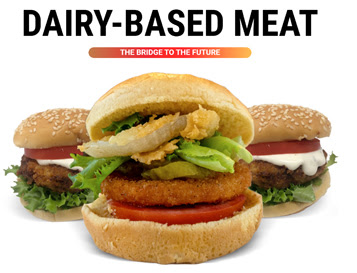
“Move over plant based, cell culture and fungi, here come the first ‘dairy-based’ alternative meats,” he said.

In a phone interview this week, he said that the dairy industry has been fueling “life for centuries.” But, it has also been void of any new technology since the patent issued in 1912 for ultra-high-temperature pasteurization. He plans to change that with his intellectual property that turns milk into filamentous materials that can be formed into structures that look like burgers, hot dogs, chicken and even scallops. With the assistance of natural flavors and a few other ingredients, he said these products replicate the taste and texture of muscle meat. 

“Here comes the new field of ‘dairy-based meat,’” he said. “[These are] meats made from all-natural milk. One of the most nutritious materials on earth in addition to being ubiquitous. And it’s a food source everyone is familiar with.”

Top Protein is a startup protein technology company that has been stealthily developing this new category of alternative dairy-meats for four years. Top Protein’s dairy-based meat portfolio includes whole cuts and shredded red and white meats. There are burgers, chicken cutlets, hot dogs, pulled pork, brisket, scallops and fish filets. There is even filet mignon. They are all made from milk. When necessary, butter is added as a fat source to provide desirable succulence. 


“With a world population seemingly outpacing the available meat supply, Top Protein sees the need
for real cost-effective solutions, not theoretical possibilities, and certainly not untested science
projects,” Marsland said. “That is why the company believes dairy-based meats are the ‘bridge to the future.’”

The company is currently building a manufacturing facility in Orlando to service local restaurants and ghost kitchens, with the latter being popular among tourists through delivery services. Plans are to have a Top Protein restaurant, too. A retail format of the product is also in the works. 

“With protein quality scores that blow away real meat, never mind the alternative meat competition,” he said. “[We also have] a manufacturing process that produces no waste.”


Source: Top Protein

The liquid waste stream from producing the “dairy-based meat” contains residual protein, vitamins and minerals. Think of the stream produced during cheese manufacturing. Top Protein’s research and development team uses that stream to produce ice cream and energy drinks. 

I leave you with this. Marsland said that the technology makes one pound of “meat” from one gallon of milk. To put this in perspective, one beef cow yields about 450 pounds of meat, according to Marsland. One milking cow produces about 3,000 gallons of milk per year, which can be turned into 3,000 pounds of “meat.” This can happen for a few years. 

Just something to think about.  


Thursday, February 16, 2023

Prioritize Making Dairy Foods More Healthy in 2023


The dairy and dairy alternative segment is unique in that you will find consumers buying a combination of both products throughout different categories, according to research from today’s blog sponsor: Synergy. Link HERE or on the banner ad to read Synergy’s five trends for 2023 in the dairy/alt dairy sector. 

I would like to focus on one of the trends. That’s sugar reduction and it should be a priority for all dairy foods innovators if they want their products to be recognized as “healthy.” 

The FDA’s proposed framework for the updated definition of “healthy” focuses on ensuring that nutrient-dense foods that help consumers to build a diet consistent with current dietary recommendations can qualify to bear the claim. Use of the word “healthy” in food marketing is voluntary. (Read more about making nutrient density a priority in 2023 HERE.)


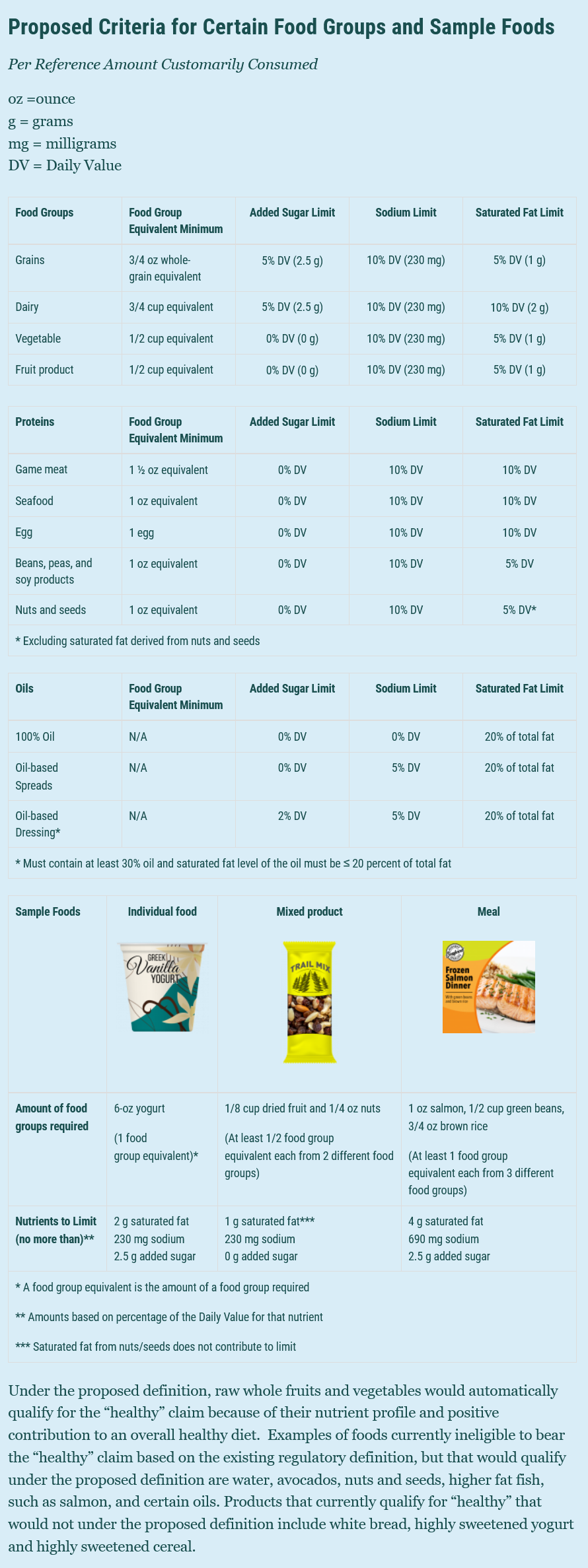
To meet the proposed definition, a food product would need to contain a certain amount of food from at least one of the food groups or subgroups (e.g., fruit, vegetables, grains, dairy and protein foods) recommended by the 2020-2025 Dietary Guidelines for Americans. The specific limits for added sugars, saturated fat and sodium would be based on a percentage of the Daily Value for these nutrients. DVs are reference amounts of nutrients to consume or not to exceed each day. The proposed criteria for how much food from a particular food group is required (called food group equivalents) and the specific limits for the three nutrients vary for individual food products, mixed products (which contain more than one food group), main dishes and meals, and are based on a Reference Amount Customarily Consumed, which is the basis for determining a serving size. 

FDA uses Greek yogurt as an example. Click on the infographic sourced from FDA for more details.  

To read more about the proposed definition, link HERE.

The good news is that over the past 20 years, which is about the time sugar became evil, the food industry has been able to stealthily get many consumers to prefer a less sweet taste. According to research from HealthFocus International, when decreasing sugar in the diets, more consumers prefer to reduce rather than replace with non-sugar alternatives or other flavors. Shoppers prefer less-sweet products over those that use non-sugar sweeteners or other substitutes. 

That should help with decreasing added sugars in sweet dairy foods, especially “The 4 Best Dairy Foods to Eat Every Week, According to a Dietitian.” This article recently appeared EatingWell.com, which reaches an audience of more than 10 million monthly viewers as well as more than 5 million fans through its social media channels. You can link to the article HERE.

Registered Dietitian Isabel Vasquez’s summary states:  Despite many consumers turning to non-dairy alternatives, dairy products have a lot of nutritional benefits. With a variety of dairy options out there, including ones suitable for lactose intolerance, you can probably find something that works for you regardless of your dietary needs or taste preferences. It is especially worth adding dairy to your weekly intake for its highly bioavailable calcium, a nutrient important for bone health and the prevention of osteoporosis.

It’s a great time to be in dairy! But here’s some disappointing news.

According to FDA, about 15% of products qualify for the current definition of “healthy,” and less than 5% actually bear the claim. The agency further estimates that after the proposed improvements to the claim are implemented, only 4% of foods in the grocery store might carry the claim. 

Formulate your products to be “healthy” claim worthy!


Thursday, February 2, 2023

Prioritize the Nutrient Density of Dairy Foods: Pack in the Protein


Mark your calendars and register HERE to attend Dairy Processing’s live webinar and discussion on dairy processors’ outlook for new product innovation in 2023 and beyond. Cypress Research surveyed dairy processing professionals in mid-2022 and respondents shared their input on prioritization of new product development, both pre- and post-pandemic; ingredient priorities during the next 12 months; and new product development initiatives for the coming year, and more. I will assist with discussing findings from this survey—as well as showcase recent innovations that speak to the trends--during a free webinar on Feb. 8, 2023. Nutrient density will be part of the discussion. Link HERE to register. 

Before we discuss nutrient density, I am sharing a quote from my friend Julie Smolyansky, CEO of Lifeway Foods, that she provided in an interview to DairyReporter.com (Jan. 25, 2023).

“While we did hit some challenges several years ago around the anti-dairy movement or plant-based, we’ve seen the pendulum swing back dramatically back to dairy, back to brands that consumers know,” Smolyansky said.

Woo hoo! 

Lifeway Foods saw a 29.1% increase in sales during the third quarter of 2022, driven in part by a strategy to expand its product offerings for on-the-go consumers and boost awareness of probiotics, according to Smolyansky. Lifeway’s main products are dairy-based kefir, a nutrient-dense fermented dairy food loaded with protein and probiotics.  

If you missed the January 20 blog titled “Commit to Innovating with Probiotics and Protein in 2023,” you can link to it HERE. That Dairy Processing research I mentioned at the top of this page, identified protein and probiotics as the two most important ingredient trends for U.S. dairy processors. 


What are nutrient-dense foods? These are foods that pack in a lot of beneficial nutrients relative to their energy content. Many dairy foods are nutrient-dense foods. 

According to recent research conducted by New Nutrition Business, Gen Z and Millennials, specifically,  are looking to get more bang for their buck. The concept of nutrient density resonates with them, even though the phrase “nutrient density” may not roll off their tongue. 

The research took place across five countries: US, UK, Australia, Brazil and Spain. It showed that consumer interest in eating more nutrient-dense foods continues to climb, with 18% of people saying they look for more nutrient-dense foods, compared to 12% in 2021. 

Nutrient density has always been part of the dairy industry’s vernacular. It’s back in the conversation as consumers worry about inflation and how they can afford to eat healthfully. 

“Keep bellies and wallets full with satiating, nutritious food and drink,” said Lynn Dornblaser, director of innovation and insight, Mintel, at The Hatchery Chicago, which hosted the “Consumer Trends of 2022 and 2023 Predictions” conference on Jan 25, 2023. “Although consumers may not readily know the term nutrient density, it is what they seek. It feels like the new way to talk about healthy. There’s opportunity to balance solid nutrition with a fair price. Brands will need to make basic nutrition and satiety messaging clear to help consumers stay in control of grocery budgets while easily nourishing themselves.” 

To read more on this topic, link HERE to “What consumers want in 2023,” an online article I wrote this week for Food Business News

According to research from Innova, one in two consumers globally agree that cost and value for money have become more important over the course of the past year. The challenge and opportunity for the food industry lies in how to provide affordable nutrition.

“Rating ‘health’ (41%) as the most important driver of product development, with ‘affordability’ (30%) in second place, it is clear that consumers look for simple and nutritional solutions that fit their strained budget,” according to Innova’s Global Insights Director Lu Ann Williams. 

On February 22, Williams, along with Kamel Chida, advisor to VC Nucleus Capital and the Bill & Melinda Gates Foundation, will discuss the growth opportunities for food and beverage businesses. Discover what consumers say about their health and nutritional needs, and how companies can fill this demand at affordable prices. Link HERE to register.


One of my favorite trends surveys comes from Pollock Communications and Today’s Dietitian. The 757 registered dietitian nutritionists (RDNs) who responded to this year’s “What’s Trending in Nutrition” survey provides insights on what they believe consumers will value in 2023, their top concerns when grocery shopping, and their top-10 superfood predictions. 

The study shows that after keeping immune health and comfort top-of-mind during the pandemic, consumers are back to prioritizing affordability and convenience when shopping for food. As consumers navigate the cost-of-living crisis, RDNs predict that affordability will be a higher priority than immunity for the first time since the onset of the pandemic. Consumers will be looking for functional, value-based foods that support their immunity and gut health. RDNs predict the top purchase drivers in 2023 will be foods and beverages that:
  • Are affordable and value-based (70.4%)
  • Are easily accessible and convenient (59.1%)
  • Support immunity (57.6%)
Their predictions for the “Top-10 Superfoods for 2023” are:
  • Fermented Foods, such as yogurt, kimchi, kombucha tea and pickled vegetables
  • Seeds, such as chia and hemp
  • Blueberries
  • Avocados
  • Nuts, including pistachios, almonds and walnuts
  • Leafy Greens, such as spinach
  • Aquatic Greens, such as algae, seaweed and sea moss
  • Green Tea
  • Ancient Grains
  • Non-Dairy Milks


But It Is Real Milk With the Benefits
Coffee with milk (proteins) may have an anti-inflammatory effect, according to a new study published in the Journal of Agricultural and Food Chemistry. Researchers at the Department of Food Science, in collaboration with researchers from the Department of Veterinary and Animal Sciences, at University of Copenhagen, investigated how polyphenols behave when combined with amino acids, the building blocks of proteins. The results have been promising. To read more, link HERE.


“In the study, we show that as a polyphenol reacts with an amino acid, its inhibitory effect on inflammation in immune cells is enhanced. As such, it is clearly imaginable that this cocktail could also have a beneficial effect on inflammation in humans. We will now investigate further, initially in animals. After that, we hope to receive research funding which will allow us to study the effect in humans,” said Professor Marianne Nissen Lund from the Department of Food Science, who headed the study.

With that said, the RDNs who responded to the “What’s Trending in Nutrition” survey, said that plant-based eating continues to rise in popularity. They rated it as the third most popular diet trend after intermittent fasting and keto diets. However, despite the popularity of plant-based diets, only 1% of surveyed RDNs reported that they would recommend highly processed meat alternatives.


Snacking Isn’t Slowing Down
RDNs predict that, despite loosened COVID-19 restrictions, consumers are still snacking as much as they were over the last two years, with boredom (71.8%), comfort (71.8%) and working from home (67%) being the top-three reasons why.

“Consumers are more aware than ever of the benefits food can provide for gut health and immune function. As consumers face higher costs at the grocery store, they’ll be looking for affordable food and snacks that still provide valuable health benefits,” says Louise Pollock, President of Pollock Communications. “Our survey findings reflect how consumer behaviors are shifting as COVID-19 restrictions loosen, remote work remains and inflation rises, from prioritizing affordable foods to continued interest in snacking.” 

Misleading Marketing and Nutrition Misinformation
Food and wellness content online can make nutrition confusing for consumers because it is often misleading. While the majority of RDNs agree that consumers look to social media platforms for nutrition information, they also believe that these platforms are rife with nutrition misinformation, specifically citing Facebook, Instagram and TikTok as the top sources, and social media influencers being the category leading the charge for delivering misinformation.

“Social media influencers are talking about wellness and nutrition at rates never seen before, but people struggle to differentiate between credible information and myths. This only supports the need to amplify credible sources of nutrition information, like registered dietitian nutritionists,” says Mara Honicker, publisher of Today’s Dietitian. “With the survey in its 11th year, we are excited to continue to share insights from these experts in food and nutrition, at a time where the value of food is subject to more scrutiny.”


Thursday, January 26, 2023

Prioritizing Gen Z in 2023


Caution: Some of you may not like reading today’s blog…and, please keep in mind, these are generalizations backed by global industry research authorities. It’s not like I woke up on the wrong side of the bed and have a negative attitude. I did my homework!

Baby Boomers, the time has come. You are irrelevant for the majority of food and beverage innovation and marketing. You will get over it, hopefully sooner than later, because once you do, there’s a world of change waiting for you, a world where you can make a difference. 

Irrelevancy is nothing to us Gen Xers. I/We were never relevant, as Baby Boomers overshadowed us and then produced families—Millenials--that exerted their “powers of participation” to make themselves as important, if not more, than their Boomer parents. Well, that’s over with. Gen Z is where the action is. Consider this payback from Gen X, as Gen Z is our offspring. 

Gen Z watched their Gen X parents survive foreclosures and bury dreams of getting that single-family, white picket fence home in “a good neighborhood with good schools.” (My family of four never left our two-bedroom starter townhouse in Chicago.) During the 2008 financial crisis, they saw us shop sales and clip coupons. “No sale, no coupon, no box of cereal,” was a repeated phrase in my home. Hello Groupon, which began the same year. Groupon was the only ticket to having date night. 


And now, it’s 2023. Gen Z is growing up, and the ONLY demographic important to most marketers. The good news is, Gen Z may be more grounded mentally, physically, socially, and every …ally than any other living generation. To put it nicely, they’ve gone to H E DOUBLE HOCKEY STICKS and back with the pandemic and they want change. They want a "Back to Basics" approach to eating. 

This past Wednesday (Jan. 25, 2023) afternoon, The Hatchery Chicago hosted a “Consumer Trends of 2022 and 2023 Predictions” conference. My forever professional friend, Lynn Dornblaser, director of innovation and insight at Mintel, shared some great insights based on her nearly 40 years of experience tracking global food and beverage trends. This Boomer knows—and embraces—that it is all about Gen Z. 

She shared some of Mintel’s leading food and drink trends. One is “Savvy Sustenance,” which is all about nutrient density, and being fueled by Gen Z who is savvy with their newly earned dollars.

“Although consumers may not readily know the term nutrient density, it is what they seek. It feels like the new way to talk about healthy,” said Dornblaser. “There’s opportunity to balance solid nutrition with a fair price.”

That’s screaming dairy!

Another is “Unguilty Pleasures.” Post pandemic, consumers are all about the freedom to indulge and to treat themselves. This is being fueled by…Gen Z, the demographic who was shipped back home while studying abroad in March 2020. The demographic who missed 8th grade, high school and university graduation ceremonies. They want their cake! They will eat dessert before dinner. 

“Often, pleasurable food and drink are marketed as being naughty, guilty or frivolous,” said Dornblaser. “This approach can be alienating for consumers—even those who adhere to healthy diets—who need some well-earned, guilt-free respites.”

She said that food innovators should focus on flavor and experience. It’s all about “small treats” or easily portioned products to allow consumers a well-considered treat.

That’s screaming dairy!

Need more Gen Z marketing direction? 
Here are insights from Cheyenne Hunt, J.D., (infographic source above) an advocate and attorney specializing in progressive activism, legislative advocacy, communications and democracy-focused tech policy.

She explained that Gen Z, the “iGen” demographic cohort born between 1997 and 2012, is the first to grow up fully immersed in technology. The belief systems and behaviors of Gen Z are a driving force not only in shaping culture, but economies at the global level. It’s imperative to understand commonalities in order to discern opportunities and challenges that lie ahead. 
 
She said that many Gen Zers prioritize their career and financial goals over immediate gratification in their personal lives. They are more materialistic and motivated to succeed than previous generations, with an overall goal achieving financial security and an upper middle-class lifestyle that now is seemingly out of reach for many as wages remain stagnant over time. 

Gen Z values a slower pace of life and is more focused on living in the present moment. Research shows that two-thirds of Gen Z is moderately to extremely worried about their physical and mental health, making health a high priority for this generation. They also distinguish between “quiet quitting,” which many in the generation believe is simply giving only as much into their job as their job compensates them for vs. “slow living,” which involves setting healthy boundaries between work and personal life.

Gen Z is known for their budgeting skills and understanding of credit. After watching their parents face the consequences of the 2008 financial crisis, they tend to be more financially savvy and responsible than previous generations. 

Call me crazy, but I think Gen Z wants to embrace dairy products. They want a "back-to-the-basics" approach to life. Make sure they remain relevant to this young cohort. Repeat after this Gen Xer: no one else matters, only Gen Z.   


Thursday, January 19, 2023

Commit to Innovating with Probiotics and Protein in 2023


Happy New Year! It’s been a few weeks since I blogged, as the year kicked off with a trip to Tampa to watch the Illini (my alma mater) play (and lose) in a Bowl game. That was quickly followed with going to Orange County to speak at the inaugural “Coffee, Tea and Creamers: The Art and Science of Milk in Beverages” short course at Chapman University. This was one of a number of programs from the Dairy Business Innovation Initiative Pacific Coast Coalition funded by USDA-AMS, in collaboration with the California Dairy Innovation Center. And then there was the Winter Fancy Food Show this week in Las Vegas. 

The two industry events confirmed that startups and entrepreneurs are embracing dairy to make everything from milk tea boba to high-protein snacking cheesecakes to culinary-inspired butters. Link HERE to my Food Business News dairy-focused overview and slide show from the Winter Fancy Food Show. (The Bowl trip reminded me I am getting too old to day drink at an outdoor sports event.)  


Let’s kick start this year with what I believe will be the two most important attributes to market in dairy foods this coming year. They are probiotics and protein. 

Here’s some great news. After nearly three years of shifting priorities, the dairy industry is starting to prioritize new product development and innovation again, according to Cypress Research, Kansas City, Mo. Probiotics and protein are the two most important ingredient trends for those who participated in this confidential survey of U.S. dairy processors on behalf of Dairy Processing

I will assist with discussing findings from this survey during a free webinar on Feb. 8, 2023. Link HERE to register. 

Interest in these two ingredient categories should not be surprising, as almost all of the food and beverage trend reports and forecasts for 2023 rank gut health/immunity as a consumer priority, with protein maintaining a prominent force in health and wellness programs. One of the most reputable authorities on food and consumer trends is the International Food Information Council (IFIC), which has stated that 2023 will be a year all about healthful beverages and demands for probiotics and protein, among other trends. 

Let’s jump straight to the gut. IFIC explains that probiotics have been steadily growing in popularity, with digestive/gut health being the third most commonly sought-after benefit among Americans. Don’t expect that interest to wane in the coming year, and expect to see them more and more beyond the yogurt section, as probiotics are increasingly being added to non-traditional foods, like chocolate, ice cream, juices, sauces and even nutrition bars. 


Beverages, specifically, are viewed as an ideal delivery system for probiotics. According to IFIC’s 2022 Consumer Insights on Gut Health and Probiotics Survey, of those who try to consume probiotics, 25% say they commonly seek them out in wellness drinks. 

IFIC’s conversation on protein is that plant-based alternatives to meat and dairy are old hat, but plant-based pasta, rice and snacks will be a growing trend in 2023. These products point a new lens on sustainability and innovation, often relying on “upcycling,” which takes plant-based food components that ordinarily would have gone to waste and processes them for use in other products. Upcycling reduces food waste and contributes to sustainable food production. 

It is true. Consumers are becoming increasingly comfortable with innovative, plant-based food alternatives, a trend that should continue in 2023. But the majority still love meat and dairy. It is paramount that the dairy industry “change the narrative about the power of dairy protein.” Link HERE to read a recent piece I wrote on this topic for Food Business News

Want to learn more about formulating with dairy proteins? Link HERE to register for the American Dairy Products Institute's "Dairy Ingredients 360 Dairy Course" starting Feb. 9, 2023. 

And here’s another good read. Link HERE to read “Consumer interest driving gut health innovation.” 

Please commit to innovating with probiotics and dairy proteins in 2023. Happy New Year!


Friday, December 2, 2022

Dairy Foods Trends 2023: Concepts, Flavors and Recipes


It’s that time of year when food and beverage authorities make their predictions for what will be trending the upcoming year. Last year, plant based, keto and immunity were the consensus. And while these three trends will continue to fuel new product innovation, there are other noteworthy trends to be aware of, and one of them is “real food,” which, of course, is what dairy is all about. Consumers are also looking for authenticity and transparency. Dairy excels in this department, too. And lastly, most flavor forecasts are typically not category specific, so I like to review them and make them relevant to dairy. Read on to learn more about what will be “hot” for dairy in 2023. 

Julian Mellentin, director of New Nutrition Business and a professional colleague, says that consumers’ expectations of convenient, packaged food and beverage is trending towards being simpler and less processed. This is set to become more important over the rest of this decade, he says. I agree.

There’s growing evidence that consumers are increasingly shunning ultra-processed foods (UPFs) and looking for more “real foods.” In a recent survey of consumers by New Nutrition Business, 20% of Americans and 40% of Spaniards consumers said they were trying to avoid UPFs, the highest numbers since the consultancy began asking this question. 

“The growing consumer interest in ‘less processed’ has grown out of the clean-label trend of identifying something undesirable in our food and avoiding it,” says Mellentin. “What’s different is that we are entering a new phase. Brands will have to do more to reinvent UPFs and to deliver products that get closer to consumers’ expectations of ‘real food.’” 


Most dairy has never been considered a UPF. The exception is canned aerosol cheese and some processed cheeses. This puts dairy in a very favorable position with consumers. 

Avoiding UPFs means, to a growing number of consumers, choosing fresh and natural foods. When the International Food Information Council asked Americans about the most common attributes of a healthy food, the top answer, given by 37% of people, was “fresh,” while 20% of consumers said, “minimal or no processing.” 

“The opportunity over the next three to five years is for packaged food companies--gradually, step-by-step--to renovate products,” says Mellentin. “That will require a focus on ingredients and processing technology, which deliver the safety, convenience and palatability people seek while doing so with as little processing as possible, or at least with a type of processing that people accept.” 

Ingredient suppliers have an important role to play in enabling this change. Further, dairy processors do not need to reformulate their entire product line.

“A significant percentage of mainstream consumers want to continue enjoying their favorite foods just as they are,” says Mellentin. “The result may be that companies will have some products within their portfolio that meet consumer expectations for less processed and real food, just as today they have free-from or gluten-free lines in their portfolio.”

In other words, aerosol cheese is not going away!

According to “10 Key Trends in Food, Nutrition & Health 2023,” Mellentin notes that there are many brands and companies where “simply processed” and “real” have long been part of strategy. No surprise, dairy—and even some plant-dairy—are big players in this space. Consumers expect these products to be wholesome and farm fresh, even if that farm fresh refers to minimally processed plants. 

One example is Yoplait’s French-inspired Oui by Yoplait yogurt. The brand focuses on simple ingredients and artisanal-style packaging and production. It was the first product of its kind from General Mills. The brand explains the simplicity of the production process on its packaging. Oui achieved over $100 million in the first year of retail sales with just three SKUs and has since been expanded to 26 SKUs reports Mellentin.

Danone is responding to the trend in Spain, the European country fueling the avoidance of UPFs. The desire to avoid UPFs is partly cultural, but it also owes something to Carlos Rios, a Spanish blogger and nutrition guru with 1.5 million followers on Instagram, according to Mellentin. Rios is the creator of Realfooding, a movement that encourages people to avoid UPFs. Danone was the first major food company to engage with the Realfooding project. One of Danone’s natural drinking yoghurts, with just four ingredients, now carries the Realfooding endorsement. There are numerous dairy products---everything from cheese to ice cream—that now also carry the Realfooding endorsement. 
Technology has an important role to perform in enabling packaged products to deliver on consumer expectations, says Mellentin. He provides the example of US-based plant milk marketer Elmhurst, which developed a technology that enables it to create a two-ingredient, nutritionally dense plant milk. 

Elmhurst’s products deliver on consumers’ expectations of simple processing and few ingredients, in marked contrast to most plant milks on the market, says Mellentin. 

This clean-food movement may bring consumers back to dairy, especially with the growing number of lactose-free options in the marketplace. After all, for many consumers, the sole reason they went to plant based was to address their intolerance or sensitivity to lactose, also known as milk sugar. 

Lactose-free is another formulation trend. And, clean food is also a big opportunity for A2 milk, as consumers are becoming educated about A1 and A2 casein, with the original, authentic form of casein being A2. Remember, authenticity in a food’s origins is gaining traction. 

Pavel Kolarov, CEO of Trimona Foods Inc., shared with me that there’s a growing momentum behind the A2 movement now more than ever before. 

“The reason for my optimism is that ever since we changed our packaging (about 8 months ago) to feature A2 on the front of the pack, our sales in the same chains and stores have shot up considerably,” he says. “Our Whole Foods business is up more than 30% in unit terms when the category overall is stagnant. And, that is without any new marketing or promotion. Our new items are also getting a lot of interest. The vanilla got picked up by Sprouts nationwide and our drinkable by Whole Foods.”

That covers trends in concepts and recipes for 2023. Let’s move onto flavor trends. There are five that standout for dairy innovation. They are Latin American, botanicals/florals, sweet heat, nostalgic/comfort and all-day breakfast.

Latin American flavors are all the rage. The flavors that translate to dairy applications include horchata. The flavor profile for horchata has many interpretation, almost always with a sweet cinnamon profile. There’s also tepache. This is a cold fermented beverage with pineapple and cinnamon. Sounds to me like a great drinkable yogurt profile. 

And let’s not forget aguas frescas. While the translation means “fresh water,” aguas fresca de leche includes milk. Think of it is a thinner, lightly flavored milk beverage with the purpose of refreshment rather than nourishment. 

Tastewise data shows that stone fruit and citrus flavors are trending in the category, with apricot, plum, lychee and yuzu fueling innovation in agua fresca flavors.
Tastewise, as well as some other flavor authorities, say that botanicals and florals continue to gain traction. In the past two years, floral flavor profiles have grown 91% in consumer interest and botanicals have grown 31% in consumer interest , according to Tastewise.  They both bring functional health to food and beverage. 

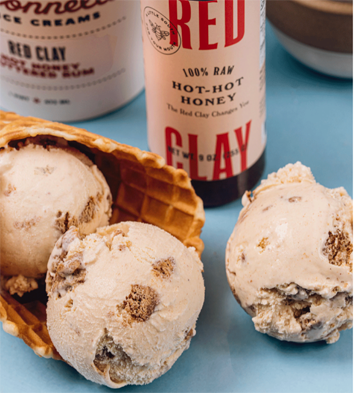
Fusion and mashup flavors appeal to curious consumers craving excitement. Sweet-heat combinations are a bit part of this flavor trend, with hot honey one of the most popular flavor trends of the moment. 
This past autumn, McConnell’s introduced Red Clay Hot Honey Buttered Rum Ice Cream. Red Clay’s hot honey is made with sustainably sourced, 100% raw wildflower honey infused with habanero mash for the perfect marriage of sweet meets heat. (It’s all about authenticity.) McConnell’s uses the honey as a variegate in rum-spiked ice cream that has hints of cinnamon and nutmeg, along with chunks of house-baked speculoos cookies.

According to Spoonshot’s 2023 report, interest in complex heat “goes beyond level of heat to specific varieties of pepper from around the world, underlying flavor notes, and even pairing with other flavors.” (Again, it’s all about authenticity, as well as traceability.) The report shows that the complex heat trend is fueled by consumers’ growing interest in international flavors. 

The Food Institute reports that coming out of the COVID pandemic, many consumers are drawn to comfort foods that remind them of simpler, pre-pandemic times. Nostalgic foods have become very popular over the past year and the trend doesn’t show signs of abating in 2023. 

Nostalgic flavors play very well into all types of dairy foods. As do breakfast flavors. 

My professional colleague Chef Charlie Baggs shared with me, “I think breakfast is where you’re seeing the most innovation with flavors. It’s a meal that can be eaten all day. It’s cost-effective and it lends itself well to global flavor trends.”
Cheers!


Thursday, November 17, 2022

Five very different approaches to playing in the plant-based space. Is one of them right for you?


Photo source: Noodle bowl featuring UPSIDE Chicken

This week something big went down in the U.S. food system. In case you missed the announcement, as it is not directly dairy related, UPSIDE Foods became the first company in the world to receive a “No Questions” letter from FDA for cultivated meat, poultry or seafood. 

The FDA released a MEMO detailing the agency’s review of the data and information provided by UPSIDE Foods to establish the safety of its cultivated chicken filet. If you are a food science geek like me, it’s an interesting read. You can access it HERE.

This letter indicates that FDA accepts UPSIDE’s conclusion that its cultivated chicken is safe to eat. This historic step paves the way for the company’s path to market in the U.S. and brings cultivated chicken one step closer to consumers’ plates. 


“This is a watershed moment in the history of food,” said Uma Valeti, CEO and founder of UPSIDE Foods. This milestone marks a major step towards a new era in meat production, and I’m thrilled that U.S. consumers will soon have the chance to eat delicious meat that’s grown directly from animal cells.”

In the U.S., cultivated meat is regulated by both FDA and USDA. Having received a “No Questions” letter from FDA, UPSIDE Foods will now work with USDA’s Food Safety and Inspection Service to secure the remaining approvals that are required before the company’s cultivated chicken can be sold to consumers. 

Here’s what you need to know. UPSIDE Foods grows meat, poultry and seafood directly from animal cells. These products are not vegan or vegetarian, but they are said to be planet friendly. It is projected that cultivated meat production, at scale, will use less water and land than conventionally produced meat. And, because it’s made in a controlled environment subject to high standards of testing for safety and quality control, it has the potential to help reduce the risk of harmful bacterial contamination, according to the company. 


Cultivated meat is a close relative to precision fermentation of dairy. While both have a place in the U.S. food system to feed the burgeoning population, remember, these products are not vegan. They start from animal cells…and frankly, if I think about it too much, it creeps me out. But without a doubt, there is a need for these alternative forms of high-quality protein. 

There is also a need for plant proteins. Here are five very different recent entries into the plant-based dairy sector that are worth your time to explore. Let me tell you why. 

1. While Kraft Heinz Co., sold off most of its cheese brands, it still owns Philadelphia. And now that Philadelphia brand can be found in the U.S. on what it calls “Plant-Based Original.” The top-three ingredients in the non-dairy spread are coconut oil, modified potato starch and fava bean protein.

Back in the day—let’s say around 1992—when I worked at Kraft and was directed to make fat-free natural cheese, I remember when marketing finally believed the prototypes were “good enough” to commercialize. The brand had to get out there because the competition—namely ConAgra with its Healthy Choice fat-free cheeses—was in nationwide distribution.

While the Kraft brand still offers fat-free cheeses made with refined, improved processes that originated in the 1990s, Healthy Choice got out of cheese within a few years. Why does this matter? I do not believe Kraft Heinz would jeopardize the Philadelphia brand if it did not feel that the product was at parity or better than the competition. While it may be a work in progress, the brand knows it needs to be out there. What does that mean for other brands, they better make sure their product can stand up to Philadelphia or else…

2. Then there’s the new Baby Bel plant-based snacks. Water is the first ingredient, followed by modified food starch and coconut oil. One snack contains 50 calories, 4 grams of fat and no protein. This product’s primary competition is its like-branded dairy counterpart. While relatively tasteless, someone can do better by getting some protein into the product. There’s room for improvement and I’m sure it is being worked on. Looking forward to trying it out.   

3. There’s one more cheese to discuss. GOOD PLANeT Foods is embracing the limited-edition, seasonal flavor trend with its cheese alternatives. Very smart! It’s a great entry point for consumers to the brand. The holiday flavor is White Cheddar and Cranberry and comes in Snackable Wedges and Smoked Wheels. However, there’s not much nutrition to speak of here either. Filtered water is the first ingredient, followed by coconut oil, sunflower oil and modified food starch. Chickpea protein is part of the formulation, but not enough to even register a gram per serving. 
What make this product different than the Baby Bel product is that it’s a seasonal flavor. Most consumers are not thinking about protein content when grazing on a cheese board. 

“Consumers are looking for new ways to enjoy plant-based foods, and these festive, seasonal flavors provide this,” said Bart Adlam, co-CEO at GOOD PLANeT Foods. “We will continue to create unique offerings that bring the joy of cheese to all.”

To play in the plant-based cheese space, my suggestion is to not try to mimic what’s already established, unless it’s darn good. The smarter option, in my opinion, is to offer it in a new format or a limited-edition flavor. 

4. I am the biggest fan of limited-edition and seasonal products. They create an urgency to purchase. It is an important space to play in and a great entry point into plant-based products. 
Califia Farms added Pumpkin Spice Oat Barista to its fall fluid lineup, joining returning seasonal favorites Pumpkin Spice Latte and Pumpkin Spice Almondmilk Creamer.

“We’re thrilled to introduce our new Pumpkin Spice Oat Barista, which gives oat milk fans an easy way to froth up their favorite seasonal oat lattes at home,” said Suzanne Ginestro, chief marketing officer at Califia Farms. “With the launch of Pumpkin Spice Oat Barista, Califia brings yet another reason to celebrate the season with a full variety of yummy plant-based options to make all types of seasonal coffee-house drinks at home.”


5. Let’s end with my thoughts on frozen desserts. Accolades go out to the 100% plant-based, flavor-forward global food brand Wicked Kitchen. The company recently launched a plant-based collection of ice creams and novelties made with the lupini bean, a first-to-market product in the U.S. Founded by chefs and brothers Derek Sarno and Chad Sarno, Wicked Kitchen helped ignite the plant-based movement in the U.K., the number-one vegan market globally.

The pint-size ice creams come in four flavors: Chocolate, Cookie Dough, Mint Chocolate Chip and Vanilla. The novelties include Berry White Sticks, which is sweet vanilla plant-based ice cream with a berry sauce swirl and white-chocolate flavored coating with red berry pieces. The Chocolate Almond Sticks are sweet vanilla plant-based ice cream with toasted almond pieces and a chocolate-flavored coating. Chocolate Red Berry Cones feature sweet vanilla plant-based ice cream with red berry sauce and chocolate chips in a gluten-free maize cone. The frozen treats join the brand’s more than 200 products across 15 categories.

Why accolades to Wicked Kitchen? Because it established itself as a brand and sat back and waited to develop a consumer base in the U.S., at the same time it perfected its frozen dessert formula. 

Five very different approaches to playing in the plant-based space. Is one of them right for you?